
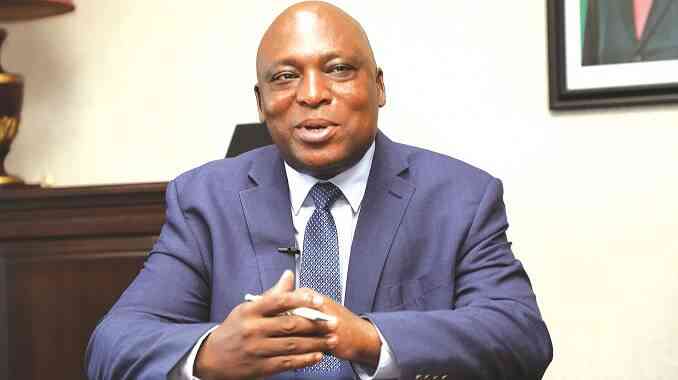
IN this interview, Zimbabwe Independent senior reporter Freeman Makopa (FM) speaks with Reserve Bank of Zimbabwe (RBZ) governor John Mushayavanhu (JM) on key macroeconomic indicators, including inflation trends, exchange-rate stability, foreign-currency reserves, banking sector soundness and monetary–fiscal coordination. The discussion focuses on the central bank’s quantitative targets, recent performance metrics and policy direction as Zimbabwe navigates disinflation, reserve accumulation and financial sector stability ahead of 2026. Find below excerpts from the interview:
FM: What is your updated inflation forecast for the next 12 months, and what numerical targets has the RBZ set for monthly inflation?
JM: Inflation is expected to continue a downward trajectory, reaching single-digit levels in the first quarter of 2026. Detailed communication regarding the Reserve Bank’s inflation projections will be officially communicated in the upcoming Monetary Policy Statement (MPS), which is scheduled to be announced in February 2026. Currently, the public should rely on the economic projections and targets enunciated in the 2026 national budget as the operative official forecast.
FM: What are the current levels of foreign-exchange market volatility, and what is your target volatility range (e.g., percentage band)?
JM: The foreign exchange market under the Willing Buyer Willing Seller arrangement has been sufficiently liquified by the market and the Reserve Bank. Precisely, the foreign exchange market has been characterised by greater interplay of market forces and enhanced trading efficiency — that way catering for all bona-fide foreign payment requirements. The accumulation of foreign currency reserves has allowed the Reserve Bank to strategically intervene in the foreign exchange market to smoothen any excessive volatility.
The greater flexibility on the foreign exchange market and smooth supply of foreign currency has resulted in a relatively stable exchange rate with limited volatility of below 5% in 2025 compared over 50% in 2024.
Exchange rate stability is a key aspect in maintaining price stability in the economy and ensuring greater certainty and predictability of economic and financial affairs. In this regard, the Reserve Bank under NDS 2 (National Development Strategy 2), will aim to maintain exchange rate variability of between +/- 15% in the near term, before narrowing the range to +/- 10% in the medium term in line with Sadc and AACB (Association of African Central Banks) regional benchmarks.
To ensure the stability of the exchange rate within the aforementioned bands, the Reserve Bank will continue with robust build-up foreign currency reserves to between 3-6 months of import cover over the medium- to long-term.
- Zimpraise to release album Number 13
- Hyperinflation headache for accountants
- Zimpraise to release album Number 13
- Hyperinflation headache for accountants
Keep Reading
FM: What is the current level of usable foreign-exchange reserves, and how does this compare with your reserve adequacy target?
JM: Since April 2024, the Reserve Bank has embarked on a foreign reserves’ accumulation strategy targeting foreign currency and precious metals including gold. The strategy involves acquiring reserves through mining royalties, outright gold purchases and part of export surrender receipts. Resultantly, foreign currency reserves increased considerably from US$276 million in April 2024 to over US$1 billion as at end of November 2025 translating to more than 1,2 months of import cover. Going forward, the Reserve Bank will continue prioritising the reserve accumulation to ensure that the country achieves target import cover of between three and six months in line with regional and international benchmarks.
FM: What are the year-to-date foreign-currency inflows (in US dollars), and how do these figures compare with the same period last year?
JM: The country’s foreign currency generation capacity has remained robust in 2025. As such, total foreign currency receipts increased by 21% to US$13,1 billion during the ten months to October 2025, compared to US$10,8 billion received during the same period in 2024.
FM: What has been the measured impact of surrender requirements — supported by export performance figures or liquidity data — on market stability?
JM: Out of the 30% export surrender requirements 12,5% is allotted to the government to service external obligations, while 12,5% is purchased by the Reserve Bank to support the foreign exchange interbank market and the balance of 5% is channelled towards the accumulation of foreign currency reserves.
Leveraging the export surrender requirements the Reserve Bank has strategically intervened in the foreign exchange market to ensure market clearance and meet all bona-fide foreign payment requirements. To date, the Reserve Bank has intervened to the tune of over US$900 million to smooth and efficient functioning of the interbank foreign exchange market.
FM: What is Zimbabwe’s current non-performing loan (NPL) ratio, and how has it moved numerically over the past 12 months?
JM: Non-performing loans in the banking sector have been well contained at 3,07%, much lower than the international benchmark of 5%.
FM: What are your current real interest-rate estimates, and what range do you project for the next 6–12 months?
JM: While the economy has started experiencing a positive real interest rate since October 2025, when inflation fell below the bank policy rate, establishing the future real interest rate for the next 12 months is subject to various variables such as the expected policy rate and inflation. Presently, the real interest rate is around 16%, which we obtain as the difference between the bank policy rate (35%) and the annual ZiG inflation (19%). This positive trajectory is expected to continue as the economy heads towards single-digit inflation in 2026.
FM: What proportion of national transactions are now digital, and what is your projected percentage for 2025?
JM: The average proportion for digital transactions up to October 2025 is around 94% of total national payment systems transactions.
FM: How much physical cash is currently in circulation (in ZiG or USD terms), and what is your targeted cash-to-broad-money ratio?
JM: As at December 9, 2025, cash in circulation amounted to ZiG508,75 million (equivalent to US$19,4 billion) which is around 3% of total broad money. The targeted cash to broad money ratio for 2026 is 5%.
FM: What are the current levels of government borrowing from the RBZ (in monetary terms), and what limits or thresholds have been agreed for coordination with fiscal authorities?
JM: The government has not borrowed from the central bank since April 2024, and this trend is expected to continue in 2026, as stated in the National Development Strategy 2. The statutory limit, however, currently allows government borrowing from the central bank not to exceed 20% of the previous year’s revenues. However, as espoused in the NDS2, the statutory limit for government accommodation at the central bank will be reviewed downwards to 5% or less of previous year’s fiscal revenues, in line with most Sadc countries.