ONLY four African countries are structurally equipped to sustain long-term industrial growth, a new continental index has found, underscoring deep-rooted constraints that continue to hold back most economies on the continent.
The 2025 RED Index of Industrial Development in Africa, released by the Business Council for Africa, identifies Morocco, Egypt, South Africa and Mauritius as the only economies with the alignment needed to industrialise at scale.
While countries such as Rwanda and Nigeria are making measurable progress, the report finds their trajectories remain incomplete.
Most African economies, it adds, are still classified as either vulnerable or stalled.
At the heart of the findings is a stark conclusion: Africa’s industrialisation challenge is not simply about ambition, but structure.
The index assesses economies across three core pillars engines of industrialisation, which capture foundational capabilities; accelerators, which determine the pace of transformation; and decelerators, the structural constraints that can stall or reverse progress.
Across the continent, corruption and security instability emerge as the most significant barriers, weakening institutions and undermining the execution of industrial policy.
Drawing on the historical experiences of countries such as South Korea, Malaysia and Vietnam, as well as African examples including Morocco and Ethiopia, the index identifies the factors that consistently underpin successful industrialisation. It positions itself as a practical framework for policymakers seeking to design and implement long-term industrial strategies.
- Ease of doing business is everyone’s business
- Dangote, Varun shake up Zimbabwe’s economy
- Dangote scouting for investment opportunities in Zimbabwe — Presidency
- Dangote’s Zimbabwe comeback tour: what went wrong the first time? What’s changed now?
Keep Reading
Aliko Dangote, president and chief executive of the Dangote Group, said Africa’s development must be driven from within.
“It must be built, owned, and sustained from within. What is required now is clarity of structure and commitment to execution,” he said in the report’s foreword.
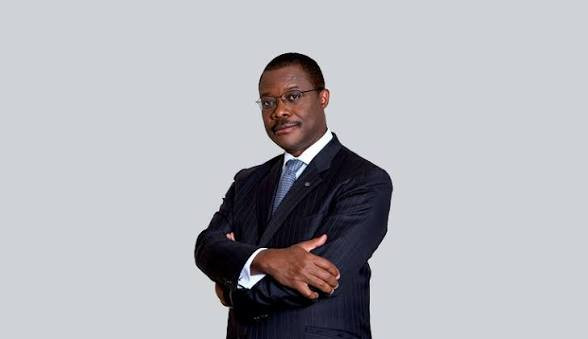
Arnold Ekpe, chairman of the Business Council for Africa, said the findings should serve as a wake-up call.
“This is not just an index. It is a call to action — for African policymakers, investors, and businesses to take ownership of Africa’s industrial future and commit to the structural changes required to deliver sustained growth.”
With global capital increasingly seeking resilient and scalable investment destinations, the report argues that Africa’s ability to industrialise will depend less on policy intent and more on the depth of its structural reforms.
For most countries, that transformation remains a work in progress.