
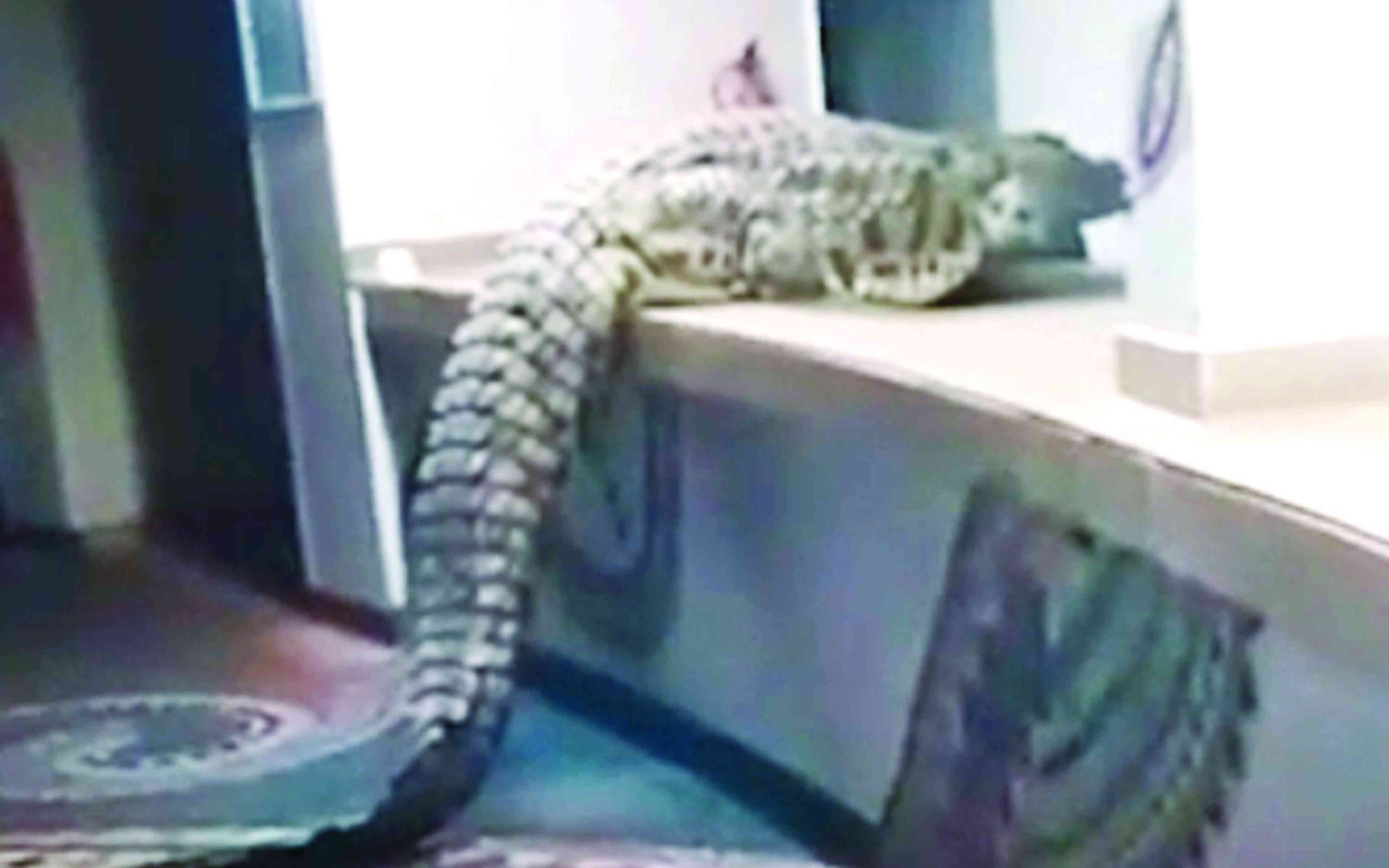
Tourists at a four-star hotel near Victoria Falls in Zimbabwe got closer to nature this week, than they likely intended, after a crocodile wandered in.
The 13-foot-long reptile entered the A'Zambezi River Lodge from the River Zambezi and headed to the restaurant’s buffet counter, UK newspaper The Times reported.
When the crocodile realised the Amulonga Restaurant was closed, he continued his hunt for food by venturing over to the kitchen. Footage shared by Sky News showed the animal crawling up onto the eatery's counter.
The hotel, which sits on the river near the border with Zambia, shared footage of the surreal moment on Facebook in a since-deleted post, writing: “On Friday we had an early morning visit from an unexpected guest.”
The lodge joked: “He was checking why room service was running late. No rules. No invitation. No reservation. This is the Zambezi — where wild means wild.”
John Richards, a tourist from the city of Portsmouth in England, told The Times, “Waiters told us how it had just walked in as if it was a paying guest, and when it couldn’t get a table enquired at the desk and finding nobody there, actually tried to climb over it to get into the kitchens.”
He told the newspaper: “Then it went to an armchair and lay on it and then sauntered out to the decking where all the tables are and with no grub on the menu settled down in a water feature out the front where it seemed happy.”
The crocodile was a Nile crocodile, per The Times. The reptiles are widespread throughout much of Africa. It’s the largest predator on the continent and is thought to be the second-largest living reptile in the world, after the saltwater crocodile, according to the African Conservation Foundation.
- Tarakinyu, Mhandu triumph at Victoria Falls marathon
- Andrea The Vocalist, dreams big
- All set for the 2022 Econet Victoria Falls Marathon
- Econet Victoria Falls Marathon return a boon for tourism
Keep Reading
Rangers from the Zimbabwe Parks and Wildlife Management Authority came to take the crocodile back to the river.
Spokesman Luckmore Safuli said: “The Nile crocodile came from the nearby Zambezi and was safely [immobilised] by our personnel and taken away and safely released back into the Zambezi,” per The Times.
“There were no human injuries or damage to the property. It is not unusual for the crocodiles to move up onto dry land, especially as this incident happened within the species’ natural range and habitat,” Safuli added, according to the outlet.
Pride Khumbula, who is a spokeswoman for the hotel, told the paper: “The lodge’s proximity to wildlife is not accidental but intrinsic to its identity and set within a protected landscape that celebrates coexistence rather than separation.”
“The situation was promptly managed by ZimParks, who responded swiftly and safely apprehended the animal,” Khumbula added, per the outlet.
“This is not the first time wildlife has entered the vicinity, and our experienced team is well-trained to respond appropriately and effectively in such situations as happened here.”
Beyond the spectacle at Victoria Falls, such encounters are not unique to Zimbabwe. Across the world, wildlife is increasingly straying into human spaces, often with the same mix of curiosity, confusion and quiet assertion of territory.
In Mumbai, leopards have over the years wandered into densely-populated suburbs, slipping through alleys and sometimes entering homes or schoolyards, triggering panic before being captured and returned to nearby forests. Wildlife officials there say the animals are not invading as much as adjusting to shrinking habitats and expanding cities.
In the United States, particularly around Lake Tahoe, black bears have become regular, if unwelcome, visitors in hotels and residential areas. Drawn by the scent of food, they have been filmed opening doors, rummaging through kitchens and even exploring hotel lobbies, often leaving behind scenes of disarray.
Southern Africa has its own share of such encounters beyond the Zambezi. In parts of Botswana and Zambia, elephants have been known to wander through lodges and village homesteads, brushing past dining areas or destroying crops. While these moments sometimes appear calm, they carry an undercurrent of danger, particularly when animals feel threatened.
Further afield, in Australia, kangaroos and koalas have been reported inside offices, cafés and suburban homes. Disoriented by habitat loss and environmental pressures, the animals often require rescue teams to guide them back into safer environments.
In Florida, alligators frequently turn up in swimming pools, golf courses and even residential kitchens, prompting routine calls to wildlife authorities. Like the Nile crocodile on the banks of the Zambezi, they are operating within their natural range — but increasingly crossing paths with human activity. — People/Staff Writer.