
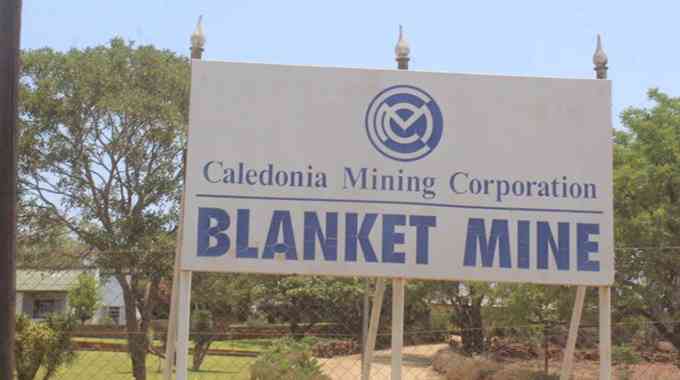
CALEDONIA Mining Corporation is investing US$14,2 million in a new power transmission line for Blanket Mine as the gold producer moves to cut electricity costs and protect operations from persistent power outages.
The Jersey-headquartered miner said it would build a 34km transmission line connecting Blanket Mine to Zimbabwe’s 132 kilovolt (kV) grid backbone, a project expected to reduce reliance on expensive diesel generators and improve energy security at the Gwanda-based operation.
The investment comes as ongoing electricity shortages continue to disrupt mining activity and raise operating costs across the sector.
In its 2025 annual report filed with the United States Securities and Exchange Commission, Caledonia said the project would begin immediately and is scheduled for completion in the second quarter of 2027.
“Also planned in 2026 is the construction of a 34km electricity line to connect Blanket to Zimbabwe’s 132Kv backbone,” Caledonia said.
“This investment is expected to reduce the price of power received from the grid and reduce the incidence of power outages experienced by Blanket, thereby reducing the use of expensive diesel generators. The study for this project has been completed, and the estimated cost of the project is US$14,2 million.”
The miner’s production costs rose sharply to US$101,3 million last year from US$80,7 million previously, driven by inflationary pressures on labour, consumables and electricity, increased underground development work, and continued investment in operational reliability and safety.
Blanket Mine accounted for most of those costs. Caledonia said unstable electricity supplies had forced the company to increase diesel-powered backup generation capacity to 18 megawatts to keep mining operations running.
- Record breaker Mpofu revisits difficult upbringing
- Record breaker Mpofu revisits difficult upbringing
- Caledonia profits up 16% after record production
- Power crisis pushes Blanket Mine into fresh costs
Keep Reading
“Power surges as experienced at Blanket, if not controlled, can cause severe damage to Blanket’s electrical equipment,” the company said.
“Blanket has addressed the issue of interrupted power supply by increasing its diesel generating capacity to 18MW of installed capacity which was sufficient to maintain all operations and capital projects but only on a stand-by basis.”
The company said diesel consumption fell from about 1 758 kilolitres in 2024 to 993 kilolitres in 2025, but warned that generators remained an expensive and environmentally unfriendly option dependent on imported fuel supplies.