IN 2024, Zimbabweans living in the United Kingdom sent US$709,6 million home. That made the UK the single largest source of diaspora remittances to Zimbabwe, overtaking South Africa for the first time since records began. And yet there is no direct flight between Harare and London.
There has not been one for nearly two decades. Anyone making that journey today routes through Johannesburg, Addis Ababa, Dubai, Doha, or Nairobi. A trip that ought to take around 10 hours routinely takes eighteen.
This is not a new conversation. NewsDay has written before about the signal embedded in airline decisions: that when carriers leave a market, they are making a statement about confidence, not just about routes.
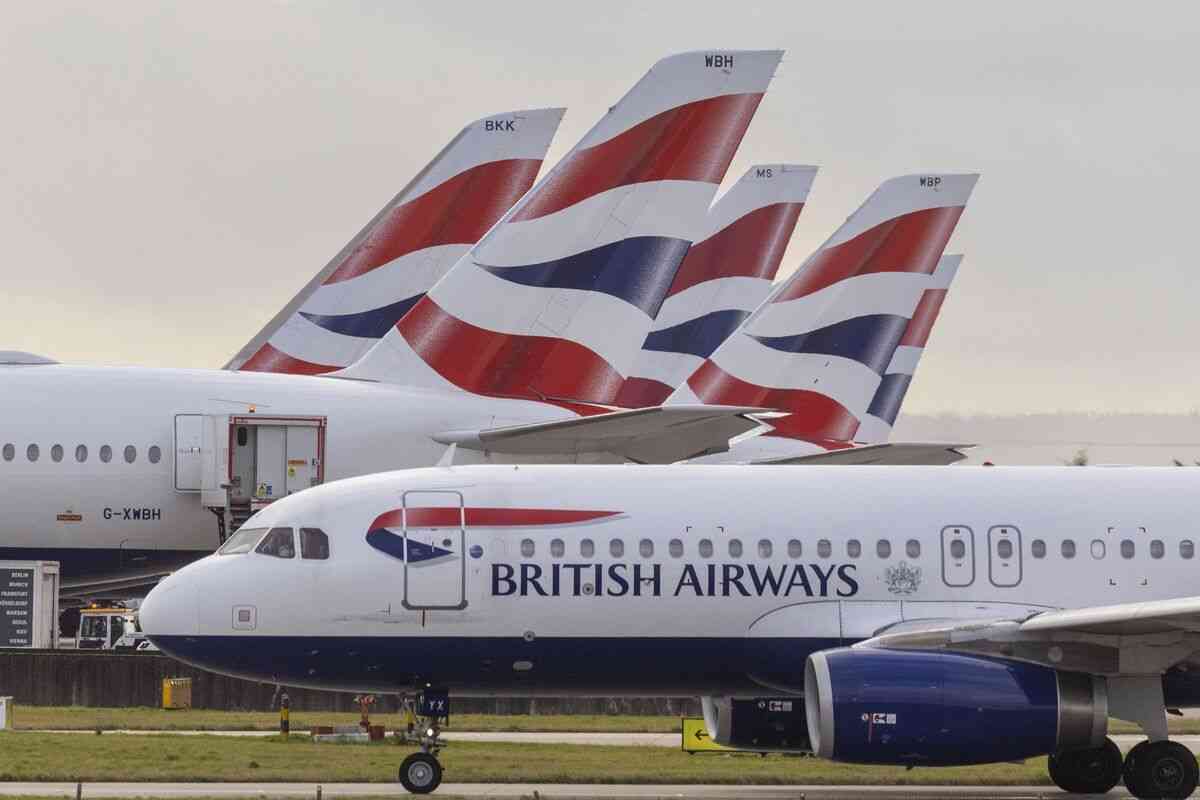
British Airways, KLM, Lufthansa, Swissair, Qantas and Air France all withdrew from Harare between the late 1990s and 2007, and their reasoning was broadly the same: Zimbabwe’s economic collapse and hyperinflation had made the market untenable.
British Airways’ three-weekly Heathrow-Harare service ended on October 28, 2007, with the airline citing spiralling costs and falling demand. That was a verdict for 2007. The question is what it is based on now.
Because the numbers have moved considerably. Total diaspora remittances to Zimbabwe rose from US$922 million in 2019 to US$2,58 billion in 2024, a 195% increase in five years. The UK’s share of those flows grew from 24,7% in 2021 to 28,6% by 2025.
South Africa’s fell from 38,3% to 27,5%. Finance minister Mthuli Ncube confirmed that in the year to June 2024 alone, 36 000 Zimbabweans relocated to the UK, placing them among the top five non-EU nationalities for long-term migration to Britain.
The economic corridor between Harare and London is one of the most active on the continent. The aviation infrastructure serving it is among the most neglected.
- Zim predicts tourism recovery as SAA returns
- Zim predicts tourism recovery as SAA returns
- Skin tights land school chaplain in soup
- ARSENAL'S NEW ARSENE
Keep Reading
This is not speculation. An Airbus-commissioned study of unserved African routes, published in 2024, modelled the Harare-London city pair and found that captured demand from 2026 onwards could sustain five to six weekly widebody flights.
Emirates and Qatar Airways together already absorb roughly half of all London-Harare traffic, despite routing passengers through Dubai and Doha on journeys far longer than a non-stop service would be. The demand is not theoretical. It is sitting in seats, just the wrong ones.
British Airways has been asked. In 2020, the Zimbabwe Tourism Authority confirmed the airline had been approached about restoring the route and had declined, citing insufficient business class potential. This is the same carrier whose commercial manager said in 2007 that falling passenger numbers had left the airline with considerable losses on the route.
Both answers reflect a market that no longer exists. The passenger base on the Harare-London corridor today is not the thin layer of colonial-era business travellers and package tourists that justified a 777 full of flat beds in 2000.
It is a large, economically-active UK diaspora supplemented by investors, students, and returning residents. These are people who fill economy cabins and premium economy sections, not first class. That is not a business class problem. It is a question of aircraft configuration and commercial imagination.
The one carrier with the most obvious motivation to operate the route cannot. Air Zimbabwe remains individually named on the EU Air Safety List, banned from operating in European airspace due to serious safety deficiencies identified by EASA.
The Mutapa Investment Fund, which owns the airline, announced in January 2026 that Air Zimbabwe was targeting a June 2026 resumption of Harare-London flights, via a leased Boeing widebody.
With only two international routes currently operating and EASA bans requiring sustained auditing to lift, the June 2026 target is ambitious to the point of strain. This route will not be revived by the national carrier. It will come, if it comes, from a carrier that can read the numbers.
Etihad Airways announced in April 2026 that it will begin Abu Dhabi-Harare service in March 2027, three times weekly. That is Abu Dhabi to Harare, not London. But the fact that a Gulf carrier has looked at Africa’s aviation gaps and found a commercial case worth committing to is worth noting. Etihad’s stated rationale was trade flows, cargo demand, and positioning Abu Dhabi as a corridor between Africa and Asia.
It made no reference to the UK-Zimbabwe diaspora. A British carrier sitting directly on top of that diaspora, with historical presence on the Heathrow-Harare route and approximately half the slots at Heathrow, holds a stronger hand than Etihad was dealt. The question is whether anyone at British Airways is looking at it.
There is also cargo. The argument for a direct Harare-London route is not purely about passengers. It never was. Air Zimbabwe’s former London service carried Zimbabwean roses and vegetables northbound, placing fresh produce on British supermarket shelves by the following morning.
That capacity vanished with the route. Zimbabwe’s horticulture exports still route through South Africa and Dubai, absorbing freight costs and spoilage that a direct connection would eliminate.
A route built around the diaspora corridor pays its way twice: once in seat revenue, once in the hold.
Put it together. The Reserve Bank of Zimbabwe data. The Airbus route modelling. The hundreds of thousands of people already making this journey, just not directly, and paying a premium in hours and connections to do it.
The UK is Zimbabwe’s largest remittance source. The corridor exists. The aircraft exist. The slots exist. The demand exists. What is missing is a carrier willing to look at what the numbers say rather than what the route last looked like in 2007.
Muhamba is a business analyst, market researcher and the AMH Group chair’s executive assistant. — [email protected]