A parallel water system is rapidly taking shape across Harare, as residents lose faith in council supplies and organise themselves into borehole syndicates — exposing the deepening collapse of the city’s public infrastructure.
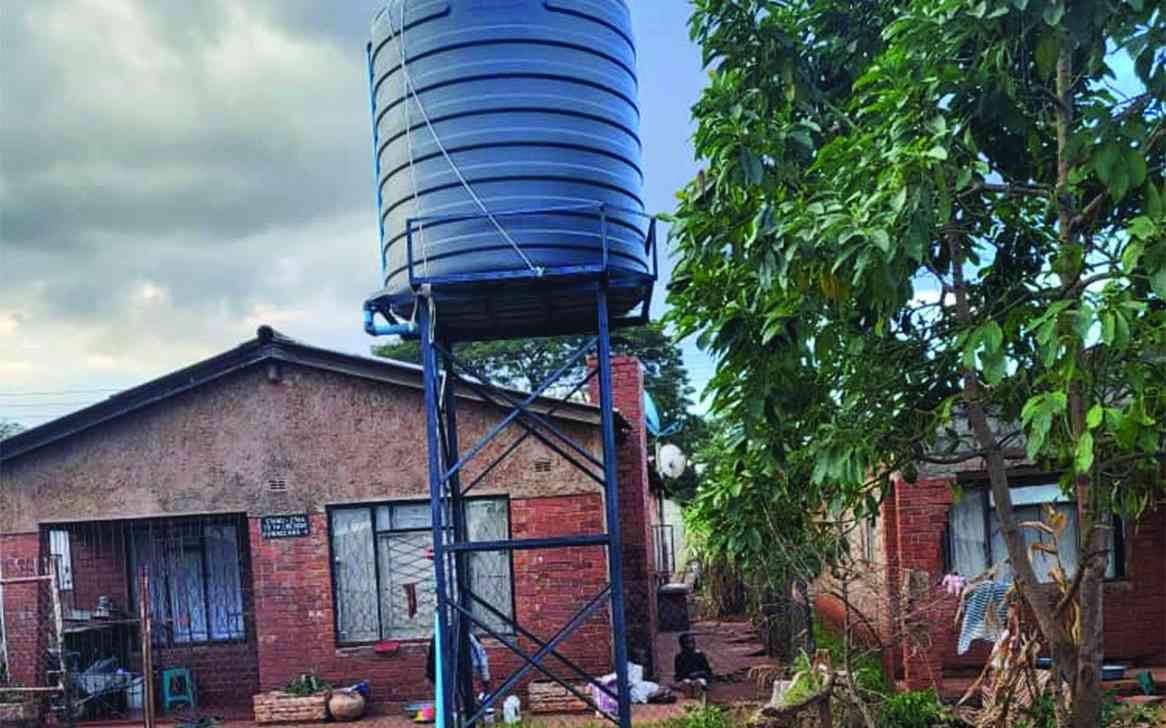
Across high-density suburbs such as Kuwadzana, Glen View, Budiriro and Highfield, households are forming informal “borehole clubs” — groups of between 10 and 40 families pooling resources to drill wells, install storage tanks and pipe water directly into their homes.
“We stopped trusting council water completely,” said a Kuwadzana resident involved in a 24-household borehole group. “Sometimes it is dirty, sometimes it smells. Even when it comes, people say it is not safe to drink. We had no choice.”
The rapid spread of these private schemes signals a deeper breakdown at the city’s Morton Jaffray Water Treatment Works, long plagued by ageing infrastructure, erratic chemical supplies and heavily polluted raw water sources, including Lake Chivero.
Residents say the failures are now evident at the tap.
“When the water comes, you can see immediately that something is wrong,” said Tendai Madovi. “People no longer trust it. That is why everyone is trying to drill a borehole if they can afford it.”
“We could no longer rely on Harare City Council water because it is often unsafe, sometimes dirty and unreliable,” said Martha Musona, also from Kuwadzana.
“There are long periods when water does not come at all, and when it does, we are not confident it is safe for drinking. That is why we decided to pool resources and drill our own boreholes.”
- Byo armed robber in court
- Woman jailed 12 years for indecent assault
- Magistrate jailed 3 years for abuse of office
- Zim’s poor batting hands India series
Keep Reading
Harare Residents Trust director Precious Shumba said the crisis reflects systemic failure and collapsing public confidence.
“The water situation in Harare is desperate. It has been worsening for the past decade,” Shumba said. “The City of Harare has failed to fulfil its public mandate to provide adequate potable water to the estimated 350 000 households.”
He said mistrust in water quality is now driving residents away from municipal supply.
“There is mistrust in the quality of Harare water. Finding alternative sources of water has become a problem confronting every resident,” he said.
The breakdown is compounded by losses in the distribution network. The Harare Residents Trust estimates that up to 60% of treated water is lost through leaks and illegal connections, leaving only about 40% reaching households.
“This means only about 40% of the pumped treated water is reaching intended households,” Shumba said.
As supply falters, borehole clubs are fast becoming a substitute system, but experts warn the shift carries risks. Unregulated drilling is accelerating groundwater depletion, with water tables already falling in parts of the city.
“The current challenge now being faced in these communities is over-abstraction of underground water, thus depleting the underground water, resulting in falling water levels,” Shumba said.
As boreholes run deeper, costs are rising — widening the gap between households that can afford private water and those that cannot.
Encroachment on wetlands is compounding the problem, undermining natural groundwater recharge and weakening the city’s long-term water security.
“With wetlands being invaded and converted into residential areas, the situation can only get worse,” Shumba said.
Public health risks are also mounting. Intermittent supply is forcing households to store water for long periods under unsafe conditions, while reliance on untreated sources increases exposure to disease.
Community Working Group on Health executive director Itai Rusike warned that unsafe water remains a major driver of illness.
“Environmental conditions underlie many of the common health problems in Harare, including diarrhoeal diseases. This makes access to safe water, safe sanitation and hygienic waste disposal fundamental for health,” Rusike said. “The cholera outbreak of 2008–2009 was a marker of the need for investment in water and sanitation infrastructure.
“Water and sanitation are essential for good health outcomes and sustainable development. Inadequate access to water and sanitation infrastructure is a major source of disease outbreaks such as diarrhoea, cholera, typhoid, pneumonia and skin diseases.
“The biggest concern is that water supplies in Harare are unreliable, with cut-offs for prolonged periods, meaning people are resorting to unsafe sources. Urban diarrhoeal disease rates are generally higher than rural due to poor water and sanitation in high-density areas.”
Residents say daily life has become a constant calculation of risk.
“You are always choosing between two risks,” said a Budiriro resident. “The council water or the borehole, neither feels safe anymore.”
City authorities, however, reject claims that municipal water is unsafe.
Harare City Council spokesperson Stanley Gama said supplies meet required standards.
“I am not sure what you mean by your conclusions of ‘unsafe’ water from the pipes. Our water is the safest and is treated to SAZ and WHO standards. Anyone is free to take our water to a lab and independently test it,” Gama said.
He acknowledged infrastructure failures were affecting delivery.
“What we do experience are bursts on our pipes which are very old and need replacing. These leaks are underground, resulting in dirty water being released at times. This is why the City of Harare and our partner Helcraw Water are replacing old pipes,” he said.
He also warned against over-reliance on boreholes.
“Most boreholes in Harare are very unsafe and contaminated. Residents must test their borehole water regularly,” he said.
Gama said the city had introduced smart meters to improve efficiency.
“We have introduced smart water meters, which will mean residents will use water sparingly, meaning we have more to distribute,” he said.
The crisis is compounded by the worsening sanitation. In Kuwadzana, residents have endured more than seven months of flowing raw sewage, with the problem still unresolved this week.
A slow-moving stream of human waste snakes through the suburb, carrying excrement, toilet paper, rotting food, plastic and nappies.
Flies hover in thick swarms, while dogs wander through and drink from it — a stark illustration of a city where basic services are failing and survival increasingly depends on private means.
Health ministry permanent secretary Aspect Maunganidze said authorities are on high alert over the public health risks.
“The Ministry of Health and Child Care is concerned about the public health risks arising from ongoing water supply challenges in Harare. It must be noted that the City of Harare follows the WHO safety standards in water processing.
“The main challenge has been limited access to safe water. This increases the likelihood of water-borne diseases such as cholera and typhoid, particularly in high-density areas,” he said.
Maunganidze said disease surveillance and response systems had been strengthened.
“Essential medical supplies have been pre-positioned, and health facilities are being supported to manage potential cases. Environmental Health Practitioners are also intensifying water quality monitoring, community inspections, and public awareness on safe water handling, sanitation and hygiene,” he said.
“We are working closely with the City of Harare and partners to support water quality assurance, including testing and chlorination where feasible, while promoting household water treatment methods.
“The Ministry continues to monitor the situation closely and urges the public to practice good hygiene and seek prompt medical care if symptoms arise. The public is encouraged to treat all water before drinking, store it safely, practice good hygiene, and report any suspected cases of illness early.”