SECTIONS of the Deed of Donation and Trust, which governs the operations of the Mass Media Trust (MMT), have been amended, we are told, “to strike a balance of power and responsibilities between the trustees and the government”.
The government, in the person of the Director of Information, Bornwell Chakaodza, is pretending that hitherto “the trustees could run Zimpapers the way they wanted and neither the Minister of Information nor the president had the legal powers to do anything about it”.
This is, of course, a good example of Bornwell’s sense of humour. The Mass Media Trust has for 16 years been nothing more than a doormat upon which the Minister of Information has regularly wiped his feet. It wasn’t even consulted when senior Zimpapers editors were fired or transferred and everybody remembers the stories of proprietors being summoned to explain why the president’s story wasn’t on the front page.
Admittedly, of late the MMT has found its voice and chairman Honour Mkushi has declined to have personnel who are manifestly unqualified or unsuitable foisted upon the trust. It is this which the Ministry of Information and the president have taken exception to. The amendments thus are designed to serve the interests of dictatorship and nepotism and the public should be aware of this.
Malaysia’s Prime Minister Mahathir Mohamad is on record for his long standing hostility to Western notions of democracy. Indeed, his “go to hell” rhetoric, not to mention his attacks on the judiciary and the press, have earned him the title of “the Mugabe of the East”.
But that accolade is now under threat following Mahathir’s latest eccentric outburst on workers’ rights. He complained about the costs of a high-wage economy and observed that all democratic countries of the West which are inclined towards socialism are suffering economic decline.
To compound this heresy, he denounced what he called “the tyranny of the majority” which can victimise people as much as feudalistic or dictatorial regimes.
Sounds as if he has been taking a leaf from FW De Klerk’s book.
- MUCKRAKER: Crooks are having a field day while Chris keeps blabbering
- Muckracker: Scarf on high demand
- Thank God, Muckraker recovering from recent ‘vene vayo’ rib crackers!
- It’s back to the old, tired ‘sanctions’ mantra again
Keep Reading
Last week’s State House press conference provided reporters with plenty of gossip. Muckraker was fascinated by President Mugabe’s comparison of his own regime with that of Mobutu Sese Seko in Zaire.
The president was busy telling international investors to “go to hell” when they appeared reluctant to support Zanu PF’s new patronage system. He was quoted as saying with regard to investment, “If Mobutu Sese Seko can get it what makes us not?”
The answer obviously has something to do with cellular phones.
We rarely criticise our judiciary in this column precisely because members of that honoured profession should be seen as above the sordid political process.
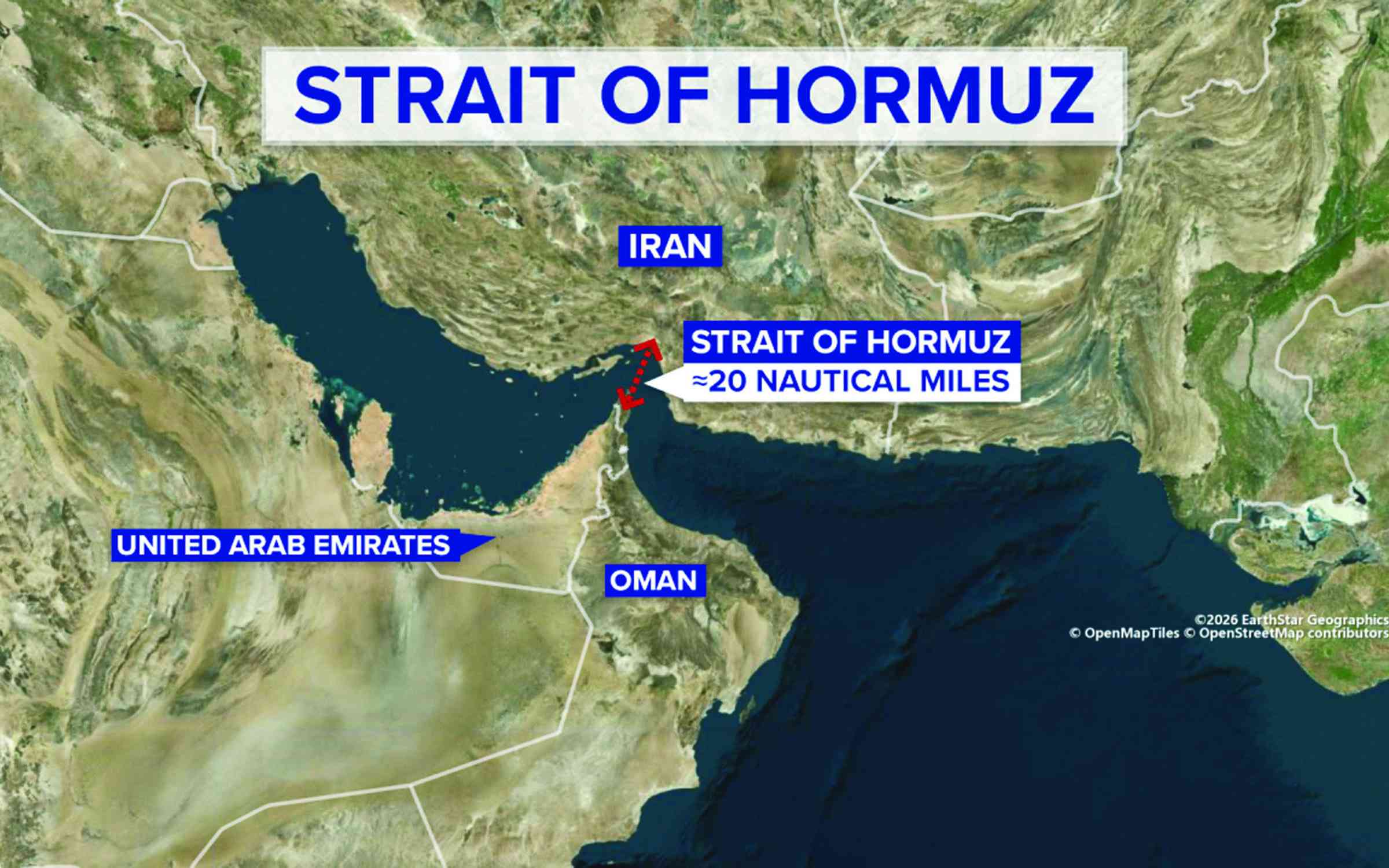
How then do we explain the busy visit to Iran by Chief Justice Gubbay? The visit, we are told, is designed to “foster bilateral relations” and appears to have been organised by the Iranian chief justice.
Let us be clear about this. Iran is a country where the judicial system has sent tens of thousands of people to the gallows or the firing squad on the grounds that they do not conform with the fundamentalist doctrines propagated by the ruling theocracy. Women are obliged to cover themselves in black at all times, and dissent is virtually unknown. Iranians are not even allowed to watch satellite TV.
For Zimbabwe’s judiciary to associate itself with such an odious system, condemned in numerous United Nations reports for repeated human rights abuses represents a very serious error of judgment.
The Iranian judiciary is a political instrument of a bloodthirsty totalitarian regime making this visit profoundly political in character. Chief justice Gubbay should have politely declined the invitation.
Muckraker, like most residents of Harare, Bulawayo and Masvingo is getting worried by the apparently random nature in which the cities are run. Of course, we are not worried about the correctness of the cancellation of the mayoral elections. What is worrying is why they should have been found to be illegal in the first place bearing in mind that the town clerks concerned are not only professional people, but have been at their jobs for longer than anybody would remember.
We are being administered illegally and engaging in extravagant pseudo-elections that are proving very costly in the end.
According to the judgment by Justice Adam, the town clerks of all the three cities acted ultra vires their powers. Either the nomination papers were not filed on time or the time for the close of the nominations was unilaterally extended without any attention being paid to laid-down procedures or the Urban Councils Act.
One wonders how many regulations and by-laws are passed and saddled on ratepayers when they should never have seen the light of day. Why should the ratepayers and residents shoulder the burden of their folly?
Clearly, one reason for this level of laxity and arrogance must emanate from the length of tenure of office of our town clerks. It is one office where we seem to have the equivalent of a life tenure. Most of us have never heard of any other town clerk for Bulawayo and Harare except the two incumbents. Which must explain why to some extent they seem to operate more by the rule of thumb than according to law.
As the judge noted he would not have hesitated to pass liability on the two gentlemen had they been named in the Forum Party suit as the defendants in their personal capabilities. There is the vexed issue about the billboards in Harare. Who exactly is to blame for their erection?
Naturally, when they were first seen along the roads people assumed the city council knew what was happening: that they were generating revenue from advertising. Not so according to town clerk Edward Kanengoni. They must now all be pulled down because they are illegal structures.
In fact, it is being proposed that those interested in discussing the issue with council are being free to do so and each case will be judged on its merits. When did Kanengoni and his officials realise the billboards were illegal?
Muckraker only hopes everything will be judged on its merits, not on the basis of some financial consideration. There have been numerous reports of corruption that have gone virtually uninvestigated in this country and the disease has become endemic to our society.
It was even alleged in one respected foreign magazine recently that greasing the palm or paying a kickback had become a normal way of doing business in Zimbabwe. Part of the expenses had to incorporate a substantial portion for bribes to negotiate deals or to win contracts.
The latest shocking scam was revealed in the Kuruneri committee where 100 customs officers have been sacked for corruption, bribery and extortion.
Only last week, Muckraker was lamenting the behaviour of most of these so-called civil servants who have become a burden on the taxpayer. Now we discover that they are not only rude but couldn’t care a hoot how they use our money. Visitors to the country have to pay through the nose to get their goods cleared at the border. But none of that money is accounted for. Which may explain their menacing attitude.
Generically defined, corruption actually means decomposition, which means rottenness. One hopes that something serious is being done to clear the mess.