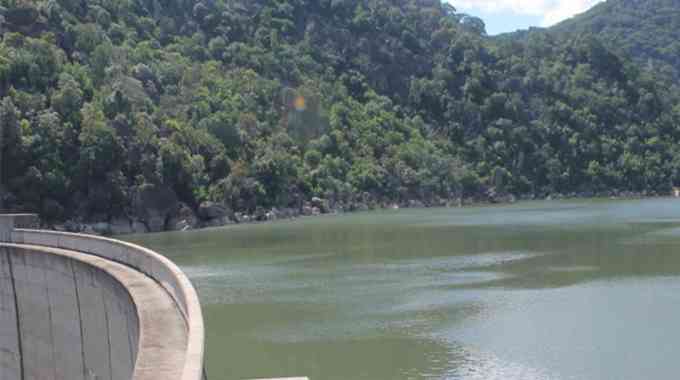
THE Zimbabwe National Water Authority (Zinwa) has reported encouraging dam levels, with the national average reaching 93,4% as at April 27, presenting a rare opportunity to drive broad-based economic transformation.
More than 10 dams have reached full capacity, with significant gains recorded even in traditionally dry regions such as Masvingo.
Yet the key challenge remains converting this water surplus into sustained economic activity, rather than allowing it to flow unused.
Much of Masvingo lies in agro-ecological regions 4 and 5, where rainfall is unreliable. With proper water harvesting and management systems, the current dam levels could support smallholder irrigation while stabilising agricultural output in drought-prone areas.
This comes as government rolls out an ambitious programme to establish 35 000 village business units. These enterprises will depend heavily on reliable water supplies for irrigation, agro-processing and related activities. Without a strong water management framework, their viability will be severely constrained.
Zimbabwe aims to expand irrigation to 496 000 hectares by 2030 to reduce dependence on rain-fed agriculture. While this target remains ambitious given fiscal limitations, the current water levels provide a critical foundation.
Major dams, including Tugwi-Mukosi and Mutirikwi in Masvingo, Bangala, Siya, Mtshabezi and Ingwesi are all at 100% capacity, according to the Zinwa report. Upper Insiza, Zhove, Sebakwe and Arcadia have also reached full levels. In contrast, Mazowe Dam is lagging at just 14,8% full, highlighting disparities that require attention.
In the Lowveld, sugar estates such as Triangle and Hippo Valley already depend on these water systems. However, the next phase must extend benefits beyond large-scale agriculture to surrounding communities.
- ED vows to shake off basket case status
- Water shortages hit Gutu-Mpandawana
- Feature: Model shift: Climate change forces Zim to finally take up irrigation
- Power cuts hit Karoi water supplies
Keep Reading
The government, working through Zinwa, the Ministry of Agriculture and the Agricultural and Rural Development Authority, must urgently mobilise investment into irrigation infrastructure, fisheries, hydroelectric power and water reticulation systems. These are essential to unlocking rural productivity in the country.
Lake Mutirikwi already hosts the five-megawatt Great Zimbabwe Hydro Power plant, demonstrating the potential for integrated water use.
If supported by infrastructure, districts such as Chivi, Mwenezi, Zaka and Chiredzi — all in Masvingo province — could transition into productive greenbelts, improving food security and household incomes.
However, this will require a shift in policy. Water use must go beyond domestic consumption to support income-generating activities.
Zimbabwe’s weak water harvesting culture also needs urgent reform, with households encouraged to develop small-scale storage systems for gardens, livestock and orchards.
The water is available. The task now is execution.