
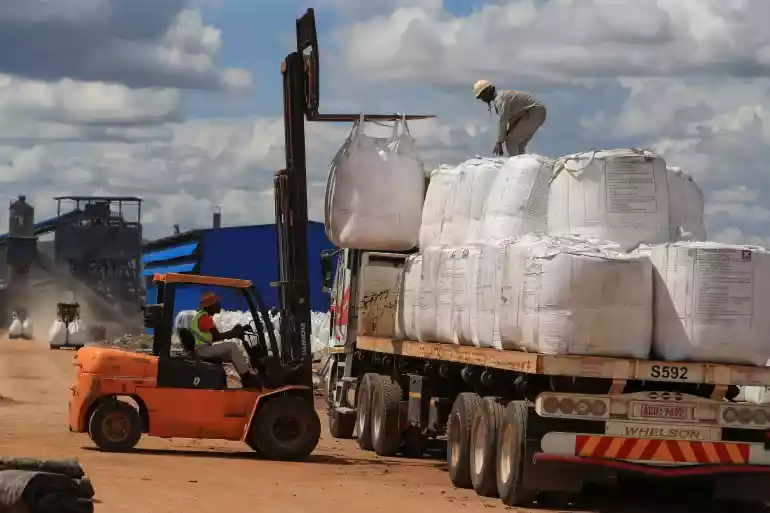
The Mines ministry recently announced a ban on the export of raw minerals. If properly implemented, the move could redefine Zimbabwe’s mining trajectory.
Despite growing beneficiation calls, several minerals — including lithium concentrates — have been exported largely in raw or semi-processed form, especially to China, where demand has surged alongside growth in the electric vehicle industry. The new restrictions seek to shift Zimbabwe from a purely extraction-based to one anchored on industrial development and value addition.
The ministry said the ban was dedicated to promoting transparency, enhancing domestic value addition and beneficiation and ensuring compliance and accountability in the export of key mineral resources. Under the new regulations, only mining companies with valid titles and sanctioned beneficiation plants will be permitted to export minerals.
The advantages of such a policy are clear. Zimbabwe holds significant reserves of lithium, nickel, graphite and other strategic minerals critical to the global energy transition. Local processing would allow the country to capture greater value instead of exporting jobs and profits abroad. Beneficiation plants could stimulate industrial growth, generate employment, increase foreign currency earnings and reduce overreliance on volatile commodity prices.
If implemented effectively, the ban could also formalise the sector and curb leakages. Zimbabwe is losing close to US$1 billion annually through smuggling of minerals. By tightening export rules and requiring proof of local processing, authorities may reduce illicit flows and improve revenue collection.
However, the policy is not without risks and disadvantages.
First, Zimbabwe currently lacks adequate beneficiation capacity across several minerals. An abrupt export freeze may disrupt production, discourage investment and create cashflow constraints for mining firms that rely on export earnings. Smaller operators, in particular, may struggle to finance the construction of processing plants, potentially leading to mine closures or job losses.
Second, policy unpredictability remains a concern for investors. Sudden regulatory shifts can raise perceptions of risk, particularly in a sector that requires long-term capital commitments. Without clear timelines, incentives and transitional arrangements, the ban could slow new investment rather than accelerate industrialisation.
- Zimbabwe deals help China tighten African lithium grip
- Zimbabwe deals help China tighten African lithium grip
- Zimbabwe’s huge say in US$60m lithium market
- Pioneering Zim lithium executive steps down
Keep Reading
Historically, it is often well-connected elites who facilitate smuggling, exploiting proximity to power and regulators will face intense scrutiny as they attempt to seal porous borders and ensure compliance.
Ultimately, the export ban represents a sound strategic vision: transforming Zimbabwe from a raw material supplier into a value-adding industrial player. But strong policies alone are not enough. Without consistent enforcement, institutional integrity and investor confidence, even the cleanest policy direction can falter in implementation.