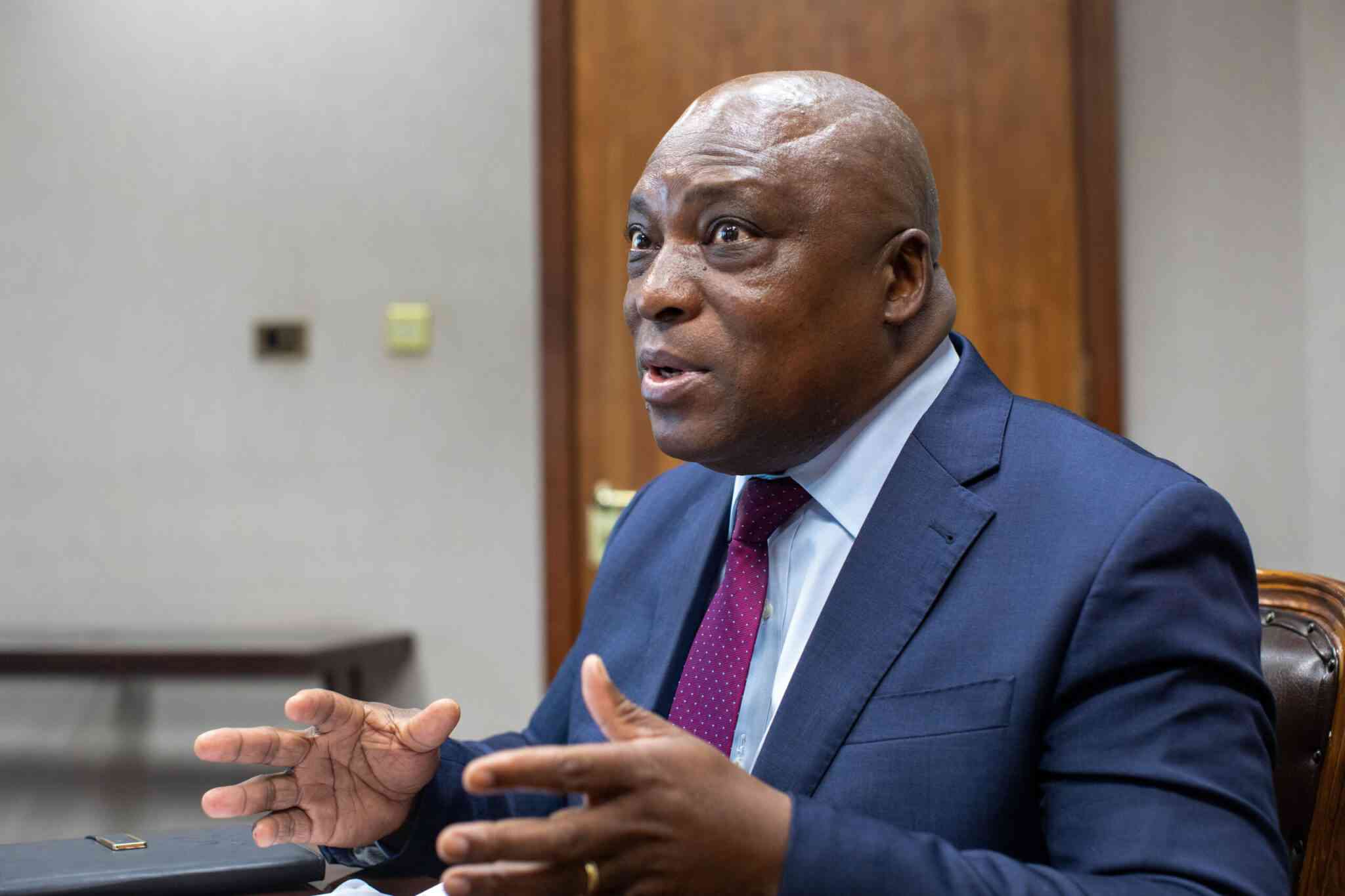
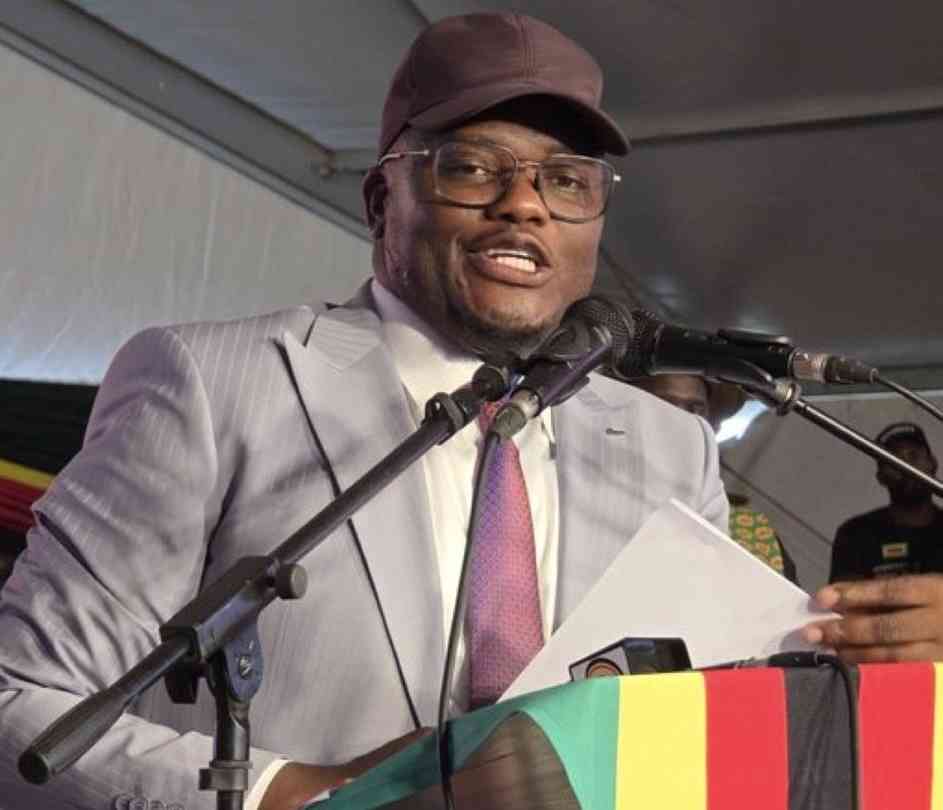
PRESIDENT Emmerson Mnangagwa’s adviser Paul Tungwarara has moved to entrench his company’s controversial role in Zimbabwe’s river rehabilitation programme, seeking the involvement of the Environmental Management Agency (EMA) even as political and institutional scrutiny intensifies over his seemingly expanding influence and recent incendiary public remarks.
Correspondence seen by the Zimbabwe Independent shows that Tungwarara, writing in his capacity as head of Prevail Group, sought EMA’s technical guidance in the implementation of a pilot river rehabilitation project, which he characterised as a nationwide initiative.
The approach comes just two weeks after this newspaper reported that the government had granted Prevail Group exclusive rights to rehabilitate the Muroodzi River in Mashonaland Central, a decision that sidelined rival firms and raised concerns about monopoly power, procurement integrity and regulatory capture.
A Cabinet directive circulated to provincial ministers authorised Prevail to rehabilitate the Muroodzi River as a “prototype” project, pending the development of national guidelines by the Ministry of Environment, Climate and Wildlife.
All other river rehabilitation activities were simultaneously suspended nationwide.
In a letter dated January 8 to EMA director-general, Tungwarara said Mnangagwa “has expressed great satisfaction with the successful pilot river rehabilitation project at Muroodzi River in Concession”.
“Inspired by this progress and its positive effects, His Excellency has approved the expansion of this noble initiative into a nationwide pilot project across all provinces,” Tungwarara wrote.
He said the expansion would allow communities to participate in restoring degraded waterways and signalled Prevail’s intention to work closely with the environmental regulator.
- Byo author eyes SA award
- WB revises downwards Zim growth
- Letters: Zanu PF to blame for anything wrong in Zim
- Shortages show the poverty of ideas in govt
Keep Reading
“As we prepare to commence, we fully recognise the important role of EMA in protecting our natural heritage,” Tungwarara said.
“We intend to work closely with you to ensure all our activities fully comply with national environmental standards and best practices.
“Our approach focuses on mechanical clearing and desilting, with strict measures to safeguard the ecosystem — including processing excavated material using contained washing plants located away from active river channels.
“To ensure every step meets national standards and reflects best practices, we kindly ask for your guidance in carrying out this important work,” he added.
It was not immediately clear what formal role EMA would play, including whether it would be contracted by Prevail or the government, or how its participation would be funded.
Asked what role EMA would play, and if it would be paid, Tungwarara said; “Those technical questions will have to go to my technical team”. He had not reverted at the time of going to print.
Meanwhile, EMA spokesperson Amkela Sidange said: “Kindly note issues on the river rehabilitation project are handled by an inter-ministerial committee on River Rehabilitation and not EMA”.
The letter adds a new layer to an already contentious arrangement that places a single private company at the centre of a potentially lucrative national environmental programme.
The controversy has been amplified by Tungwarara’s increasingly public political posture. Over the weekend, the presidential adviser drew backlash at a Zanu PF rally in Nyanga, where he made combative remarks while overseeing the disbursement of the Presidential Constituency Empowerment Fund.
Tungwarara later defended similar comments made in Marange, characterising them as part of a “good fight” despite angering some within the ruling party who interpreted his remarks as targeting some of President Mnangagwa’s close allies.
He denied naming individuals, saying his comments had been misinterpreted.
Tungwarara doubled down on his loyalty to Mnangagwa, declaring he was prepared to confront internal opposition “for Vision 2030” and was “ready to die today” for party “order”.
The remarks prompted a sharp response from within Zanu PF. Youth League deputy commissar Taurai Kandishaya publicly rebuked Tungwarara on social media, questioning his official role and suggesting he was more focused on internal power struggles than on mobilising investment, his stated mandate.
The exchange exposed unease within party structures over the influence wielded by non-elected presidential advisers whose private business interests intersect with major State projects.
The dispute is unfolding against broader factional tensions within the ruling party, where succession anxieties, business rivalries and internal power struggles continue to surface. Outside party ranks, reaction has been mixed. Some war veterans and former detainees have publicly rallied behind Tungwarara, praising his recognition of their role in the liberation struggle and his advocacy for their welfare.
Others have raised renewed concerns about transparency and oversight, particularly regarding the handling of presidential empowerment funds and projects linked to Tungwarara’s office.
Social media commentary has circulated allegations, untested and unproven, about the management of empowerment programmes and the accumulation of wealth by politically connected figures.
At the centre of the debate is the river rehabilitation programme itself.
According to the Cabinet directive seen by the Independent, the government is preparing to gazette a Statutory Instrument to give legal force to the Polluter Pays Principle, compelling miners responsible for environmental degradation to fund rehabilitation efforts.
“This communication serves to remind you, Hon ministers, that alluvial mining and the river ecosystems rehabilitation programmes remains suspended until further notice,” the directive reads.
“Currently, work is in progress regarding the gazetting of a Statutory Instrument to ensure the Polluter Pays Principle is legally enforceable and to guide the river rehabilitation process.
“The only company that has been given the greenlight to undertake river rehabilitation, as a prototype, is Prevail Group of Companies, at Muroodzi River in Mashonaland Central province.
“As such, the company should not be given a mandate for further river rehabilitation outside this Muroodzi river-approved prototype.
“Pending further guidance, Hon ministers, no company should be awarded a contract to carry out river rehabilitation across the provinces,” it further stated.
Several firms involved in environmental restoration told the newspaper the arrangement effectively locks out competitors and undermines transparency.
“This is a de facto monopoly. If government wants a pilot project, it should be competitively procured and independently evaluated,” one executive at an environmental services firm said.
The dispute comes amid growing scrutiny of Prevail Group’s expanding footprint in government contracts.
The company has in recent years secured major State projects, including the refurbishment of Parirenyatwa Group of Hospitals, the Presidential Borehole Scheme, the US$500 million Mt Hampden Cyber City development, and construction work at State House and Zimbabwe House.
In September 2025, a parliamentary portfolio committee accused Prevail International of gross underperformance after finding that several boreholes and village business units installed in Chivi district were incomplete or non-functional.
Former finance minister Tendai Biti criticised the river rehabilitation directive, saying it lacked transparency and parliamentary oversight.
“Parliament must stand up to such issues. Civil society and citizens must also speak out,” Biti said.
“We have schools without teachers and hospitals without medicine and those are the consequences of lack of transparency.”
The controversy also coincides with remarks by Vice-President Constantino Chiwenga, who recently warned against economic capture by a small, well-connected elite and called for clean governance and accountability in the management of public resources.
As the government moves to operationalise the Polluter Pays Principle, analysts say the credibility of the programme will depend on openness, competition and measurable environmental outcomes, rather than exclusive mandates.