
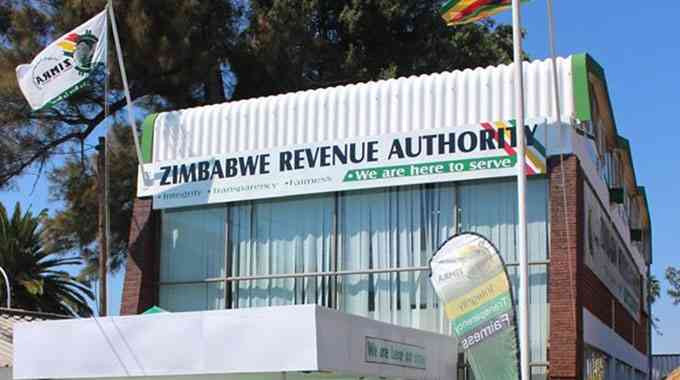
ZIMBABWE’S tax authority has launched an aggressive enforcement campaign against multinational corporations and large domestic firms accused of abusing transfer pricing arrangements and illicitly moving profits offshore.
The Zimbabwe Revenue Authority (Zimra) says it is seeking to recover billions of dollars lost annually through illicit financial flows; a drain officials argue has compounded the country’s chronic foreign currency shortages and fiscal stress.
Senior Zimra officials said companies suspected of manipulating cross-border transactions were now under active scrutiny, with several already subjected to forensic audits, tax reassessments and penalties.
“This is operational,” one senior official said. “Zimra is going after corporates involved in transfer pricing abuse and the externalisation of funds.”
At the centre of the campaign is a technological overhaul that includes the deployment of advanced data analytics and artificial intelligence-driven systems to identify and prioritise high-risk taxpayers.
Officials said the tools allow the authority to move beyond routine audits and whistle-blower tips to systematic, large-scale detection of complex profit-shifting schemes.
“Zimra is going after corporates involved in transfer pricing abuse and the externalisation of funds,” one official said.
“It has been reported that artificial intelligence-driven systems are being used, or considered, to strengthen detection of such practices.”
- Zim headed for a political dead heat in 2023
- Record breaker Mpofu revisits difficult upbringing
- Tendo Electronics eyes Africa after TelOne deal
- Record breaker Mpofu revisits difficult upbringing
Keep Reading
Transfer pricing abuse has long been flagged by Zimbabwe’s Treasury and central bank as one of the most damaging sources of revenue leakage, particularly in mining, manufacturing, telecommunications and financial services.
Authorities accuse firms in these sectors of under-pricing exports, inflating management fees and royalties, and routing procurement costs through related offshore entities in low-tax jurisdictions.
Contacted for comment, Zimra’s marketing and corporate affairs executive, Gladman Njanji, confirmed that artificial intelligence now formed a core pillar of the authority’s reform agenda.
“Zimra has formally adopted artificial intelligence-driven systems as part of its new five-year transformation strategy launched in 2025,” Njanji said.
“The initiative is aimed at strengthening revenue collection through enhanced risk profiling, data analytics and improved detection of non-compliance patterns, including in transfer pricing.
“The strategy was approved in the fourth quarter of 2025 and is currently in a phased rollout stage. Tangible results are expected to emerge progressively as the systems become fully operational,” he added.
Zimra officials, interviewed, said the abuses under investigation were closely linked to the externalisation of funds at a time when Zimbabwe faced acute foreign exchange constraints.
“This is not about compliance education anymore. We are dealing with deliberate, structured schemes. The response has to be equally sophisticated and decisive,” a senior tax official said.
According to multiple sources, Zimra is using AI-enabled risk engines to cross-reference customs data, transfer pricing documentation, financial statements, banking flows and corporate group structures. Companies flagged by these systems are subjected to exhaustive audits that can span several years and multiple jurisdictions.
The move marks a turning point for an authority that has historically relied on manual audits and tip-offs.
Zimra believes the technology will allow it to detect patterns of abuse that previously went unnoticed and to do so at scale.
Firms deemed high-risk face backdated tax assessments, penalties and interest charges, with criminal investigations and asset recovery possible in severe cases.
Officials said the authority was prepared to pursue litigation where necessary.
The campaign aligns with broader government efforts to curb illicit financial flows, which the Reserve Bank of Zimbabwe has repeatedly blamed for fuelling exchange rate volatility and undermining monetary stability.
Finance ministry officials estimate that transfer pricing abuse and fund externalisation cost Zimbabwe more than US$1,5 billion annually, a figure that exceeds state spending on several critical social services and infrastructure programmes combined.
President Emmerson Mnangagwa’s administration, constrained by limited access to international financing and rising fiscal pressures, has made domestic revenue mobilisation a strategic priority.
In recent years, Zimbabwe has overhauled its transfer pricing framework, aligning it more closely with international standards, expanding disclosure requirements and increasing penalties.
Officials concede, however, that enforcement lagged behind regulation, a gap the authority now says it is closing aggressively.
Corporate executives and tax advisers say Zimra’s posture has hardened noticeably in recent months. Audits are broader, more technical and less open to negotiation, with documentation requests extending deep into group-level transactions, including intellectual property arrangements and offshore financing structures.
Several companies, the officials said, were revising transfer pricing policies, unwinding certain cross-border arrangements and setting aside provisions for potential tax liabilities.
Business groups have pointed out that while tackling abuse was necessary, enforcement should be predictable and insulated from political interference to avoid deterring investment.
Zimbabwe’s move mirrors a broader shift across Africa, where revenue authorities are increasingly turning to technology and cross-border information sharing to confront profit shifting by multinationals.
South Africa and Kenya have both expanded the use of data analytics in pursuing complex international tax cases.