Zimbabwe’s central bank this week warned mounting government cash-flow gridlocks — if left unresolved — could unravel hard-won monetary and price stability, exposing a fault line between fiscal stress and economic recovery.
In a frank caution contained in its five-year strategic plan covering 2026 to 2030, the Reserve Bank of Zimbabwe (RBZ) said Treasury’s persistent cash-flow challenges could morph into a direct threat to monetary stability unless policymakers work in far closer coordination.
“Although the fiscal deficit is contained, government cash flow challenges require strong collaboration with the Reserve Bank to avoid destabilising monetary and price stability,” the central bank warned.
The alert came at a critical moment for the economy, as the RBZ embarks on a plan to build a US$6 billion foreign exchange reserve buffer by 2030 to anchor confidence, stabilise prices and safeguard the gold-backed ZiG, launched in 2024.
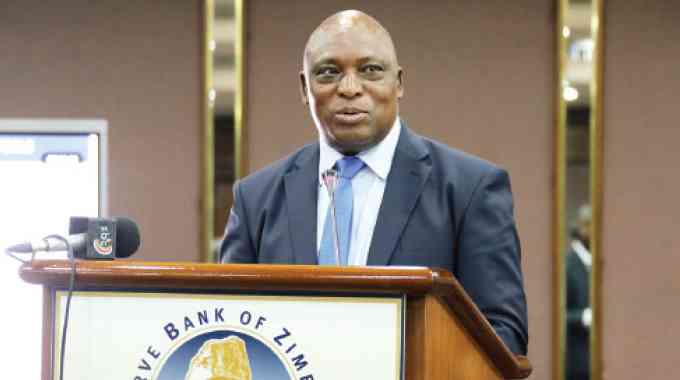
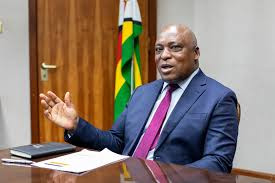
RBZ governor John Mushayavanhu, writing in the strategy document, said the past 20 months of deliberate repositioning of the central bank back to its foundational mandate had delivered overwhelming stability, but cautioned unresolved fiscal pressures still cast a long shadow over the outlook.
His remarks coincided with a government admission this week that at least 226 public projects stalled in 2025 after funds ran out, slowing Zimbabwe’s already fragile economic development drive.
State media reported on Thursday that a US$500 million package was in place to complete “high-impact” projects, with government urging line ministries to move with speed.
“The caution is not routine technocratic language,” said Tapiwa Sibanda, head of strategy at Trade Winds.
- Zimbabwe needs to rethink economic policies
- Zimbabwe needs to rethink economic policies
- Forex demand continues to fall
- Digital platforms transfer ZW$8tn
Keep Reading
“It is an early alarm from a central bank that knows how quickly fiscal slippage can undo monetary reform in Zimbabwe.”
“This is not of little consequence. In fact, it is one of the most under-reported macroeconomic red flags in the current cycle. The RBZ’s warning is quietly signalling a fault line between fiscal stress and monetary stability, and history shows when that line cracks in Zimbabwe, the damage is swift and severe,” he said.
“While Zimbabwe has technically kept its fiscal deficit under control, the RBZ is effectively warning that how government finances and times its spending now matters as much as how much it spends,” Sibanda added.
Another economic analyst said cash-flow stress, if poorly managed, risks forcing the state back into familiar habits.
“Delayed payments, accumulation of arrears, pressure on the banking system and, ultimately, destabilising monetary interventions are the usual progression,” the analyst said.
The central bank’s concern is rooted in recent experience.
In July last year, the Zimbabwe Independent reported that government contractors tasked with rebuilding critical infrastructure, including highways, were teetering on the brink of collapse as unpaid invoices stretching back more than a year pushed firms into bankruptcy, court battles and asset seizures.
The Zimbabwe Building Contractors Association (ZBCA) warned at the time that dozens of companies were being crippled by the state’s failure to honour payment obligations.
“Some of our members are still owed by the government, and it is unfortunate that some of these outstanding figures date back to 2024, most critically the period we were preparing for our Southern African Development Community Summit,” ZBCA president Tinashe Manzungu said.
“This has forced some businesses to shut down. Others have been dragged to court, now repaying debts using personal belongings. Some have even lost their houses.”
The fallout extended beyond individual firms, with waves of asset seizures by frustrated creditors rippling through the economy, undermining confidence and choking off private investment.
Among the projects was the massive rehabilitation of the 584-kilometre Harare–Masvingo–Beitbridge Highway, including the US$90 million Trabablas Interchange, which was completed last year.
Against this backdrop, the RBZ has moved aggressively to rebuild buffers.
Zimbabwe recorded a US$1 billion current account surplus in 2025, generated US$16,2 billion in total foreign-currency receipts and lifted official reserves to US$1,2 billion — equivalent to about 1,5 months of import cover — according to the central bank.
When Mushayavanhu took office in April 2024, reserves stood at just US$276 million, leaving the country acutely vulnerable to import shocks and speculative attacks. By January 2025, reserves had risen to US$488 million.
The RBZ is now targeting a six-fold increase to US$6 billion by 2030, a level it believes is critical to underpin price stability, restore confidence and shield ZiG.
“Accumulated reserves increased from US$276 million in April 2024 to US$488 million in January 2025, and are projected to reach US$1 billion by December 2025 and US$6 billion by 2030,” Mushayavanhu said.
“Launch of ZiG marked a historic milestone in restoring monetary sovereignty and confidence,” the RBZ said, arguing tangible backing is essential after decades of inflation, currency collapses and dollarisation.
Yet beneath the optimism lies a clear caution that without fiscal discipline that extends beyond headline deficits to actual cash management, the gains risk being short-lived.