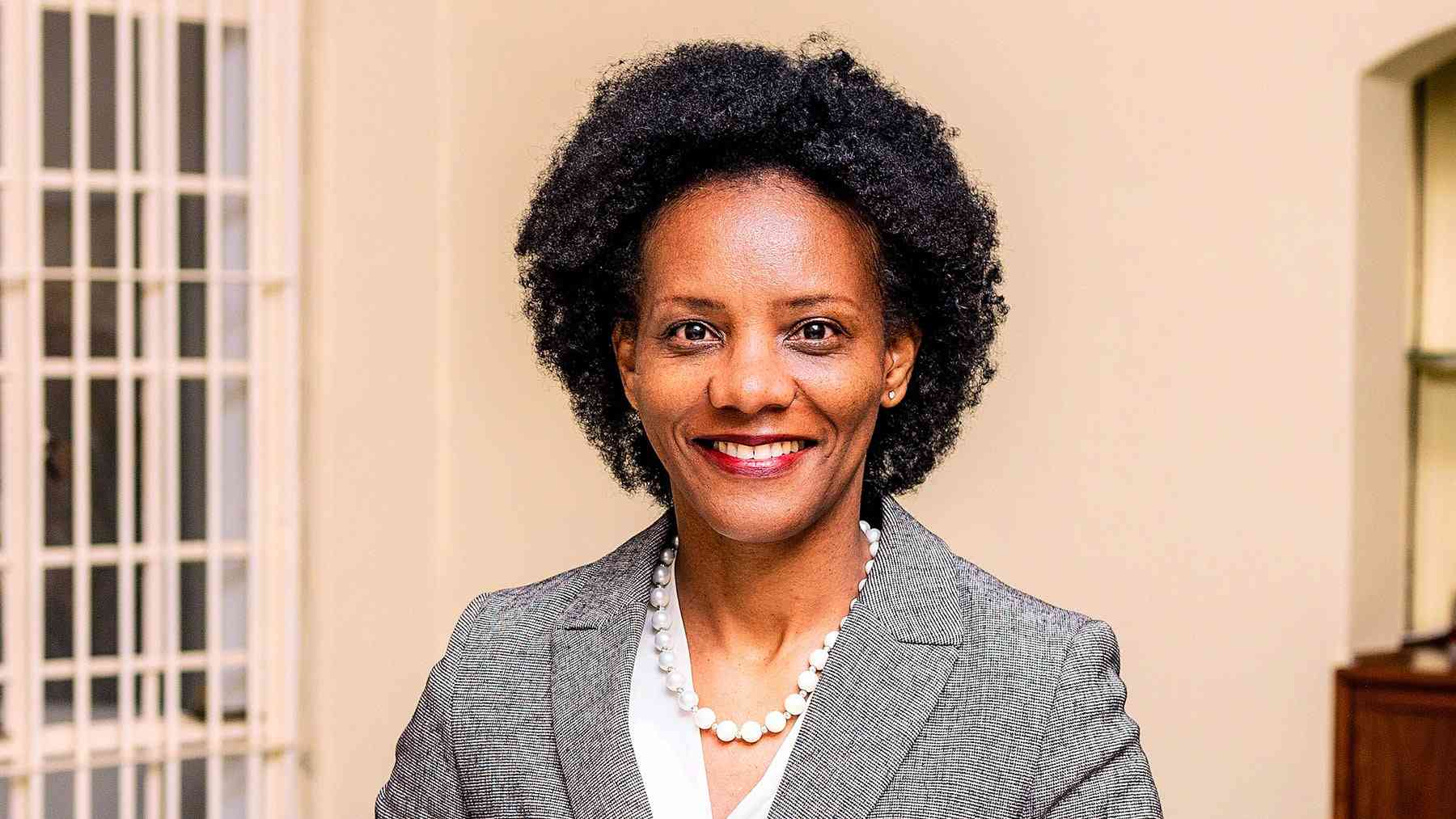
AGAINST the backdrop of the 2026 national budget and its implications for financial stability, credit growth and liquidity, Zimbabwe Independent senior reporter Freeman Makopa (FM) sat down with Bankers Association of Zimbabwe president Sibongile Moyo (SM) to discuss the outlook for the banking sector. Their wide- ranging conversation covered growth projections, lending rates, asset quality and deposit trends as banks position themselves for the year ahead. Below are excerpts from the interview:
FM: What is your projected banking sector growth rate for 2026 following the latest national budget, and how does it compare to 2025’s actual growth figures?
SM: The banking sector is aligned with the 2026 national budget projection of 5% economic growth for 2026, moderating from the revised 6,6% growth estimated for 2025. This outlook is underpinned by expected price and exchange rate stability.
FM: The budget introduced new revenue and expenditure measures. Based on your calculations, what is the expected impact (in USD terms) on banking sector liquidity over 2026?
SM: The revenue and expenditure measures introduced in the 2026 budget are varied and carry distinct, often different, implications for market liquidity. Consequently, it is not possible to provide a single aggregate calculation for the impact on banking sector liquidity without narrowing the scope.
FM: How much credit to the private sector do banks plan to extend in 2026, and how does this compare to 2025’s credit levels?
SM: The banking sector continues to play a vital role in supporting the economy, with loans to productive sectors accounting for 76,7% of total lending as of June 30 2025. Aiming to sustain the positive trajectory of 2025 — where private sector credit grew by 20% in the first half of the year alone — banks will maintain this focus in 2026. This strategy is designed to underpin the country’s projected 5% GDP growth.
FM: What is the current average lending rate across the banking sector, and what range do you project for 2026 following the budget’s macroeconomic assumptions?
- Directors’ governance plan gets Central Bank nod
- Directors’ governance plan gets Central Bank nod
- Zimdollar shortage hits the country
- BAZ, govt in fresh talks over bank charges
Keep Reading
SM: Lending rates remain guided by the Bank Policy Rate, which was set at 35% in late 2024 to anchor inflation. For 2026, with inflation projected to decline to single digits, we project a gradual downward adjustment in lending rates to stimulate long-term borrowing.
Local Currency (ZiG): Lending rates currently range between 35% and 45% per annum, depending on the client’s risk profile.
Foreign Currency (USD): Rates range between 10% and 15% per annum. For 2026, we project these ranges to narrow downwards as the 2026 Budget’s stability measures take effect and inflation trends into single digits.
FM: What is the latest industry-wide non-performing loan (NPL) ratio, and what numerical target is the association working toward for 2026?
SM: The sector’s asset quality remains sound with an NPL ratio of 2,9% recorded in June 2025, well within the international benchmark. The Sector is working to maintain the NPL ratio below the regulatory threshold of 5% throughout 2026.
FM: How much loan write-offs did banks record in 2025, and what are the expected figures for 2026?
SM: Write-offs in 2025 remained minimal due to sound credit risk management and a low NPL ratio of 2,9%. We expect this stable trend to continue in 2026, supported by improved borrower capacity from the projected economic rebound.
FM: What is the total value of deposits currently held in the banking sector, and what percentage growth do you expect in 2026 following the fiscal measures introduced in the budget?
SM: As of June 30 2025, total banking sector deposits amounted to ZiG112,8 billion (US$4,2 billion). This represents a significant increase from the ZiG89,1 billion (US$3,3 billion) recorded in December 2024. The majority of these deposits (approx. 84,7%) are foreign currency-denominated.
FM: What is the banking industry’s current capital adequacy ratio, and how many institutions meet or exceed statutory requirements (provide percentages)?
SM: The banking sector remains well-capitalised with an average Capital Adequacy Ratio (CAR) that significantly exceeds the regulatory minimum of 12%. Latest Figure: As of the first quarter (June 2025), the sector average CAR stood at 33,81%, indicating a strong capacity to absorb potential losses.
FM: What proportion of total deposits is in foreign currency versus local currency, and how has this ratio changed since the budget announcement?
SM: According to the 2026 national budget the composition of banking sector deposits is heavily skewed towards foreign currency. Approximately 84,7% of total deposits are foreign currency-denominated, with the remainder held in local currency.