THE Shepherds Foundation Trust will publicly launch “Silent Walls”, a major photo-documentary initiative, on February 6 at the Autoworld Zimbabwe showroom in Harare.
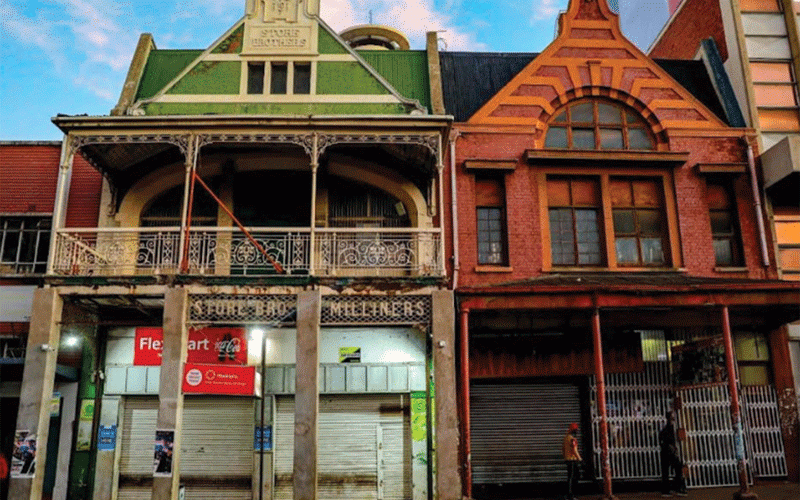
The event marks the start of a critical year-long, nationwide campaign dedicated to documenting and preserving Zimbabwe’s rapidly disappearing architectural legacy.
It is a collaborative effort spearheaded by the trust, in partnership with local automotive retailer Autoworld Zimbabwe and the National Museums and Monuments of Zimbabwe (NMMZ).
The project captures structures ranging from the iconic Bulawayo City Hall to the historically significant Mother Patrick’s mortuary in Harare, as well as sites tied to the liberation struggle — all standing as silent witnesses to over a century of layered history.
Shepherds Foundation Trust director Darius Mutamba told IndependentXtra that Silent Walls approaches architecture as a “national archive, one that holds political, social, and cultural memory”.
According to Mutamba, the inspiration came from witnessing the slow, normalised disappearance of these sites “without proper documentation, protection, or public acknowledgment”.
“The exhibition was conceived as an act of preservation, to record these spaces before they vanish, and to provoke reflection on what it means when the physical evidence of our collective memory is allowed to erode in silence,” he said.
Responding to the role of photojournalism in documenting societal challenges and culture, Mutamba noted how this practice carries a profound responsibility to bear witness, preserve memory, and tell truths that might otherwise be overlooked or suppressed.
- Great Zimbabwe US$475K restoration, preservation kitty commissioned
- Financial constraints stall completion of Old Bulawayo
- ‘Silent Walls’ launches to document Zim’s vanishing architectural heritage
- Financial constraints slow progress at Old Bulawayo
Keep Reading
“In a country such as Zimbabwe, where history is layered, contested, and often politically charged, images function not only as art, but as evidence.”
He explained that photography has the power to draw attention to what society has learned to ignore, making photojournalism an act of civic engagement as much as visual storytelling.
The selection process for the buildings was rigorous, guided by historical significance, architectural uniqueness, level of risk, and geographic representation. It involved archival study, site visits, oral histories, and close consultation with institutions such as NMMZ, whose curator, Godfrey Nyaruwanga, provided key historical validation.
The choice of venue — a contemporary car showroom — is a deliberate curatorial statement. Organisers say it challenges the idea that heritage belongs only in museums, placing it instead within the flow of everyday, contemporary commercial spaces.
The Chisipite showroom itself carries layered significance.
Before its current use, the space functioned as a fabric library, a place of design, pattern, and material memory.
According to organisers, this earlier life deepens the exhibition’s central theme: that architecture, “like textiles, carries traces of labour, culture, and lived experience across time”.
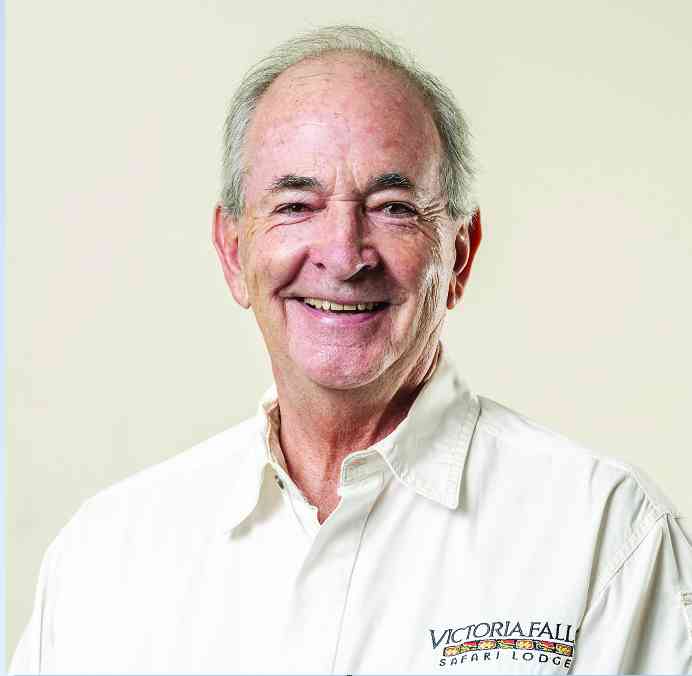
The opening will feature remarks from renowned heritage advocate and author Jonathan Waters, whose work focuses on history, place, and built environments. His participation underscores the project’s commitment to informed public discourse around Zimbabwe’s heritage.
The exhibition is curated by Rodney Badza, whose practice bridges visual art, memory, and public space.
“The title Silent Walls reflects not only the physical stillness of ageing buildings, but the deeper silence caused by erasure and neglect. Through photography, we attempt to reawaken those voices, reminding us that buildings, just as people, carry memory long after the crowd has left,” Badza added.
While visually led by Mutamba, the exhibition is a deeply collaborative effort, bringing together historians, curators, corporate partners, civil society, and cultural institutions, including creative consultant Tonderai Adam.
A national travelling exhibition is planned, with confirmed visits to Bulawayo, Masvingo, Gweru, Mutare, and Victoria Falls. Additional cities and venues will be announced progressively as confirmations are finalised.
The tour will include public engagements that will build towards the project’s pinnacle: the launch of a comprehensive national architectural catalogue in November during the Harare International Literature Festival.
Mutamba revealed that Silent Walls is a thematic evolution from his earlier 2016 exhibition titled Silent Voices, which he exhibited at the Harare International Festival of the Arts.
Both projects are rooted in an exploration of silence as a consequence of neglect, erasure, or marginalisation. His earlier work focused on people and unheard narratives, while this new work extends that inquiry to “physical spaces, buildings that once embodied power, resistance, pain, and hope”.
Looking beyond 2026, Mutamba’s vision is expansive. He envisions the project as a scalable model for other African countries, demonstrating how photography, research, and public engagement can work together to create living archives of architectural memory.
“The ultimate goal is a pan-African publication that connects local histories through shared preservation practices, grounded in regional expertise while contributing to a continental narrative,” he said.