Artificial Intelligence (AI) has become the phrase of our times. It is whispered in boardrooms, shouted in political speeches, and debated endlessly in universities. Yet, for all the excitement, something is unsettling about the way it is presented. The “artificial” side of AI is not just about machines mimicking human thought; it is about the way society is being asked to accept a new order without fully questioning its foundations.
We are told that AI will revolutionise everything: health care, education, agriculture, and even the way we fall in love. But behind the glossy promises lies a more complicated reality. The artificial side is not simply about algorithms and codes; it is about the narratives, the hype, and the power structures that shape how AI enters our lives.
In Zimbabwe, as in much of Africa, AI is spoken of as a silver bullet for development. Politicians and consultants alike promise that it will leapfrog us past decades of underinvestment in infrastructure. Yet, technology rarely solves social problems without deep institutional reform. AI cannot fix broken governance, nor can it substitute for political will. It can only amplify what already exists. If corruption is entrenched, AI risks entrenching it further.
Consider education. We are told that AI tutors will democratise learning, offering personalised lessons to every child. It sounds noble. But the artificial side of this promise is that it ignores the lived reality of rural schools without electricity, let alone internet access. What good is an AI tutor when a child has no desk, and no textbooks?
The danger is that AI becomes a distraction, a shiny object that allows policymakers to avoid the harder, messier work of reforming the basics.
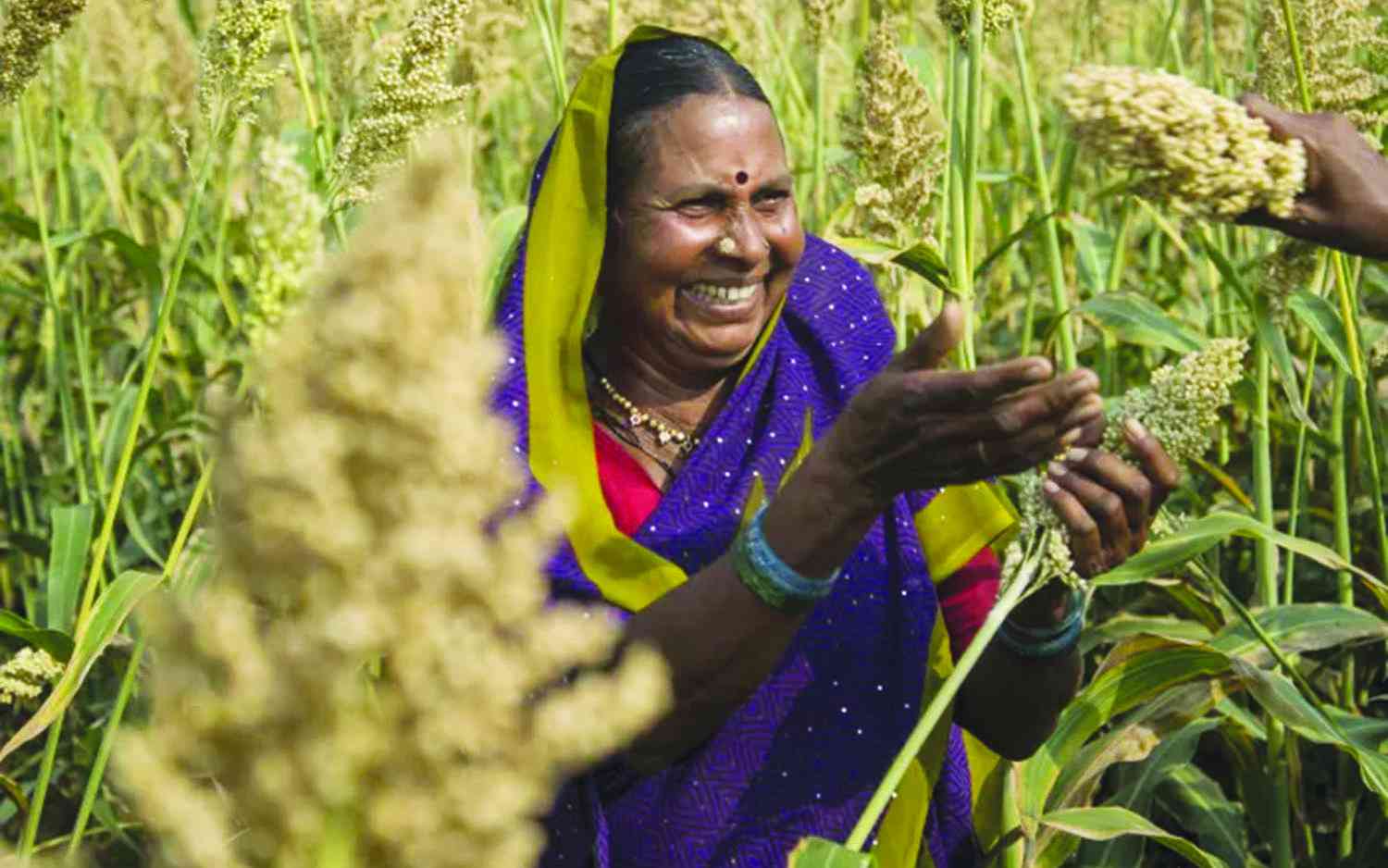
The same applies to agriculture. AI-driven drones and predictive analytics are hailed as the future of farming. Yet, it has been recently argued that technology often benefits large-scale commercial farms first, leaving smallholders behind. In Zimbabwe, where small-scale farmers form the backbone of food production, the artificial side of AI is that it risks widening inequality. Those with capital will harness it; those without will be left further behind.
There is also the question of culture. AI is often presented as neutral, as if it simply reflects data. But data is never neutral. It carries the biases of those who collect it, and the assumptions of those who design the systems.
When AI tools are imported wholesale from Silicon Valley, they bring with them cultural assumptions that may not fit our context. A chatbot designed in California may not understand the nuances of Shona idioms or Ndebele proverbs. The artificial side of AI is that it pretends to be universal, when in fact it is deeply parochial.
- Open letter to President Mnangagwa
- Feature: ‘It’s worse right now than under Mugabe’: Sikhala pays the price of opposition in solitary cell
- Masvingo turns down fire tender deal
- Human-wildlife conflict drive African wild dogs to extinction
Keep Reading
This is not to say AI has no potential. It does. Used wisely, it could help doctors diagnose illnesses faster, assist teachers in marking, and give farmers better weather forecasts. But the keyword is “wisely”.
The artificial side emerges when we treat AI as inevitable, as if it is a force of nature rather than a human-made tool. We must remember that AI is designed, deployed, and controlled by people. And people have interests.
In Zimbabwe, the conversation about AI must therefore be grounded in ethics and governance. Who owns the data? Who benefits from the systems? Who is accountable when things go wrong? These are not technical questions; they are political ones. As observed in a recent editorial, the real debate about AI is not about machines, but about power.
The artificial side also lies in the language we use. We speak of “intelligence” as if machines truly think. They do not. They calculate, they predict, they simulate. But they do not dream, they do not feel, they do not imagine.
To call this “intelligence” is itself a sleight of hand, a rhetorical trick that makes us forget the limits of the technology. There is a risk here. If we overstate what AI can do, we may understate what humans must still do. We may begin to outsource judgment, creativity, and empathy to systems that cannot truly embody them.
Already, some universities are debating whether students should be allowed to submit essays written with AI assistance. But what is education if not the cultivation of human thought? The artificial side of AI is that it tempts us to replace thinking with typing, reflection with automation.
Zimbabwe’s media has a role to play here. Too often, coverage of AI is breathless, repeating the claims of tech companies without scrutiny.
We need journalism that asks harder questions: Who profits? Who loses? What are the unintended consequences? Technology reporting must move beyond gadget worship to social analysis. There is also a generational dimension.
Young people are growing up in a world where AI is normalised. They use it to write poems, to edit photos, to generate music. For them, the artificial side may not feel artificial at all. It may feel natural. But this raises deeper questions about identity and creativity. If a teenager writes a song with AI, whose song is it? If an artist paints with AI assistance, whose art is it? The boundaries blur, and with them our sense of authorship.
In Zimbabwe, where art and culture have long been tied to resistance and identity, this matters. AI could become a tool of liberation, allowing new voices to emerge. But it could also become a tool of homogenisation, flattening our unique expressions into global templates. The artificial side is that it risks erasing the very diversity it claims to celebrate.
So, where does this leave us? Perhaps with a more sober view. AI is neither saviour nor villain. It is a tool, powerful but limited. The danger lies not in the technology itself, but in the stories we tell about it. If we tell stories of inevitability, we surrender agency. If we tell stories of empowerment, we retain it.
Zimbabwe must craft its own narrative. We must resist the temptation to import wholesale the discourses of Silicon Valley. We must ask: What does AI mean for our schools, our farms, our hospitals, our culture? And we must answer in our own terms, not in borrowed ones.
The artificial side of AI is that it seduces us with promises while hiding the costs. It dazzles us with speed while distracting us from substance. It offers us shortcuts while demanding that we ignore context. To see through this, we need critical thinking, ethical governance, and a commitment to human dignity.
The future of AI will be decided not by machines but by people. The same is true here. Zimbabwe’s future with AI will be shaped not by algorithms but by choices, choices about equity, accountability, and culture. Artificial Intelligence may be the buzzword of the decade, but it is the artificial side we must watch most closely. For in that side lies the risk of forgetting what truly matters: the human.
Dr Sagomba is a doctor of philosophy and chartered marketer (CMktr, FCIM) with an MPhil and PhD in Philosophy. He specialises in AI, ethics, and policy research, and is an AI governance and policy consultant. He is also a master’s and PhD supervisor, as well as AI ethics and governance lecturer. — [email protected]/ LinkedIn; @ Dr. Evans Sagomba/ X: @esagomba