
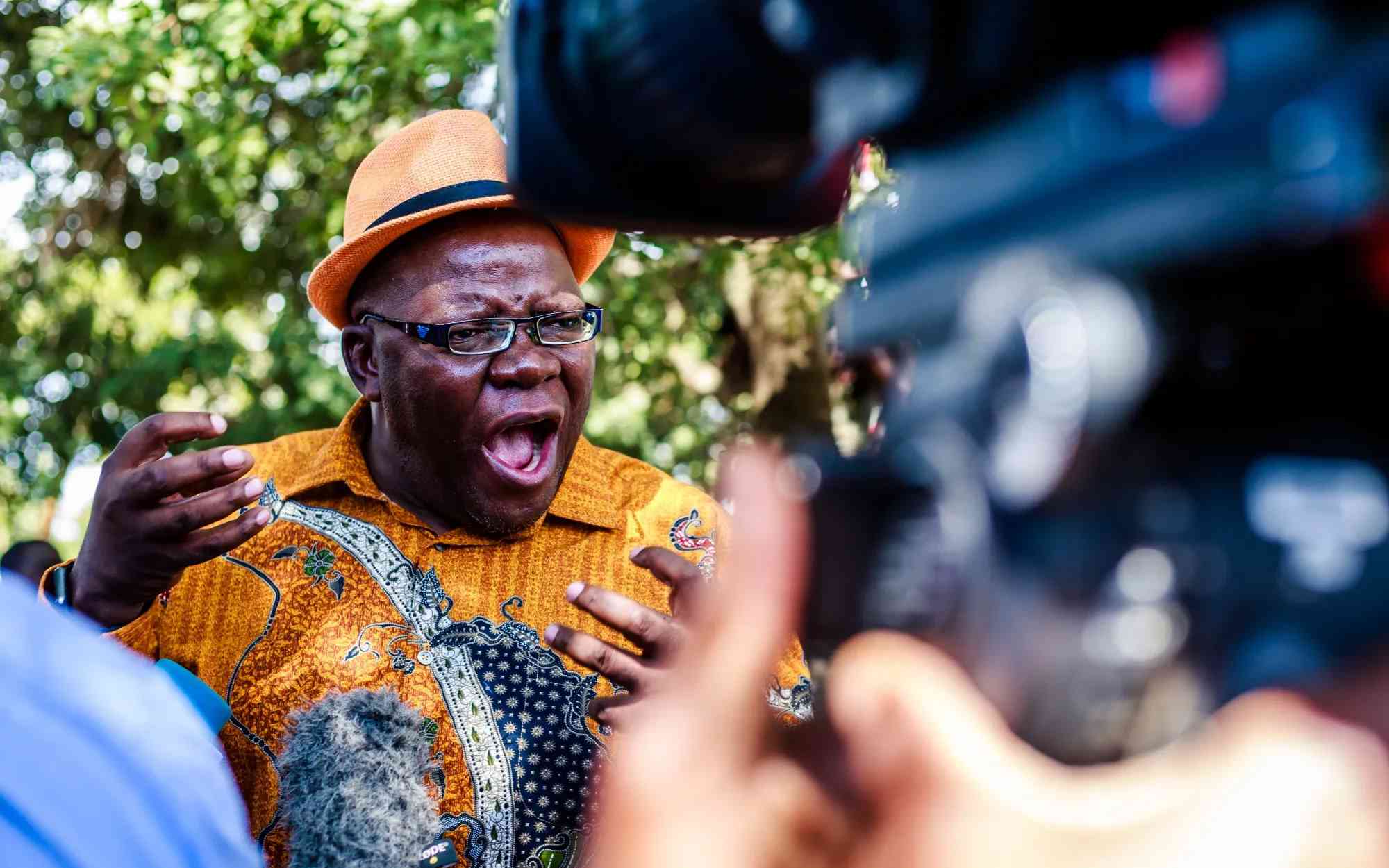
Tendai Biti’s lecture, and his subsequent arrest in Mutare last week reminded us that defending the constitution is never simply about law.
It is about reclaiming agency in a polity that thrives on erasure, about refusing to allow sovereignty to be hollowed out under the guise of legality. Renewal, in this sense, is the transformation of resistance into lived practice, the conversion of defiance into constructive energy. It demands that the constitution be recognised not merely as a shield against authoritarian drift but as the foundation upon which democratic rebirth can be built.
To speak of renewal is to insist that vigilance must evolve into institution-building, protest must mature into civic education, and defiance must be translated into alliances across civil society, academia, and grassroots movements. Renewal is the refusal to concede that the constitution is a relic.
It is the insistence that it remains a living covenant, capable of anchoring accountability and enabling democratic possibility. In this moment, renewal is not optional. It is the generational duty to transform resistance into reconstruction, to ensure that the constitution becomes not only the battlefield of survival but the architecture of a democratic future.
Biti’s intervention was unambiguous.
“Defending the constitution is defending ourselves, our right to assemble, to speak, to resist arbitrary rule.”
Renewal demands that this truth be carried beyond rhetoric into lived practice. It requires citizens to challenge unconstitutional amendments in courts and public forums, refusing to legitimise the slow-motion coup of constitutional vandalism. It requires the mobilisation of civic education so that every Zimbabwean, from township to village, understands both their rights and their responsibilities, recognising the constitution as the architecture of their sovereignty.
Renewal insists on forging alliances across civil society, academia, grassroots movements, and faith communities, building a united front that transcends factional divides. It demands collaboration with the media to amplify voices, expose abuses, and keep constitutional defence at the centre of public discourse, ensuring that silence does not become complicity.
- ED’s influence will take generations to erase
- ‘Govt spineless on wetland land barons’
- Govt under attack over banks lending ban
- Zim Constitution must be amended
Keep Reading
Renewal, then, is praxis: the daily work of reclaiming sovereignty from those who seek to hollow it out, the disciplined refusal to surrender agency in a polity that thrives on erasure.
It is the transformation of resistance into reconstruction, the insistence that the constitution must become not only a shield against authoritarian drift but the foundation for democratic rebirth. Renewal is the generational duty to defend dignity, to insist on accountability, and to affirm that the future belongs to those who refuse silence.
For Gen Z and millennials, renewal is inseparable from responsibility.
It is not a posture but a generational covenant. The constitution, for us, is not an abstract text consigned to dusty archives.
It is the living framework through which accountability is demanded, and resistance is organised. To defend the constitution is to defend the future, to insist that sovereignty cannot be mortgaged to incumbency or hollowed out by authoritarian drift. Renewal, therefore, requires more than defiance.
It demands the institutionalisation of our generational ethos of transparency, accountability, and refusal. It calls for civic movements that cannot be co-opted, silenced, or reduced to ritual, movements that embody vigilance in practice and translate resistance into durable structures of agency.
This renewal is the work of transforming protest into praxis, of embedding our ethos into institutions that endure beyond the moment of crisis. It is the disciplined refusal to surrender the architecture of sovereignty, the insistence that our generation must be the custodians of democratic rebirth. Renewal is not simply about defending what exists; it is about reconstructing what has been vandalised, ensuring that the constitution becomes not only a shield against authoritarian drift but the foundation upon which a democratic future can be built.
Across Africa, constitutions have been systematically rewritten to perpetuate incumbency. Uganda’s removal of term limits, Rwanda’s extension of the presidential tenure, and similar manoeuvres elsewhere reveal a continental strategy of constitutional capture. Zimbabwe’s struggle is thus not an anomaly but part of this wider pattern in which legality is hollowed out, and sovereignty is bent into the service of power, yet renewal demands that we refuse to be spectators in this slow-motion coup against freedom.
Biti’s insistence on vigilance offers a counter-narrative that resists resignation.
Constitutions are not inert texts but living covenants, capable of defending themselves only when citizens act. Resistance, in this sense, is both national and regional, both immediate and generational. It is the refusal to concede that authoritarian drift is inevitable, the insistence that the architecture of sovereignty can be reclaimed through vigilance, solidarity, and defiance. Zimbabwe’s struggle, therefore, is inseparable from Africa’s broader fight against constitutional vandalism, a struggle that demands citizens to transform vigilance into praxis and silence into collective renewal.
Biti’s lecture is not simply about the law. It is about renewal, about the reclamation of agency, dignity, and sovereignty in a polity that thrives on erasure. His words and his arrest remind us that the constitution is not a technical document to be interpreted at the convenience of power.
It is the last firewall against authoritarian drift, the architecture of our collective freedom. To defend it is to defend ourselves, to insist that citizenship is not a privilege bestowed by the state but the irreducible right of the people. Renewal, therefore, is more than preservation. It is the generational duty to transform resistance into reconstruction, to ensure that the constitution becomes not only a shield against arbitrary rule but the foundation for democratic rebirth.
To renew is to refuse silence, to insist that sovereignty cannot be mortgaged to incumbency, and to affirm that the future belongs to those who act. Zimbabweans must recognise that the constitution is our covenant, our shield, our battlefield, the terrain upon which dignity is defended and freedom reclaimed.
To defend it is to defend ourselves; to renew it is to defend the possibility of a democratic future, a future in which the people’s agency is not erased but institutionalised, not silenced but amplified. Renewal is the disciplined refusal to surrender, the insistence that democracy is not a relic but a living covenant, and that its defence is inseparable from the defence of our humanity.
Muzengeza is an independent journalist, political risk analyst and urban strategist offering incisive insight on urban planning, infrastructure, leadership succession, and governance reform across Africa’s evolving post-liberation and urban landscapes.