
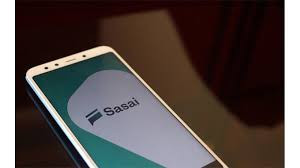
SASAI is back. It is just not called Sasai anymore. EcoCash launched what it is calling Zimbabwe’s first all-in-one super app on April 23, and the feature list is genuinely ambitious: payments, chat, bill splitting, content monetisation, stablecoin remittances through a new partnership with Circle, and an AI layer still being built.
Nobody in the announcement mentioned that the app was developed by Sasai Fintech, the same unit of Cassava Technologies that launched exactly this product, under a different name, seven years ago. That omission is not a detail. It is the whole story.
Why everyone keeps pointing at China
Talk to anyone building a digital platform in Africa and they will eventually say the word WeChat. Strive Masiyiwa said it. Elon Musk said it when he bought Twitter in 2022. It has become the shorthand for a particular ambition: the everything app, the one interface where you live your digital life.
WeChat earns the reference. Launched by Tencent in January 2011 as a basic messaging tool, it now has roughly 1,43 billion monthly active users and processes an estimated US$15 trillion in payments a year. It handled 100 million registered users within 14 months of launch and 500 million monthly active users by the end of 2014. Within three years, it was no longer a chat app. It was the operating system of daily life in China: restaurant bookings, government services, red-envelope gifting at Lunar New Year, taxi rides, hospital appointments, none of it requiring you to leave the app.
But here is the part that always gets left out of the WeChat story. China had blocked Facebook and Google by 2010. WeChat did not beat foreign competition. It walked into a field cleared of it. Russia’s VK is running the same play right now, positioning itself as a state-backed super app in a market where the government has made it very difficult to use Western alternatives. Neither of these is a story about product genius catching lightning. It is a story about building inside a bottle with the lid screwed on from the outside.
Africa has no such bottle. WhatsApp has hundreds of millions of users across the continent and no government has blocked it. Every African super app attempt has had to go head-to-head with a platform that has global engineering resources, global network effects, and a decade-long head start in most of these markets.
That is the structural problem EcoCash is walking into, as Sasai did, as Vodacom’s VodaPay did, as every telco-backed African super app attempt before them did. A 2021 survey of the continent’s super app landscape found not a single player that had achieved anything close to WeChat-style cross-vertical dominance. M-Pesa is the closest thing Africa has to a genuinely scaled digital financial platform, and M-Pesa is a payments service, not a super app.
- Young vocalist making southern Africa dance
- Letter from America: Visiting with the saints in Masvingo
- Police admit that money changers are untouchable
- EcoCash unveils ‘request money’ service
Keep Reading
The Sasai question
Cassava Fintech International launched Sasai on July 24, 2019 with an ambition that was entirely unambiguous: a WeChat of Africa, eight markets by March 2020, chat plus payments plus commerce, all in one place. Read that 2019 press release alongside the EcoCash Super App announcement from last week and you will find the same sentences in a different order. Social payments. Content monetisation. QR-code merchants. AI-driven credit. Peer-to-peer transfers without leaving a conversation. The pitch is identical because the product is the same product.
The Sasai launch did not go well. Before it had found its feet, a Zimbabwean entrepreneur named Artwell Makumbe had gone public with a claim that Econet had lifted both the concept and the name from him, after he pitched Sasai to the company in 2015, got a meeting with senior executives, and delivered a full presentation to the commercial team. The lawsuit threat never materialised into a court case, but the story ran everywhere and coloured how people received the app. Then Econet began texting its entire subscriber base about Sasai at a volume that forced the Postal and Telecommunications Regulatory Authority of Zimbabwe (Potraz) to intervene. It was the kind of promotional desperation that tells you more about internal pressure than it does about product confidence. Within months the app had roughly 100 000 downloads, a negligible number for something being positioned as a pan-African platform.
By November 2021, when Econet rebranded its technology businesses under Cassava Technologies, Sasai was still being described as the group’s super app, with a projection of 75 million users across Africa by 2025.
That target was not met. No updated figure has been offered. What has changed is the language on Sasai Fintech’s own website, which now describes the platform as a white-label social payments architecture available for operators to deploy under their own brand. The EcoCash Super App is that proposition made real. The Sasai platform, redeployed under a brand with genuine mass adoption, in the one market where Econet has always had the structural conditions to make it work.
And there is something else. Shortly after the launch, a claim circulated that users who signed up for the EcoCash Super App received their confirmation email from a Sasai domain, not an EcoCash one. This piece could not verify that through a primary source or screenshot. But it is entirely plausible. Sasai Fintech’s Cassava Remit platform already hosts EcoCash sign-up pages on sasai.com, and one page states explicitly that you need a Sasai account before you can open an EcoCash wallet. If the authentication infrastructure and email servers are Sasai’s, a confirmation email from a Sasai address is not a mistake. It is the backend revealing itself. Call it an accidental honesty about what this product actually is.
Why it might actually work this time
Here is what the cynicism misses. The use cases EcoCash is building for are not abstract. They are drawn directly from how Zimbabweans already live and transact.
Think about how money moves in this economy. A transport group on WhatsApp. A mukando circle coordinating contributions. A school run pool. A market trader managing orders from fifteen different customers. Right now, someone in each of those groups has to leave the conversation, open EcoCash, make the transfer, screenshot the confirmation, come back to WhatsApp and post it. That is four steps and two apps for a transaction that should take seconds. The EcoCash Super App collapses that into one. That is not a feature ported from Silicon Valley. That is someone who has actually looked at how money moves in Zimbabwe.
The creator monetisation play is the same logic applied to a different problem. Zimbabwe’s digital creators, comedians, musicians, commentators, small traders, currently rely on YouTube and TikTok, which pay in foreign currency that is difficult to access in Zimbabwe, or on informal arrangements with no protection. An EcoCash wallet receiving payments directly from a local audience, without a foreign intermediary taking a cut in a currency you cannot easily spend, is a genuinely better arrangement for a lot of people.
The remittance piece is where the real money is. Zimbabwe’s diaspora sent home an estimated US$1,9 billion in just the first nine months of 2024, accounting for 25% of the country’s total foreign currency earnings, according to Finance minister Mthuli Ncube’s November 2024 budget presentation to Parliament. That corridor runs through expensive and slow traditional channels. A stablecoin route that settles directly into an EcoCash wallet, bypassing correspondent banking fees and exchange rate exposure, would reshape how diaspora money enters Zimbabwe. EcoCash is not an untested infrastructure play here. In its first six years, it processed over US$23 billion in transactions, at a time when Zimbabwe’s entire gross domestic product (GDP) was roughly US$16 billion. The pipes exist.
And none of those other African super app attempts launched with what EcoCash already has: more than eight million registered accounts in a country of 15 million people, and a 99,8% peak share of the mobile money market. This is not a product asking people to trust it. It is asking people it already has a financial relationship with to do more inside an app they already open.
So, what is this, really?
It is Econet Group doing what it probably should have done in 2019: stop trying to build a WeChat of Africa from scratch and start building a better EcoCash. The continental ambition was always the weakest part of the Sasai pitch. Econet does not have a mobile network in Nigeria or South Africa. It cannot bundle airtime and mobile money in Nairobi or Johannesburg the way it can in Harare. The infrastructure advantage that made EcoCash work does not travel. What does travel is the technology platform. And what has changed is that instead of asking people to download a new app called Sasai, they are asking existing EcoCash users to update an app they already have.
WeChat succeeded because it had no WhatsApp. EcoCash has WhatsApp, and so does everyone using it. The question is not whether the EcoCash Super App can out-do WeChat. The question is whether it can do enough things better than WhatsApp, inside the specific economic reality of Zimbabwe, that people start reaching for it first. Bill splitting in a group chat. A creator getting paid by their audience. A mother receiving money from her daughter in the UK without losing a third of it to fees.
That is a narrower ambition than a WeChat of Africa. It is also an honest one. And after seven years of trying to build something continental, honest might be exactly what this needed to be.
Muhamba is a business analyst, market researcher and the AMH Group chair’s executive assistant. — [email protected]