I am cautious about offering my opinions too quickly, perhaps a discipline honed by years of doctoral training, where one learns that premature certainty is often the enemy of rigorous thought. Yet there are moments when restraint must give way to responsibility. Africa’s current political moment is one of them.
For decades, a question has hovered, sometimes whispered, sometimes shouted, over the continent: Are authoritarian regimes the answer to Africa’s enduring crises?
Put differently, and perhaps more provocatively: Does liberal democracy, as inherited from Western political tradition, genuinely serve African interests? At stake here is not democracy as an ideal, but the assumption that political forms developed elsewhere, under vastly different historical and socio-economic conditions, can be universally transplanted without consequence.
Africa’s crisis, in this sense, is not a rejection of democratic principles, but a reckoning with democratic models detached from socio-economic sovereignty and historical reality. These questions have acquired new urgency with the resurgence of military-led governments following coups d’état, particularly in the Sahel.
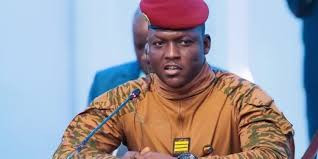
The most striking example is the government led by Ibrahim Traoré in Burkina Faso. Similar political trajectories have unfolded in Mali and Niger, culminating in the formation of the Alliance of Sahel States (AES), a military-led mutual defence pact established in 2023 and 2024.
The bloc seeks to combat jihadist insurgencies, pursue economic integration and decisively sever ties with the West, including withdrawal from the Economic Community of West African States.
The rise of these coup-born regimes has been met with sharply divided reactions. On one hand, there is a growing sentiment, both within Africa and across the diaspora, that this is precisely the rupture the continent has long needed. For its proponents, military governments represent a long overdue assertion of sovereignty and self-determination: A rejection of imperialism and its modern reincarnation, which continues to centre Europe and North America at Africa’s expense.
On the other hand, the dominant global response, particularly among Western governments, media houses, scholars and political commentators, has been outright condemnation.
- Inside sport: Is Dynamos a community team?
- Inside sport: Is Dynamos a community team?
- Burkina Faso unrest: Military officers remove leader Damiba
- Foreign-based Imbube singer speaks on solo project
Keep Reading
Coups, we are told, have no place in the “modern” world. Yet this opposition is hardly neutral. The AES’s explicit aim to delink from Western influence challenges a historical and ongoing relationship that has been profoundly extractive. From mineral concession regimes to security partnerships and monetary arrangements such as the Communauté Financière Africaine franc system, Western engagement has too often enriched the centre while immiserating the periphery.
It is, therefore, unsurprising that a project threatening this arrangement is framed as dangerous or illegitimate.
This tension was illustrated starkly when Michael Langley, commander of the United States Africa Command, accused Burkina Faso’s interim leader of misusing the country’s gold reserves to secure his military government rather than advance national development.
The accusation is telling, not merely for what it alleges, but for what it reveals about who is presumed entitled to define legitimate governance and resource use in Africa. With this context established, we return to the core question: Are authoritarian regimes the way forward for Africa?
The issue has become especially salient following Traoré’s decision to ban opposition political parties in Burkina Faso, an act that strikes at the heart of liberal democratic doctrine. In the western political imagination, shaped since the fall of the Berlin Wall, democracy has been elevated as the ultimate and universally applicable system of governance. But the real question is not whether democracy is ideal in theory; it is whether it is viable, and valuable, in the African context as currently constituted.
The honest answer is both no and yes. No, because since independence, particularly in the post-1945 era, many African states in search of international legitimacy adopted western style democracy only to witness its repeated failure to deliver on its promises.
Modernity, prosperity, justice and dignity have remained elusive for the majority. Corruption has flourished, institutions remain weak, and doctrines such as the separation of powers have often appeared as imported abstractions rather than lived realities.
The result has been persistent poverty and injustice among the toiling masses. Zimbabwe offers a sobering illustration: Since 2000, elections, central to democratic practice, have been persistently contested, yet have failed to produce meaningful socio-economic transformation.
Yes, because where leaders, particularly founding figures, were willing to relinquish power and invest in institutions rather than personalities, relative stability has endured.
Botswana and Namibia are often cited in this regard but not without caution.
One might also cautiously include South Africa, though its case is far from straightforward. These countries continue to grapple with deep structural inequalities, asymmetrical wealth distribution and economies still tethered to global capitalism’s centre, exporting raw materials much as they did under colonial rule.
For instance, the decline of African National Congress support to about 40% and the need for governments of national unity at national and provincial level due to the unresolved land and wealth distribution question. This brings us to the most contentious issue of all: Was Traoré right to ban opposition parties?
Again, the answer is both yes and no. Yes, because efficiency matters. Western style multiparty democracy in many African contexts has produced paralysis rather than progress.
Endless procedures designed to aggregate majority interests often become arenas for elite competition, patronage and division. The argument that multiparty systems can entrench fragmentation is not without merit.
Where leadership is genuinely developmental, constant political contestation can stall long-term transformation. But here lies the danger, and thus the no. Strong leadership is not the same as strong institutions. Africa’s history shows that confusing the two carries a high price. Banning opposition parties risks planting the seeds of future catastrophe. Charisma is not hereditary, and revolutionary fervour does not automatically institutionalise itself.
When such leaders exit, whether by choice or force, the resulting vacuum can plunge nations into instability, undoing hard-won developmental gains. History, in truth, offers ample evidence for both outcomes.
If Burkina Faso is to persist on this path, it must do so consciously and deliberately, investing not merely in a leader, but in leadership. That means cultivating generations of developmental thinkers who embody the spirit of Thomas Sankara as much as that of Traoré.
Without question, Burkina Faso is fortunate to have a leader willing to confront imperialism not merely in rhetoric but in action.
Yet history also teaches us that such defiance invites retaliation. Capitalist forces rarely relent. Protecting the man, however, is not enough. The true task is protecting the vision, by embedding it in institutions, leadership pipelines and a political culture capable of surviving beyond any single figure.
Otherwise, Africa risks repeating a familiar tragedy: Revolutionary promise cut short, followed by renewed dependency and despair. That is the real dilemma before us, not democracy versus authoritarianism, but whether Africa can finally govern itself on its own terms.
Chikwaza is a final-year doctoral researcher at Dublin City University (DCU) in the School of History and Geography. He previously studied politics and international relations at undergraduate and master’s level. His research interests include decolonial studies, presidential leadership and international development. The views expressed are his own.