
DAVOS matters. It matters because it is one of the few global platforms where capital, policy, technology and geopolitics converge in one place and in real time.
The World Economic Forum (WEF) Annual Meeting is beyond a networking event. It is where supply chains are redesigned, investment theses are refined, and countries compete for attention in a crowded marketplace of ideas, opportunities and influence.
The WEF Annual Meeting 2026, which ran from January 19 to 23 in Davos-Klosters, Switzerland was no different this time around.
Davos 2026 gathered circa 3 000 leaders across sectors, from 130 countries Including 65 heads of state and government, illustrating the level at which global economic and geopolitical issues are now being negotiated.
Among the prominent global figures referenced in WEF coverage and Davos reporting were United States President Donald Trump, Canada’s Prime Minister Mark Carney and China’s Vice-Premier.
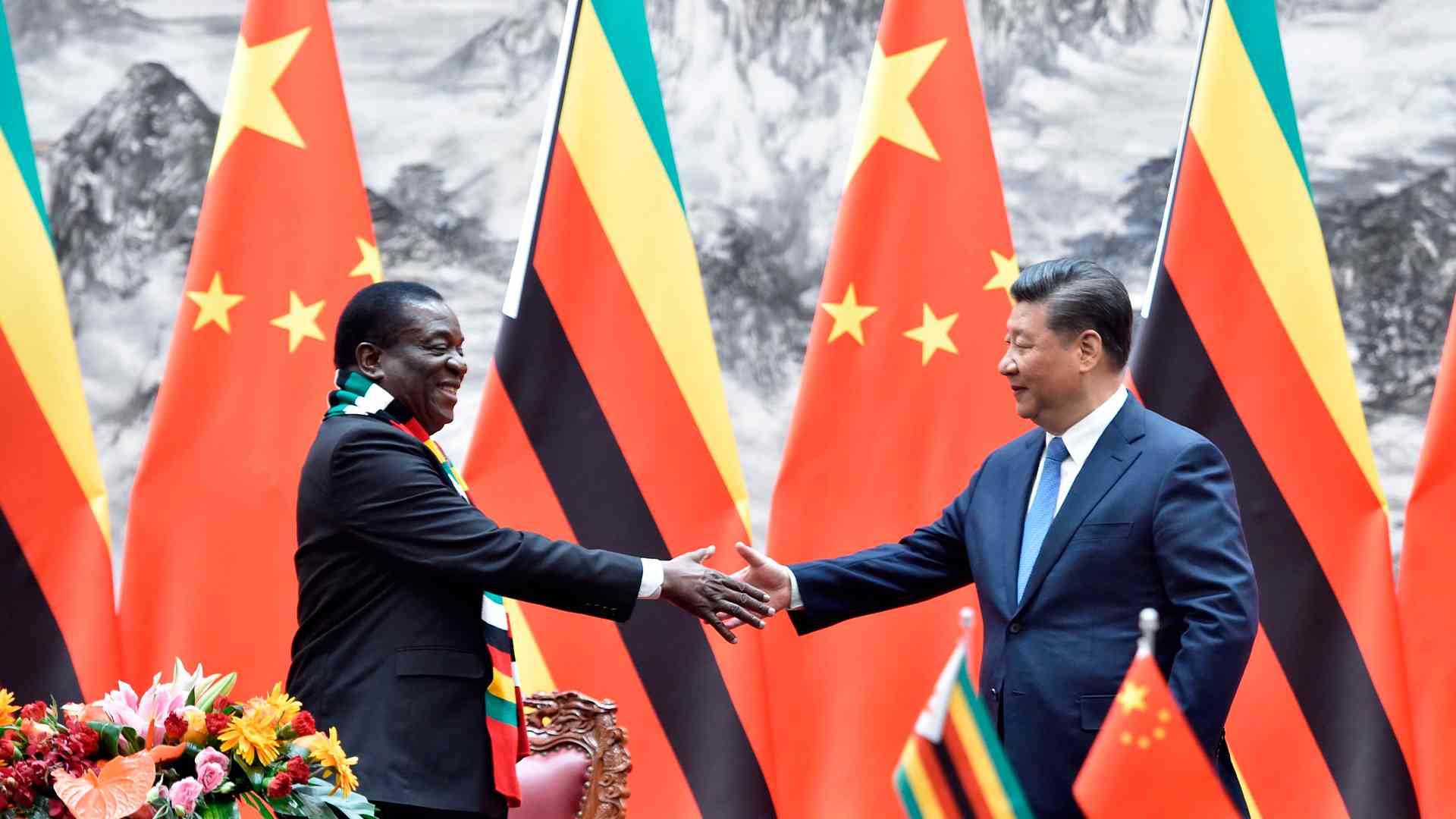
Zimbabwe was present, represented by Finance, Economic Development and Investment Promotion minister Professor Mthuli Ncube. The Zimbabwe Investment and Development Agency (Zida), with CBZ Holdings, among other participants.
Zimbabwe has been attending Davos consistently since 2018. The right question now is, therefore, not whether Zimbabwe should attend Davos. It is whether we can convert Davos visibility into deals, development and durable national advantage.
A plethora of matters were discussed. One of the topical issues that caught my attention was the conversation around critical minerals and this is the central theme of my instalment this week.
- Letter from America: Is former president Donald Trump a hero or villain?
- Chidzivo, Tarakinyu clinch Kabag honours
- Women turn disused mine pits into vegetable gardens
- Letter from America: Is former president Donald Trump a hero or villain?
Keep Reading
Why “critical minerals” dominated
At Davos 2026, the global conversation on critical minerals was shaped by one overriding reality: the clean energy transition is mineral-intensive.
Electric vehicles, renewable power infrastructure, grid storage and advanced electronics all require large volumes of lithium, nickel, cobalt, graphite, manganese and copper, alongside other strategic inputs.
That matters because minerals are no longer treated as a purely extractive sector issue. They sit at the intersection of industrial strategy, trade and national security. The other point repeatedly reinforced at Davos is that “resources are not the prize”.
Value-addition is. The winners will not be those who mine, but those who refine, manufacture, and integrate into resilient value chains.
Across Davos 2026, critical minerals and rare earths featured prominently in discussions about energy security, industrial resilience and the future of manufacturing.
The global transition to electric mobility, renewable energy systems grid storage and advanced electronics is accelerating demand for lithium, nickel, cobalt, graphite, manganese, copper and rare earth elements. These minerals are now viewed as strategic assets.
The dominant theme was clear: the future will be determined by those, who control mineral deposits, as well as the midstream and downstream capabilities that transform rocks into industrial inputs, components and technologies.
Countries with resources but without processing capacity risk being trapped in the lower end of the value chain, exporting raw materials while importing expensive finished products.
Another defining Davos theme was supply chain concentration risk. Major economies are increasingly uncomfortable with overdependence on a few jurisdictions for critical mineral processing and refining. This is driving aggressive investment into alternative sources, “friend-shoring” strategies, and new standards around ESG compliance, traceability and responsible sourcing.
For Africa, Davos 2026 carried a dual message; the continent has leverage because it holds significant mineral endowment, but leverage will only translate into prosperity if it is backed by coherent policy, credible institutions, investable projects and skills.
So, how relevant is Davos to Zimbabwe. Minerals, yes, but also credibility and value-addition. Zimbabwe does not need Davos to remind us that we are mineral-rich.
What Davos does is to remind us that the world’s interest is shifting from “who has the rocks” to “who can produce reliable supply, at scale, to acceptable standards, and with investable stability”.
Zimbabwe’s challenge is simple to state, but difficult to execute by way of moving up the value chain. That requires us to go beyond ambition. It requires coherence.
It requires energy, water, logistics, policy discipline and human capital. This is where a mineral opportunity becomes a governance test. This matters for Zimbabwe because the decisions that influence capital flows, standards, tariffs, industrial policy and supply chain partnerships are increasingly shaped in these spaces.
It is important to be clear of what “success” should look like. Zimbabwe should measure Davos outcomes in practical terms.
Firstly, investable deal flow: Davos is where investors test seriousness. For Zimbabwe, that means arriving with clear project pipelines, credible regulatory messaging and a delivery mechanism after the conference week.
Secondly, the right partnerships: Mining alone does not industrialise a country. Davos should be used to connect mining opportunities to energy, infrastructure, technology and manufacturing partners.
The third outcome should make it abundantly clear that, reputation and confidence are imperative and must be at the core any success matrix. Zimbabwe competes for capital against many countries.
The objective is to steadily reduce perceived risk through consistent policy signals and predictable implementation. My hope is that the delegation that went to Davos had a robust communication and branding machinery that can package the Zimbabwe’s narrative and distribute it with military precision.
Until the lion tells its story, the hunter will always be glorified. Zimbabwe may have a great game plan, but if it cannot tell its narrative beyond curated panel and plenary sessions, the real message may have been buried under the avalanche of well well-choreographed messages from elsewhere.
In a world where capital has choices, narrative becomes an economic tool. Zimbabwe’s presence must continue to steadily communicate reform intent, investability and industrial seriousness.
CNBC Africa coverage from Davos framed Zimbabwe’s story around investment attraction and the role of critical minerals in driving investor interest, reinforcing the centrality of the minerals narrative to Zimbabwe’s current positioning.
Davos should not be judged by photos, headlines or delegation size. After all, has been said and done, the success of Zimbabwe’s expedition in Davos should be looked at through a policy lens.
Policy is what Zimbabwe must tighten to win. The minerals opportunity will not deliver broad-based prosperity by default. It delivers value when policy is designed for value-creation, not just extraction.
What validate the Resource Curse Theory on the African continent more than any other factors is a moribund policy approach and posture. Three policy areas that require attention from those in authority stand out:
l Policy sequencing over policy excitement: Export restrictions and beneficiation targets can be directionally correct, but if they are not matched by power availability, processing capacity and bankable industrial infrastructure, they simply raise uncertainty;
l Infrastructure as industrial policy: Without reliable power, water and logistics, value-addition remains a speech, not a strategy. Zimbabwe’s minerals agenda must be integrated into long-term infrastructure planning, including industrial hubs that can crowd-in private capital; and
l Standards and traceability: Global buyers increasingly demand proof of responsible sourcing, ESG compliance and traceability. That means Zimbabwe must invest in compliance capability, data systems and credible enforcement.
Zimbabwe must go beyond presence to performance. Zimbabwe’s presence at Davos 2026 was the right strategic move. But Davos only has value when it translates into outcomes.
Critical minerals were clearly part of Davos 2026 discussions, including WEF-led framing on innovation, supply chains and the geopolitical realities of materials.
Now, Zimbabwe must do the harder work: build policy credibility, unlock infrastructure, upgrade skills, and use global platforms to convert attention into industry. Minerals are an opportunity. Execution is the differentiator and coherent narrative is the glue.
Mambure is a business leader and public policy scholar. He is a chartered marketer and fellow of the CIM (UK)and holds an MBA, Master in Public Policy and Government and an MSc in Marketing. — [email protected].