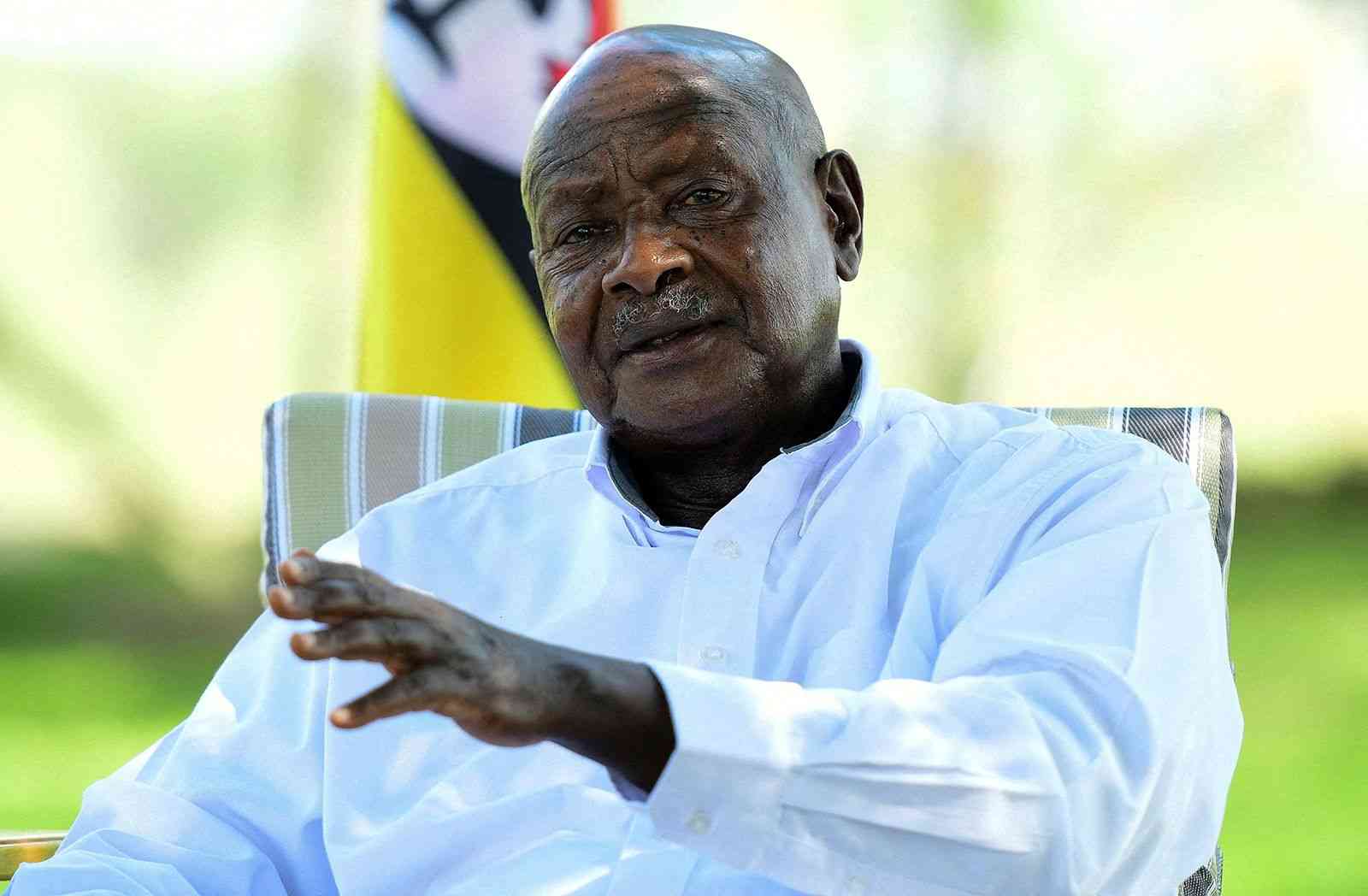
YOWERI Museveni’s seventh term as Uganda’s president, secured with a declared 71,65% of the vote, is not a democratic triumph but a tragic reaffirmation of Africa’s descent into electoral theatre.
To call this an election is to desecrate the very concept of democracy. What unfolded in January 2026 was not a contest of ideas, not a reckoning of public will, but a ritual of domination: A meticulously staged performance designed to simulate legitimacy while extinguishing dissent.
This was not merely a political event; it was a moral collapse. The abduction of the main opposition leader by military forces during the vote was not an anomaly but a feature of the system, and yet, the silence that followed was deafening.
The African Union, the East African Community, and international observers stood by in complicit silence, their inaction a tacit endorsement of repression.
This is not neutrality; it is betrayal. Betrayal of democratic norms, betrayal of the Ugandan people, and above all, betrayal of Africa’s youth, who have endured six decades of post-colonial stagnation only to find their futures scripted by ageing strongmen clinging to power.
Museveni’s victory is not Uganda’s alone; it is a mirror held up to the continent that reflects a gerontocratic order that has mastered the art of electoral mimicry while hollowing out its substance.
It reveals a regional architecture more invested in stability than justice, more concerned with optics than accountability, and it exposes the global community’s willingness to tolerate authoritarianism so long as it is orderly. This is not just a Ugandan crisis. It is a continental reckoning.
Heroes turned villains
- Open letter to President Mnangagwa
- Feature: ‘It’s worse right now than under Mugabe’: Sikhala pays the price of opposition in solitary cell
- Masvingo turns down fire tender deal
- Human-wildlife conflict drive African wild dogs to extinction
Keep Reading
Museveni is not an aberration; he is emblematic of a wider continental malaise. Across Africa, a generation of gerontocratic rulers clings desperately to power, reshaping constitutions to suit their ambitions, weaponising state institutions to neutralise dissent, and converting the once-noble credentials of liberation into instruments of repression. What was once the language of freedom has curdled into the rhetoric of domination.
The greatest tragedy is that Africa’s youth, now the demographic majority and the continent’s most vital constituency, have done nothing to deserve this betrayal.
They are punished not for failure, but for hope itself: for daring to imagine futures beyond the suffocating grip of men who mistake longevity for legitimacy. For more than six decades since the flag of independence was first raised, young Africans have watched their erstwhile heroes slowly morph into villains.
It is as though they have been following a script written in advance: first, winning legitimacy through struggle; then consolidating power through fear.
Next comes the rewriting of laws to rule indefinitely, and finally, the invocation of sovereignty as a shield — used to silence the very youth whose futures they claim to protect.
This script is not accidental; it is deliberate. It is the choreography of betrayal, repeated across capitals from Kampala to Conakry, from Harare to Yaoundé, and each act of repression deepens the disillusionment of a generation that has inherited broken promises and hollow rituals in place of genuine democracy.
Rubber-stamping repression
The African Union (AU) and its regional counterparts have descended into the role of ritualistic rubber stamps, endorsing fraudulent elections under the guise of preserving “stability”.
In their silence, they do not merely abstain from judgment; they actively confer legitimacy upon illegitimacy. Their refusal to confront Uganda’s electoral theatre is not an act of prudence but of complicity, a betrayal of the very principles they were created to uphold. Institutions designed to safeguard democracy have instead become shields for its violators, offering cover to autocrats while abandoning citizens.
This abdication of responsibility imperils the entire continental project: it hollows out sovereignty, corrodes public trust, and signals to Africa’s youth that their futures can be bartered away in exchange for the false comfort of order. In tolerating repression, the African Union and regional bodies transform themselves from guardians of democracy into accomplices in its undoing.
A continental crisis
Uganda’s election is not an isolated abnormality; it is part of a continental pattern that reveals the slow corrosion of democratic promise. In Tanzania’s 2025 polls, intimidation and civic suppression hollowed out the possibility of genuine competition.
In Guinea, violence and manipulation turned the ballot into a battlefield rather than a forum of choice.
In Côte d’Ivoire, elections exposed a widening generational chasm. Youth disillusionment collided with the entrenched dominance of political elites.
In South Africa, corruption scandals and declining legitimacy have eroded faith in institutions once heralded as continental examples.
These are not disconnected failures; they are symptoms of a system in decay, a choreography of betrayal repeated across capitals, where the ritual of voting masks the reality of authoritarian drift.
If this pattern is to be broken, fundamental change is imperative. Elections must cease to be coronations and recover their essence as genuine contests of ideas and accountability.
Africa’s youth, the demographic majority and the continent’s most vital constituency, must be empowered to lead, not pacified with empty rhetoric. Institutions such as the AU must rediscover their courage and confront illegitimacy rather than endorse it in the name of stability.
The global community must abandon its selective silence, for stability without justice is tyranny disguised as order.
Only by reclaiming accountability, agency, and integrity can Africa’s democratic experiment be rescued from ritualised decay and restored as a vehicle of renewal.
The choice before us
Uganda deserves better. Africa deserves better, and above all, its youth, who have inherited broken promises and stolen futures, deserve leaders who serve, not rulers who cling.
Museveni’s seventh term is not merely Uganda’s tragedy; it is Africa’s warning, a signal flare illuminating the continent’s democratic decay, yet within this darkness lies the continent’s most luminous force: its youth.
Particularly Gen Z, a generation fluent in the language of technology, adept at breaking down digital firewalls, and skilled at exposing the rituals of repression for what they truly are. They do not need guns to resist; their weapons are code, connectivity and creativity.
By decoding propaganda, unveiling manipulation and refusing to be silenced, they can render despotic regimes practically ungovernable, not through violence, but through relentless digital disruption and civic innovation.
The task before Africa’s youth is historic: to reclaim democracy by dismantling the illusions of legitimacy that autocrats stage. To pierce the veil of ritual with truth, to transform silence into resistance, and to insist that sovereignty belongs not to ageing strongmen but to the people.
If the continent’s future is to be secured, it will be through the courage of young Africans who refuse to inherit despair and instead demand renewal.
The choice is stark and unavoidable: renewal or ritual, democracy or domination, and history will not forgive silence, least of all from the generation that holds the keys to Africa’s digital destiny.
Muzengeza is a political risk analyst and urban strategist offering incisive insight on urban planning, infrastructure, leadership succession, and governance reform across Africa’s evolving post-liberation urban landscapes.