THE global economy is experiencing a quiet revolution. Artificial intelligence is no longer a laboratory curiosity or a corporate experiment.
It is rapidly becoming the invisible engine behind finance, manufacturing, healthcare, aviation, logistics, media and even public administration.
Nations that master this transition will accelerate. Those that lag will find themselves purchasing solutions rather than building them, consuming innovation rather than shaping it.
A new question for national recovery
For countries such as Zimbabwe, where economic recovery remains an urgent national ambition, the decisive question may no longer be only about access to capital, mineral wealth or infrastructure.
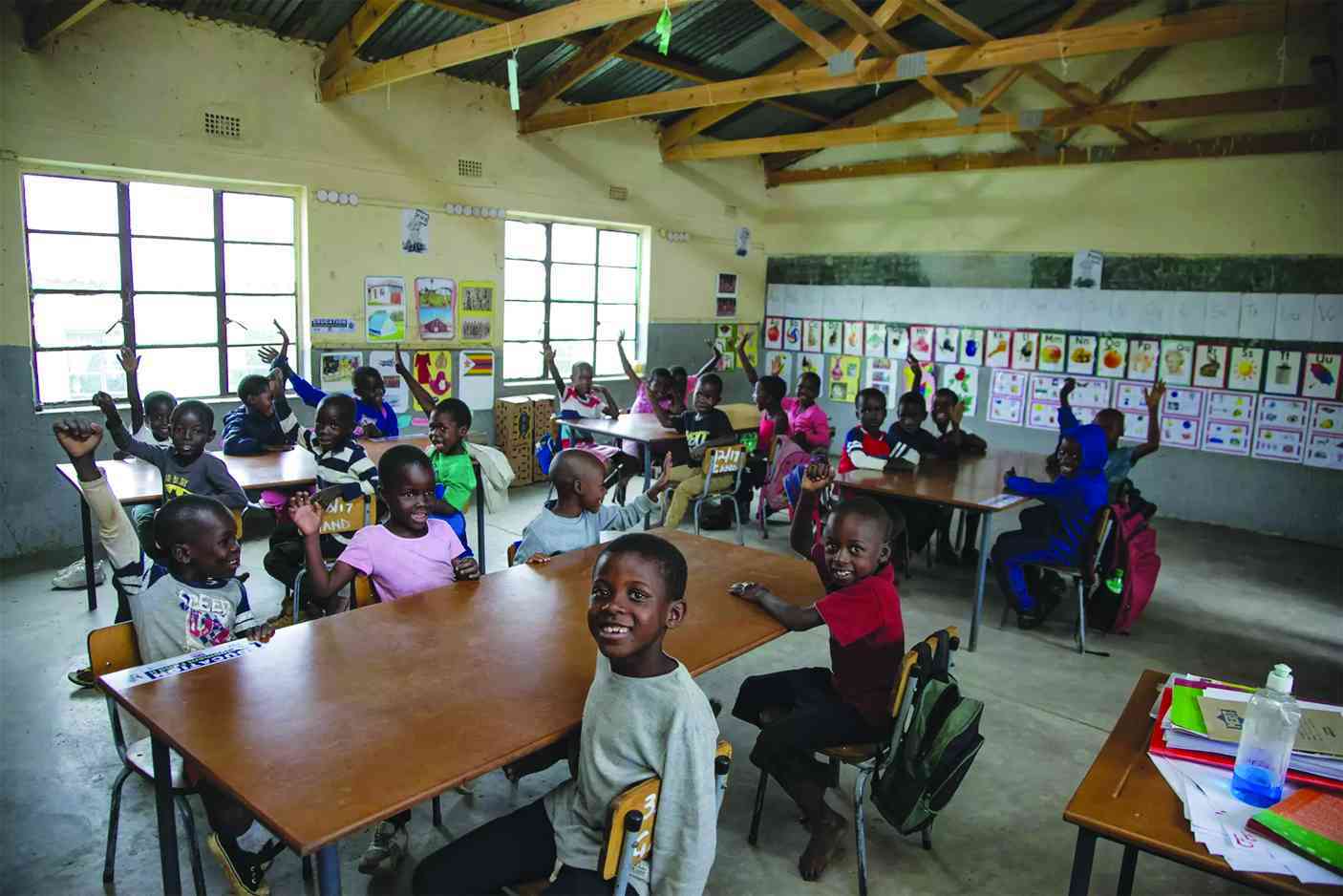
It may instead be about whether our education system is preparing minds for the age now arriving.
A proud legacy built for another era
Zimbabwe has long taken pride in its education legacy. For decades after independence, literacy rates rose, teacher training expanded and schools became symbols of social mobility.
- Mavhunga puts DeMbare into Chibuku quarterfinals
- More woes for suspended Cottco boss
- Bulls to charge into Zimbabwe gold stocks
- Ndiraya concerned as goals dry up
Keep Reading
This foundation remains one of the country’s enduring strengths. Yet the architecture of that system was built for a different era, one where success was measured by mastery of fixed syllabi, memorisation and performance in standardised examinations.
That model served an industrial and administrative economy reasonably well. It is less suited to a world defined by automation, adaptive software and continuous technological disruption.
What the digital economy demands
The emerging digital economy rewards a different set of abilities. It values computational thinking, data interpretation, creative problem solving, collaboration across distance, and the confidence to learn new tools repeatedly throughout life.
It requires graduates who can question, prototype, test and iterate, rather than simply recall. Certificates alone no longer guarantee employability.
What matters is the capacity to think in systems, to work alongside intelligent machines, and to adapt faster than technology changes.
The widening skills gap
This creates a widening skills gap. On one side is a youthful population hungry for opportunity. On the other is a global market increasingly driven by code, data and automation.
Without deliberate intervention, many young Zimbabweans risk being educated for a world that is quietly disappearing while the world that is emerging races ahead.
Visible consequences emerging
The consequences are already visible. Skilled professionals migrate to environments where their talents are better matched to opportunity.
Local companies import software and external expertise rather than building solutions domestically. Public services struggle to modernise because digital capacity is thin.
A nation rich in human potential risks exporting brains while importing technology, a reversal of the value chain that underpins true economic independence.
Technology in education
Yet this story need not end in pessimism. The same technologies creating disruption also offer unprecedented opportunity to rewire education at speed and scale.
Online learning platforms, remote collaboration tools and AI-powered tutoring systems can bring world-class training into any classroom or home with connectivity.
Young people can now acquire advanced technical skills from global institutions without leaving their communities. Diaspora professionals can mentor, teach and invest knowledge back into local ecosystems.
Small teams can build software products for global markets from a laptop and a stable internet connection.
The role of policy, institutions
The role of policy and institutions is to unlock this possibility. Schools need curricula that embed digital literacy early, not as optional extras but as core competencies.
Universities need partnerships with technology companies, incubators and research hubs to expose students to real-world innovation cycles.
Vocational training must evolve to include data skills, automation maintenance and digital design. Teacher training should adopt innovative teaching methods that promote exploration and critical thinking, instead of focusing on memorisation and repetition.
Evolving education
Importantly, this transformation does not demand abandoning foundational education. Literacy, numeracy and discipline remain essential.
The task is to layer modern skills upon a strong base, updating the engine rather than replacing the vehicle. Countries that have successfully leapt into digital economies have done so by evolving education systems, not discarding them.
The prize for Zimbabwe
For Zimbabwe, the prize is significant. A workforce fluent in digital tools attracts foreign investment, strengthens local entrepreneurship and enables participation in global remote work markets.
It allows the country to add value to its resources rather than exporting them raw. It positions young citizens not merely as users of technology but as creators of it.
Bridging the gap
Ultimately, a tech-driven recovery will not be powered by machines alone. It will be powered by people who know how to direct those machines wisely. The minerals beneath our soil matter, but the minds within our classrooms may matter even more.
The gap before us is real, but it is bridgeable. Whether Zimbabwe crosses it will depend on how boldly we reimagine education for the age of intelligent technology now unfolding.
Bangure is a filmmaker. He has extensive ex-perience in both print and electronic media production and management. He is a past chair-person of the National Employment Council of the Printing, Packaging and Newspaper Industry. He has considerable exposure to IT networks and Cloud technologies and is an enthusiastic scholar of artificial intelligence. — naison.bangure@hub- edutech.com