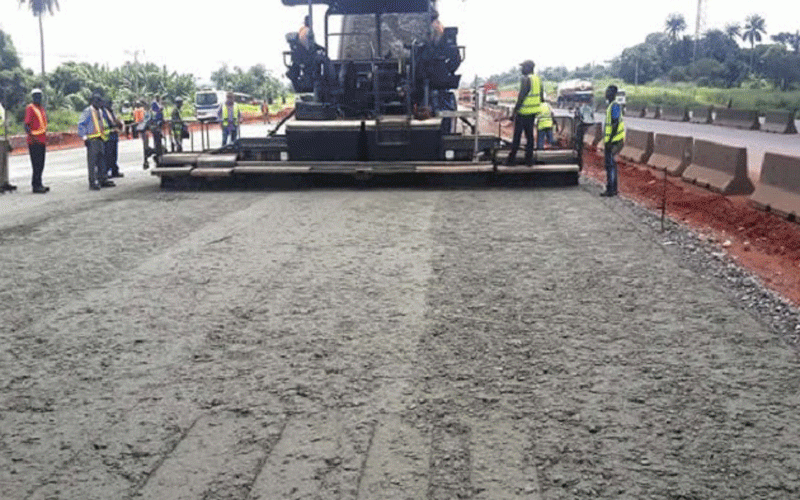
THE December opening of an additional 5,4 kilometres of the Bulawayo-Victoria Falls Highway drew the usual flurry of media hype. But the fanfare masked a far more pressing question: how did an artery of regional significance fall into such disrepair in the first place?
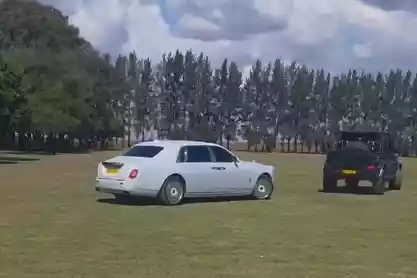
For more than four decades, the government splurged on supercars and luxury SUVs on those seated in the aisles of power.
It neglected the fundamentals. Cars deliver prestige only on well-maintained roads, not on crumbling highways. Vanity was chosen over viability. Our roads paid the price.
Still, on paper, this was progress. The newly-opened stretch pushed the total rehabilitated and opened distance to 37,5 kilometres, roughly the distance from Bulawayo to the Nyamandlovu Tollgate.
After decades of shocking neglect, that is not insignificant. Yet it is far from sufficient to justify premature applause or to award full marks to a blundering administration. Zimbabwe must resist the temptation to clap too early.
This highway is not just another public works project. It is one of the country’s most strategic economic arteries.
It carries tourism, mining output, regional transit traffic and foreign currency earnings. It links Zimbabwe to Zambia and Botswana and feeds directly into Victoria Falls, the jewel in the national tourism crown. When it fails, the damage radiates far beyond potholes.
The urgency with which the government has now moved to fix the road is striking. After years of dithering, sustained pressure, particularly from the tourism industry and road users, forced action.
- AAT adds Vic Falls Spa in post-pandemic strategy
- Feature: Insects, solution to Africa’s malnutrition and food problems
- Old Bulawayo restoration almost complete
- Old Bulawayo restoration almost complete
Keep Reading
The government knows it messed up, badly, on a vital artery and is now scrambling to correct its misdeeds.
That haste, however, is precisely what should worry us.
Zimbabwe has developed a notorious habit. It has rushed major infrastructure projects only to collapse almost immediately after contractors pack up.
Harare’s roads are the clearest evidence. Freshly tarred surfaces degenerate into gullies within months. Drainage is ignored, and shoulders crumble.
Millions are spent revisiting the same roads while vast parts of the country remain untouched.
We cannot afford to turn this highway into another expensive experiment in mediocrity. This road must be built once, properly.
Speed without quality control is dangerous. The ministry supervising this project must not act as a cheerleader. It must be a ruthless enforcer of standards.
Independent testing of materials, drainage integrity, road thickness, load tolerance and workmanship should be non-negotiable. Payments must be tied to verified quality, not political timelines.
The stakes are too high for shortcuts.
Tourism, one of Zimbabwe’s most promising foreign currency earners, depends on road access. Most domestic and regional tourists travel by road. So do logistics firms, miners and cross border traders.
A poorly-executed rehabilitation will collapse under the weight of haulage trucks within a few rainy seasons, dumping us back at square one.