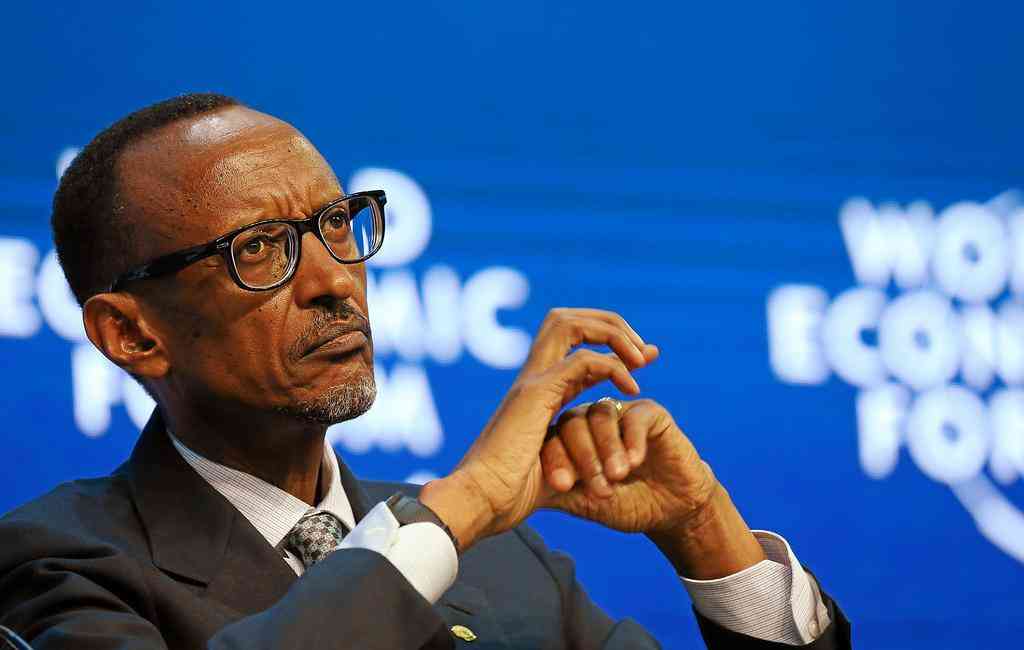
Paul Kagame, now 68, is no longer merely the President of Rwanda; he is its architect, its enforcer, its myth.
His presence permeates every institution, every policy, every metric of Rwanda’s astonishing rise. He is not just at the helm of the state; he is the state.
The economy breathes through his directives, the political culture echoes his discipline and the national psyche reverberates with his legacy. Kagame is not a conventional leader; he is a system unto himself.
But herein lies Rwanda’s existential dilemma: the man is mortal. And systems built around singular figures, no matter how visionary, are inherently brittle. Rwanda’s skyscrapers, smart cities and digitised governance may dazzle the world, but beneath the surface lies a dangerous void.
There is no vice-president. No visible successor. No institutional scaffolding for continuity. This is not strategic ambiguity; it is systemic fragility masquerading as control.
The absence of a succession plan is not a technical oversight; it is a political design. A design that centralises power so completely that the very thought of post-Kagame Rwanda induces anxiety.
The question is no longer whether Kagame has transformed Rwanda; he has. The question is whether Rwanda can transform itself beyond Kagame. Can a nation so meticulously engineered by one man evolve into a republic of institutions, or will it collapse into the chaos of unprepared transition?
This is the paradox that must be confronted, not with reverence, but with rigour. Not with fear, but with foresight. Kagame’s legacy is undeniable. But legacies must be institutionalised, not idolised.
- We were sad to see ED in Rwanda: Ndiweni
- MUCKRAKER: The grapes are sour anyway
- Govt curbs human trafficking
- Rwanda MPs oppose contraceptives for 15 year olds
Keep Reading
Rwanda must now answer the trickiest question of all: Can it survive the departure of its founding genius without becoming a cautionary tale of African autocracy?
From liberation to domination: The architecture of controlled democracy
The Rwandan Patriotic Front (RPF), once the heroic vanguard of national salvation, has morphed into a hegemonic apparatus of political permanence. For over three decades, it has ruled not through the dynamism of democratic renewal, but through the choreography of electoral inevitability.
Elections are held, yes, but they are not contests of ideas. They are coronations of control. The margins of victory are not democratic triumphs; they are statistical absurdities that provoke more suspicion than celebration.
Allegations of vote rigging, media bias, and the systematic suppression of dissent are not episodic; they are structural. The RPF’s dominance is not merely political; it is ontological.
It defines what is permissible to think, say, and imagine within Rwanda’s civic space. Dissent is not engaged; it is extinguished. The opposition is not defeated; it is erased. Rwanda’s political theatre is populated not by rivals, but by ghosts, figures like Paul Rusesabagina, once lionised globally, now reduced to cautionary footnotes in a narrative that brooks no contradiction.
The state’s response to dissent is not dialogue; it is disappearance. Exile, imprisonment, and reputational annihilation are the tools of choice. The RPF does not tolerate alternative visions of Rwanda; it monopolises the very idea of Rwanda.
It has mastered the art of ideological enclosure, where loyalty is rewarded, neutrality is suspect, and opposition is treason.
This is not the evolution of a liberation movement into a mature democracy. It is the calcification of revolutionary legitimacy into authoritarian orthodoxy. The RPF has become a political monolith, unyielding, unchallenged and increasingly unaccountable.
And in this architecture of control, the question is not whether Rwanda is stable. The question is whether it is free.
The architecture of order or the machinery of control?
Rwanda’s cell and sector system is often hailed as a post-genocide innovation, a decentralised framework that delivers services, enforces discipline and rebuilds trust from the grassroots up.
But beneath its polished veneer lies a darker truth: it is not merely a governance model; it is a surveillance apparatus. A trump card of civic engineering that blurs the line between administration and ideological enforcement.
Each cell, each sector, each village (umudugudu) is a node in a vast network of behavioural monitoring. Local leaders are not just facilitators of development; they are custodians of conformity.
They track attendance at community meetings, monitor political speech and report deviations from the state-sanctioned narrative. Loyalty is not earned; it is audited. Dissent is not tolerated; it is flagged, documented and punished.
This system embeds the state into the intimate rhythms of daily life. It transforms governance into omnipresence. It is the digital-age reincarnation of the mukondo, the neighbourhood informant, now institutionalised, normalised and technologised. Rwanda’s civic space is not open, it is observed. The citizen is not autonomous; they are accounted for.
Compared to Kenya’s ward-based model, which thrives on political contestation and media pluralism and Uganda’s LC structure, which has decayed into patronage and irrelevance, Rwanda’s system is the most efficient and the most perilous.
It delivers results, yes. But it also delivers control. In the hands of a benevolent technocrat, it is a tool of transformation. In the hands of an autocrat, it is a weapon of repression.
This is the paradox: the very system that prevented Rwanda’s descent into post-genocide chaos may also be the system that prevents its ascent into genuine democracy. It is a model that must be interrogated, not just for its outcomes, but for its implications.
For the youth of Africa, who demand transparency, freedom and agency, Rwanda’s cell system is both a lesson and a warning. It shows what is possible, but also what is at stake.
When sacred history becomes strategic silence
The 1994 genocide against the Tutsi is Rwanda’s deepest wound and most defining moment. It is a tragedy that demands reverence, reflection, and relentless commitment to “never again.” But in the hands of power, memory can be weaponised.
Kagame’s critics argue, credibly, that the genocide has been transformed from a national trauma into a political shield. A moral fortress used not only to deflect scrutiny but to silence dissent, justify repression, and monopolise legitimacy.
Rwanda’s global goodwill, its elite diplomatic stature and its strategic partnerships, from Qatar’s investment in Rwanda Air and Bugesera Airport to its seamless integration into global forums, are built on the moral capital of that tragedy.
The world sees Rwanda through the lens of redemption. But redemption must not become immunity. The genocide must remain sacred, not strategic. It must be a call to justice, not a cover for authoritarian consolidation.
The instrumentalisation of trauma is a dangerous game. It creates a civic culture where questioning the government is conflated with denying the genocide. Where critique is treated as betrayal. Where historical pain becomes a tool of political control.
This is not reconciliation; it is repression dressed in remembrance. By sacralising the past to sanctify the present, Kagame’s administration has constructed a narrative fortress that is impenetrable. But fortresses do not foster freedom; they entrench fear.
The youth of Rwanda, and of Africa, must learn to honour history without being imprisoned by it. Trauma must be healed, not harnessed. Memory must be curated, not manipulated.
If Rwanda is to truly transcend its past, it must democratise its memory. It must allow multiple voices, multiple truths and multiple futures. Otherwise, the genocide becomes not a lesson, but a leash.
And the nation risks becoming a mausoleum of suppressed debate, where the ghosts of history are invoked to silence the living. I can now expand this into a full section on trauma politics across post-conflict African states, comparing Rwanda’s memory politics with South Africa’s Truth and Reconciliation model and Sudan’s post-war silence. Let me know if you would like that.
Kagame’s foreign policy is strategic brilliance or calculated provocation, depending on who is watching. Paul Kagame’s regional footprint is as deliberate as his domestic discipline, precise, assertive and unapologetically self-interested.
Nowhere is this more evident than in eastern Congo and Burundi, where Rwanda’s incursions, alliances, and covert operations have drawn sharp accusations of destabilisation, resource exploitation and geopolitical overreach.
To his critics, Kagame is not a regional stabiliser but a Machiavellian tactician, projecting power beyond his borders under the guise of national security and Pan-African solidarity.
Yet paradoxically, while regional actors raise alarms, global leaders extend handshakes. Kagame is feted in Davos, welcomed in Doha, and praised in Brussels. Why? Because he delivers what the West craves from Africa but rarely finds: order, efficiency and a coherent national vision.
Rwanda is the darling of development economists, the poster child of post-conflict recovery and the preferred partner of global capital. This is the Kagame paradox: a man accused of authoritarianism who produces results that liberal democracies struggle to replicate.
His partnerships with powers like Qatar are not symbolic; they are strategic. From the co-ownership of Rwanda Air to the construction of the Bugesera International Airport, these alliances are reshaping Rwanda’s economic architecture.
They are not aid; they are equity. Rwanda is not just rising, it is soaring, propelled by a foreign policy that blends pragmatism with ambition and cloaked in the language of sovereignty and self-reliance.
But beneath this ascent lies a haunting question: What happens when the pilot is gone? Kagame’s foreign policy is not institutionalised; it is personalised. It is not a doctrine; it is a signature.
His relationships with global elites, his credibility in international forums and his command of Rwanda’s narrative are not transferable assets. They are Kagame-specific capital.
Without him, does Rwanda retain its altitude? Or does it spiral into the turbulence of succession crises, regional retaliation, and diplomatic recalibration? The very success of Kagame’s foreign policy may be its greatest vulnerability: it is too dependent on the man, not the machine.
Rwanda’s greatest political risk
Paul Kagame’s most glaring vulnerability is not external; it is existential. It is not the threat of rebellion, economic collapse, or foreign interference. It is the absence of a succession plan.
At 68, Kagame remains the undisputed architect of Rwanda’s transformation, but he has failed to confront the most inevitable truth of leadership: mortality. There is no vice president. No heir apparent. No institutional scaffolding for continuity. This is not strategic ambiguity; it is a dangerous vacuum masquerading as control.
Rwanda’s political architecture is built around Kagame’s persona, not around resilient institutions. The absence of a designated successor is not a constitutional oversight; it is a deliberate design.
A design that centralises power so completely that the very notion of post-Kagame Rwanda is treated as taboo. But taboos do not prevent transitions; they only ensure they are chaotic when they come.
The cautionary tale is already written across the border. Yoweri Museveni, Kagame’s old mentor and enabler, now lingers in power as a relic of a bygone era, clinging to office, eroding his legacy and presiding over a nation fatigued by his permanence.
His refusal to exit with dignity has turned Uganda into a museum of missed opportunities. Kagame must not follow that path. Rwanda deserves better. Africa’s youth demand better.
Leadership genius must be curated, not hoarded. Governance models must be codified, not mystified. Kagame must mentor a successor, not a clone, not a son, not a loyalist, but a capable steward. Someone, who understands the architecture of Rwanda’s rise and dares to democratise it.
Succession must be intentional, transparent, and institutional, not dynastic, gerontocratic or accidental.
The true measure of Kagame’s greatness will not be in how long he ruled, but in how well he prepared Rwanda to thrive without him. If he fails to do so, his legacy risks collapsing under the weight of its own brilliance.
Rwanda will not be remembered for its skyscrapers, its digital infrastructure or its global partnerships, but for its inability to evolve beyond its founding genius.
The age of entitlement must end
Africa stands at a generational crossroads. The continent’s future is being held hostage by a ruling class whose average age exceeds the life expectancy of the very citizens they govern.
Kagame’s age, 68th, is not just a biological fact. It is a political metaphor. A symbol of a continent ensnared in gerontocratic inertia, where leadership is treated as a lifetime entitlement, not a renewable civic contract.
This is not merely about age; it is about agency. The youth of Africa, who constitute over 60% of the population, remain structurally excluded from the corridors of power. Their energy is commodified, their creativity exploited, and their dissent criminalised.
They are told to wait their turn, to respect their elders, and to defer to experience. But experience without evolution is stagnation. And reverence without relevance is repression.
Kagame’s continued dominance, like that of Uganda President Yoweri Museveni, Cameroon President Paul Biya, and others, reflects a deeper pathology: the institutionalisation of gerontocracy as governance. It is a system that recycles old ideas, rewards loyalty over innovation, and treats political office as an ancestral inheritance.
The youth must reject this model, not with rage, but with rigour. Not with slogans, but with systems.
Generational trauma has conditioned us to fear power, not challenge it. We have inherited the silence of our parents, the caution of our communities and the cynicism of our history. We are angry but misdirected.
We rage against each other, not against the architecture of repression. This must change. The youth must become architects, not agitators. Designers of new institutions, not dependent on old idols.
Africa does not lack talent; it lacks transfer. The baton of leadership is clutched by ageing hands unwilling to release it. But the future cannot be inherited, it must be claimed. The youth must demand constitutional reforms, term limits, leadership quotas and civic education. They must build movements, not mobs. They must institutionalise their aspirations, not idolise their frustrations.
This is the generational reckoning. The age of entitlement must end. The age of empowerment must begin. Kagame’s legacy, however brilliant, must not become a blueprint for perpetual rule. It must become a lesson in leadership, and a launchpad for generational renewal.
From personality to permanence
Rwanda’s greatest challenge is not whether Kagame’s vision works; it demonstrably does. The evidence is irrefutable: a nation once synonymous with genocide now boasts digital innovation, infrastructural elegance, and geopolitical relevance.
The question is not feasibility, it is continuity. Can Rwanda sustain its transformation when the architect is no longer at the helm? Can the system outlive the man?
Kagame’s governance model is a rare African success story, disciplined, data-driven and strategically global. But its brilliance is also its vulnerability: it is dangerously personalised. The absence of a vice-president, the lack of a visible successor, and the silence around transition planning are not signs of strength; they are symptoms of institutional fragility. Rwanda risks becoming a political orphan when its founding genius exits the stage.
Succession must not be an afterthought; it must be a constitutional imperative. It must be deliberate, transparent and democratic. Not dynastic, where power is inherited like property.
Not gerontocratic, where leadership is preserved in ageing hands. Kagame must endorse and ratify a transition framework that democratises his legacy, not fossilises it in myth.
Institutionalising Kagame’s genius means codifying the principles that made Rwanda rise meritocracy, strategic planning, civic discipline and global engagement. It means building systems that do not depend on charisma, but on competence. It means mentoring a successor who is not a clone, not a loyalist, but a visionary steward, capable of evolving the model without eroding its essence.
If Kagame fails to do this, his legacy risks becoming a cautionary tale: a brilliant ascent followed by a chaotic descent. But if he succeeds, he will not only secure Rwanda’s future, but he will also offer Africa a blueprint for post-charismatic governance.
A model where leadership is a relay, not a reign. Where institutions are the heroes, not individuals.
The discipline of power vs the decay of politics
In the East African political theatre, Kagame stands as a paradoxical outlier, neither a democrat nor a despot in the conventional sense. His governance is disciplined, strategic and ruthlessly purposeful.
Rwanda, under his stewardship, has become a case study in post-conflict transformation, urban precision, and geopolitical relevance. His urban planning is not cosmetic; it is ideological. His political culture is not chaotic; it is coherent. But coherence without pluralism is brittle. And brilliance without succession is dangerous.
Contrast this with Kenya, a democracy by design but contested in practice. Its electoral cycles are marred by tribal arithmetic, judicial brinkmanship and elite musical chairs.
The institutions exist, but their integrity is perpetually negotiated. Kenya’s urban planning is ambitious but uneven, its political culture vibrant but volatile. It is a democracy that breathes, but often gasps.
Then there is Uganda, where Yoweri Museveni’s rule has decayed into a gerontocratic relic. Once a revolutionary, now a ruler by default, Museveni presides over a nation fatigued by his permanence.
His governance model is not strategic; it is survivalist. His urban planning is stagnant, his political culture hollowed out by patronage and repression. Uganda is not evolving; it is enduring.
Kagame, by contrast, has delivered what others promise: order, infrastructure and global partnerships. But his model is dangerously personalised. It is built around his intellect, his discipline, his vision, not around institutions that can replicate those virtues.
Rwanda’s rise is real, but its resilience is untested. The absence of a vice president, a visible successor, or a constitutional roadmap for transition exposes a systemic vulnerability that no skyscraper can conceal.
Kagame must be remembered not for how long he ruled, but for how well he prepared Rwanda to survive him. His legacy must be institutionalised, not idolised.
His governance model must become a blueprint, not a tombstone. Rwanda must evolve from Kagame’s Rwanda to a Rwanda of systems, citizens, and sustainable leadership.
Kagame and the legacy of forgiveness
Kagame is, without equivocation, Africa’s most effective leader of the 21st century. His governance has defied the continent’s post-colonial malaise, transforming Rwanda from a nation of ashes into a beacon of order, ambition and global relevance.
His model, rooted in discipline, strategic clarity and infrastructural precision, is a masterclass in post-conflict statecraft. But effectiveness without succession is not brilliance; it is brinkmanship. It is a ticking time bomb disguised as stability.
Kagame’s legacy must not be entombed with him. It must be curated, codified and democratised. Rwanda must not become a mausoleum of memory, where the genius of one man is preserved in amber while the nation stagnates in uncertainty.
The true test of Kagame’s leadership is not how high he lifted Rwanda, but how well he prepared it to fly without him.
To honour Kagame is not to cling to his presence; it is to institutionalise his principles. It is to build systems that replicate his discipline without requiring his dominance. It is to mentor successors who inherit his vision, not his throne.
Rwanda must evolve from Kagame’s Rwanda to a Rwanda of resilient institutions, plural leadership and generational renewal.
And here lies the prophetic imperative: the youth must be central to this transition. They must not be passive recipients of Kagame’s legacy; they must be active architects of Rwanda’s future.
The baton must be passed, not withheld. The youth must be empowered, not pacified. They must be trained in governance, nurtured in civic responsibility and entrusted with leadership. Not tomorrow. Today.
Africa’s renaissance will not be led by octogenarians clinging to power; it will be driven by young minds unafraid to challenge orthodoxy, reimagine governance and democratise excellence. Kagame’s model must become a blueprint for generational transfer, not a relic of gerontocratic permanence.
Let us ask not what Kagame has built, but whether he has built Rwanda to outlive him. Let us demand not just monuments of progress, but mechanisms of continuity.
Let us ensure that Rwanda’s rise is not a chapter, but a trajectory. And let the youth be the authors of its next volume.
Muzengeza is a political risk analyst and urban strategist offering incisive insight on urban planning, infrastructure, leadership succession, and governance reform across Africa’s evolving post-liberation urban landscapes.