WHEN money meets logic, the outcome is always desirable. But add a concept perceived as vague or abstract, and scepticism creeps in. That is often the case with green building — dismissed by some as an unnecessary complication to the norm. Yet the facts are undeniable: buildings consume over 40% of global energy, generate more than a third of greenhouse gas emissions, and shape the daily lives of billions.
Within this challenge lies a powerful opportunity. Green building is not a fad — it is a transformative approach that blends social, environmental, and economic dimensions to redefine how we design, construct, and operate our spaces. This article strips away the mystery, showing why green building makes both dollars and sense, and why it is the future of construction, investment, and urban development — an opportunity property developers, financiers, and practitioners cannot afford to ignore.
The environmental imperative
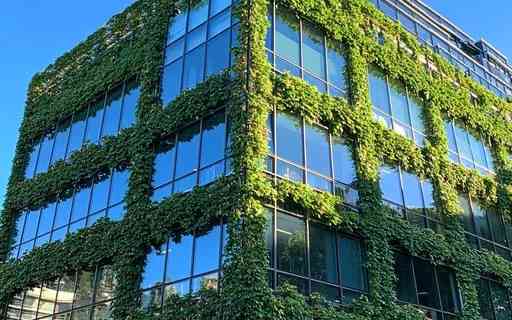
At its core, green building is about reducing the ecological footprint of the built environment. Traditional construction methods often rely on resource‑intensive materials, inefficient energy systems, and designs that ignore local climate realities. The result is high emissions, waste, and unsustainable consumption. Green building flips this paradigm by embedding sustainability into every stage of the process:
Energy efficiency: Buildings are designed to minimise energy demand through insulation, passive cooling, natural lighting, and efficient HVAC systems. Renewable energy sources, particularly solar, are integrated to reduce reliance on fossil fuels. Energy conserved is energy gained.
Water conservation: Rainwater harvesting, greywater recycling, and low‑flow fixtures ensure responsible water use. Freshwater discourse is becoming topical at global level, where in Africa, Cape Town, Addis and Nairobi are facing water stress due to factors such as climate change and population growth. The same for Paris, Beijing, Rio de Janeiro, New York and Dubai among others.
Materials: Preference is given to locally-sourced, recycled, and low‑carbon materials, reducing embodied energy.
Waste reduction: Construction and demolition waste is minimised through circular economy practices, saving resources in the process.
- COP27: Zimbabwe’s opportunity to shine
- Shot in the arm for Chiredzi, Bikita communities
- Is Zimbabwe ready for green building standards?
- Teacher witch-hunt continues
Keep Reading
The environmental benefits are profound. A green building can reduce energy consumption by up to 50%, water use by 40%, and carbon emissions by 35% compared to conventional structures. In regions such as Africa, where rapid urbanisation is colliding with climate vulnerability, these savings are not optional — they are essential for resilience.
The social dimension
Green building is not just about saving the planet; it is about improving lives. Buildings are where people spend most of their time — homes, schools, offices, hospitals. The quality of these spaces directly impacts health, productivity, and wellbeing.
Healthier indoor environments: Green buildings prioritise air quality, natural light, and non‑toxic materials. This reduces respiratory illnesses, allergies, and stress.
Comfort and productivity: Studies show that employees in green offices report higher satisfaction, fewer sick days, and improved performance.
Affordable living: By lowering utility bills through efficiency, green housing ensures affordability is not undermined by hidden costs.
Resilience for communities: Climate‑responsive design protects vulnerable populations from heatwaves, floods, and other extreme events.
In Africa, where housing deficits and infrastructure gaps remain pressing, green building offers a pathway to inclusive development. It ensures that growth does not come at the expense of health or equity, but instead creates environments that uplift communities.
The economics of green building
The most persistent myth about green building is that it is “too expensive.” Upfront costs which are considered to be marginally higher, are in actual fact investments with own returns, the long‑term economics tell a different story. Green building is not a luxury — it is a smart investment. A case for energy independence through solar.
Cost savings
Lower operating costs: Energy and water efficiency translate into reduced utility bills. Over a building’s lifecycle, these savings often outweigh initial investments.
Reduced maintenance: Durable materials and smart systems lower repair and replacement costs.
Access to finance, green bonds and climate funds: Investors are increasingly channelling capital into sustainable projects. Formalising green standards makes projects “investment-ready”.
Incentives: Governments and development banks offer tax breaks, grants, and concessional loans for green projects.
Market value, higher property values: Certified green buildings command premium rents and resale values.
Tenant demand: Corporates and institutions prefer sustainable spaces to meet ESG commitments.
Risk mitigation
Climate risk: Buildings designed for resilience face fewer losses from extreme weather.
Regulatory Risk: As codes tighten globally, green buildings are future‑proofed against compliance costs.
In short, green building is not a cost burden — it is a financially prudent strategy. It aligns with global capital flows, reduces risks, and delivers tangible returns.
Why green building is the future
The convergence of environmental urgency, social demand, and economic logic makes green building inevitable. Several trends reinforce this trajectory:
Global commitments: The Paris Agreement and Sustainable Development Goals (SDGs) place buildings at the heart of climate action.
Urbanisation: Africa’s population is projected to double by 2050, with 75% of the buildings that will exist then not yet built. This is a once‑in‑a‑generation chance to build sustainably from the ground up.
Technology: Advances in solar, smart systems, and digital design tools make green solutions more accessible and affordable.
Finance: ESG investing and climate finance are reshaping capital markets, rewarding sustainable projects.
Policy: Governments are increasingly embedding green standards into building codes and public procurement.
The future of construction is not about choosing whether to go green — it is about how fast we can mainstream it.
Demystifying the myths
To fully embrace green building, we must dispel common misconceptions:
“It’s too costly.” In reality, lifecycle savings outweigh upfront costs.
“It’s only for elite projects.” Affordable housing can benefit most from efficiency and resilience.
“It’s complicated.” With clear standards and rating tools, green building is practical and scalable.
“It’s optional.” Climate realities make sustainability a necessity, not a choice.
Conclusion: Dollars and sense
Green building is no longer a mystery, it is the intersection of dollars and sense — financial prudence and common sense. It is about creating spaces that are environmentally responsible, socially uplifting for communities to thrive, while delivering measurable economic returns. As the world confronts climate change and Africa races toward rapid urbanisation, the future of construction will be defined not by concrete alone, but by conscious design and sustainable practice.
For developers, investors, financiers, and practitioners, the message is clear: embracing green building is not just smart business, it is the only path to building a future that lasts.
As policymakers, investors, developers, and citizens, the question is no longer “Why green building?” but “How quickly can we make it the norm?” The answer will define not only the future of our built environment but the future of our planet.
Juru is chief executive officer at Integrated Properties.