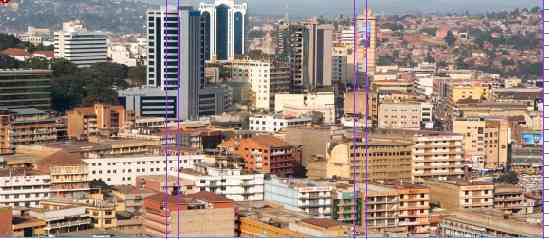
ONE hour on foot through Kampala raised uncomfortable questions, not about Uganda, but about ourselves.
I left the hotel on a Sunday afternoon with no particular agenda, just a pair of walking shoes and the mild curiosity of a visitor trying to read a city on its own terms. An hour later, I returned with something I had not expected to carry, a quiet, unsettling sense of possibility.
Kampala’s streets were clean. Not airport-lobby clean and not swept-for-the-cameras clean. They were genuinely, matter-of-factly clean. The kind of clean that suggests nobody made a special effort, because nobody needed to.
Consider what this means in context. The city is home to an estimated two million boda bodas, the motorcycle taxis that form the backbone of urban mobility in Uganda.
They weave through intersections at all hours, ferrying millions of passengers daily in conditions that, by any analysis, are chaotic. And yet, no litter in sight, not even on the street corners and not even wedged against the storm water drains. The rubbish that one might reasonably expect from two million fuel-burning, passenger-carrying, snack-dispensing machines simply, was not there.
For a Zimbabwean and I say this without apology nor performance, the absence of litter was striking and awe-inspiring. We know what our own streets look like. We know the resigned familiarity of litter as landscape, the sense that public space is nobody’s responsibility and therefore everyone’s dumping ground. Kampala, at least in the corridors I walked, had decided otherwise.
The greeting before the business
But cleanliness was only the beginning. From the airport transfer to the hotel check-in, from the reception desk to the breakfast table, something else accumulated. Ugandans kept looking at me, not suspiciously, not with the studied blankness of the overworked either.
- Uganda court hands life sentence to man caught with elephant ivory.
- Uganda’s State Minister Engola shot dead by bodyguard
- US revokes visas after Museveni signs tough anti-gay Bill into law
- Sables storm into Africa Cup semis
Keep Reading
They looked and then they smiled and then they said good morning or good afternoon as if they meant it and it came from the bottom of their heart.
This might sound like a small thing. It is not.
The smile of a stranger in a service role is one of the most reliable indicators of a society’s interior weather. It cannot be easily faked at scale.A single concierge can be trained to smile. An entire airport, an entire city, cannot. What I encountered in Kampala felt less like hospitality policy and more like the essence of the people and their cultural bedrock.
Ugandans, across their more than 56 ethnic groups, share a deep grammar of greeting.
The Luganda “Oli otya?” meaning “How are you?” is not a rhetorical formality here. Greetings precede everything, before directions are given, before business is transacted, before a question is answered.
The pleasantry is not decoration, it is the point.
It says, I see you and you are worth the moment it takes to acknowledge.
One of the boda boda riders who thought I needed a lift stopped and greeted me first before enquiring if I needed a ride. For me, that was special.
Roots in deep soil
How does this happen?The honest answer is that no single cause will do. Uganda’s warmth is not a policy. It is an accumulation of traditional values, of colonial-era English manners absorbed and then embedded in African values, of a relatively stable post-1986 social order that, whatever its political complications, has allowed civilian life to breathe and communities to hold.
The concept of “obuntu”, the Ugandan articulation of ubuntu, the shared African philosophy that locates personhood within community, runs beneath the surface of daily interaction here.
Ndoro-Mkombachoto is a former academic and banker. As a Systems Transformation Strategist, she helps multilateral agencies, such as the UN, IFC/World Bank, DANIDA, CIDA, GTZ, etcetera, future-proof their operations in markets where the rules are still being written. She also assists private and public sector companies in volatile emerging markets and constrained ecosystems, solve the complexity of institutional alignment by using frameworks that turn systemic constraints into growth engines. Gloria is the current Chairperson of NetOne Financial Services PLC, a subsidiary of NetOne Telecomms. Follow Gloria on YouTube @ HeartfeltwithGloria or contact her on [email protected]