EVERY January and August, a familiar dread settles over millions of parents. It is not only school fees, uniforms, or stationery that weigh on their minds — it is the daily, grinding cost of getting their children to school.
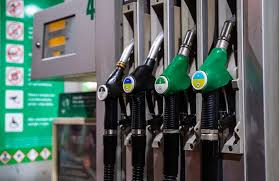
This term, the burden is heavier. Fuel prices have surged, and transport operators have responded swiftly, hiking fares with little warning and even less sympathy.
For parents who cannot afford private vehicles, there is no alternative. The kombi, the minibus, the school taxi — these are not luxuries. They are lifelines. When drivers raise their fares, parents do not have the option of simply saying no.
“At the end of the day, the child must be in class — and the drivers know it.”
‘Fuel is high’
Walk to any school gate or bus rank during the opening weeks of term and you will hear the same story. Transport operators, citing rising fuel costs, announce fare adjustments without consultation, without structure, and often without any fixed figure.
“Fuel is high, so we are adjusting,” one driver told the mother of two schoolchildren in Masvingo last week. He offered no receipt, no schedule, no government-authorised rate card. Just a demand. And the mother paid — because the school bell does not wait.
Transport operators understand one fundamental truth: at the end of the day, a child must be in class. That knowledge gives them leverage, and in a market with little regulation and even less enforcement, they use it freely.
- A celebration of being together
- Grace tidings: Do you understand what it means to be holy?
- School of sport: For everything there is a season
- Vieira backs Mane for Ballon d’Or ahead of Bayern move
Keep Reading
The mathematics of desperation
Consider a parent with two school-going children. If transport costs increase by even a modest amount per child per trip, the cumulative monthly figure can represent a significant share of household income — in some cases more than groceries, more than rent.
When wages remain stagnant while fares climb, something in the family budget must give way.
Many parents confess to cutting meals, skipping their own work transport, or borrowing money just to ensure their children can attend school. Some wake children as early as four or five in the morning to walk part of the route and board the kombi from a cheaper pick-up point down the road.
This is not a solution.
It is survival.
Drivers are not villains
It would be unfair to portray all transport operators as exploiters. Fuel costs are real. Vehicle maintenance is costly. The economics of running a school taxi or minibus have become genuinely difficult as pump prices rise. Drivers, too, are trying to survive.
But fairness must cut both ways. The parent earning a fixed or piece-rate wage cannot absorb unlimited fare increases any more than the driver can absorb unlimited fuel price increases. The difference is that the driver holds the power in this transaction. Parents have no union, no lobby, and no recourse. They simply pay — or leave their children at home.
“Every Monday morning, they tell you the price has gone up again. You argue, they say get off then. So, you pay. You always pay," said a parent of a secondary school learner in Masvingo.
The silence of the authorities
Where, in all of this, is the government? Where are the regulatory bodies tasked with overseeing public transport fares? In many cases, the honest answer is: absent. Fare regulation exists on paper, but enforcement is inconsistent at best and invisible at worst.
For children transported to and from school — a captive, vulnerable population — there is a compelling case for the state to intervene more decisively. School transport should be treated as an essential service, with fares subject to government oversight, especially during periods of significant fuel price movement.
Families should not be left to negotiate alone against operators who face no real consequence for overcharging.
“Education is not a luxury. A missed day of school is a missed lesson — a step backward in a child’s future.”
A crisis that demands urgent action
The rising cost of school transport is not a minor inconvenience. It is a barrier to education. When children miss school because parents cannot afford the fare, the nation loses.
When parents borrow money or go hungry to cover transport costs, families are destabilised.
The ripple effects reach far beyond the school gate.
What is needed is a coordinated response: government regulation of school transport fares during periods of fuel inflation; transparent and publicised rate adjustments; and meaningful recourse for parents who are overcharged.
Schools, parent-teacher associations, and civil society organisations also have a role to play in advocating loudly for families who currently face this crisis alone and in silence. Until then, every morning, millions of parents across the country will dig into pockets that are already empty — and pay a price they cannot afford — because the alternative is a price no parent is willing to pay.
Transport fares
Researches conducted across urban and peri-urban schools in Zimbabwe’s Masvingo, Harare, and Bulawayo provinces reveals a troubling pattern: school absenteeism spikes predictably in the weeks immediately following fuel price increases, as transport costs rise and household budgets are squeezed.
School heads in several districts report a noticeable drop in attendance in the first two weeks of term following fuel adjustments.
In some cases, pupils simply stop coming — not because they have dropped out formally, but because their families cannot sustain the daily transport cost.
Social workers note that the burden falls disproportionately on female-headed households and households dependent on informal sector incomes. These families have the least flexibility to absorb sudden fare increases, and the least political voice with which to demand relief.
Government data on transport fare oversight remains largely opaque. No publicly accessible database tracks real-time kombi or school taxi fares relative to official fuel price movements — a gap that advocates say makes it easy for operators to overcharge without accountability.
Civil society groups are calling for a dedicated school transport monitoring mechanism, similar to frameworks in South Africa and Botswana, where community-based fare committees review and publish school transport rates each term. Such a mechanism, advocates argue, would bring transparency and reduce the power imbalance that currently leaves parents with no recourse. Until meaningful regulation arrives, parents will continue to absorb whatever increase the market — and the morning rush — demands of them.
Dzingai is a social sciences student at the Julius Nyerere School of Social Sciences, Great Zimbabwe University, Masvingo. She writes on social welfare, public policy, and community development. Views expressed are her own. These weekly New Horizon articles published in the Zimbabwe Independent, coordinated by Lovemore Kadenge, an independent consultant, managing consultant of Zawale Consultants (Private) Limited, past president of the Zimbabwe Economics Society (ZES) and past president of the Chartered Governance & Accountancy Institute in Zimbabwe (CGAIZ). Email [email protected] or Mobile No. +263 772 382 852.
At the same time, enforcement must be accompanied by broader reforms.
Towards a more balanced approach
A meaningful response to the challenges of informal transport operators requires a shift from a purely punitive model to a more balanced and integrated approach.
First, there must be accountability within law enforcement institutions. Allegations of corruption, abuse of power, and unsafe practices must be taken seriously and addressed transparently. Without this, any enforcement effort will continue to lack credibility.
Second, the state must invest in reliable and accessible public transport systems. As long as there is a gap, informal operators will continue to fill it. The question is whether this happens in a regulated and safer way, or in a criminalised and chaotic environment.
Third, there is a need to create pathways for regularisation. Not all informal operators are unwilling to comply with the law; many are simply unable to meet existing requirements that are often prohibitive. Simplified licensing processes, affordable compliance mechanisms, and inclusive policy frameworks could bring more actors into the formal system.
Finally, there must be a shift in how the state views informality itself. Rather than treating it solely as a problem to be eliminated, it should be understood as a reality to be managed and integrated into the broader economic framework.
Law, order, and responsibility
The current situation on Zimbabwe’s roads is not just about unlicensed drivers or police overreach. It is about the broader relationship between the state and its citizens, and the ways in which power is exercised in everyday life.
Law enforcement is necessary. Regulation is necessary. But neither can come at the cost of human life. If the enforcement of the law creates conditions that are as dangerous as the violations it seeks to address, then something has gone fundamentally wrong. Zimbabwe does not need a war on its roads. It needs a system that works — one that is fair, accountable, and grounded in the realities of its people.
Until then, the question will remain: who is really being protected, and at what cost?
Mutowekuziva–Mafa is a legal practitioner and social justice advocate specialising in climate justice and extractives. With an LLB and Masters of Law of Land and Natural Resources from the University of Zimbabwe, she empowers African communities and promotes sustainable development through expertise in natural resource governance, transparency and accountability.These New Horizon – a weekly column published in the Zimbabwe Independent, coordinated by Lovemore Kadenge, an independent consultant, managing consultant of Zawale Consultants (Private) Limited, past president of the Zimbabwe Economics Society (ZES) and past president of the Chartered Governance & Accountancy Institute in Zimbabwe (CGAIZ). Email [email protected] or Mobile No. +263 772 382 852