
A FAIR critique of “backward” exhibits must also reckon with how innovation evolves and how Zimbabwe can leapfrog without pretending to be Silicon Valley.
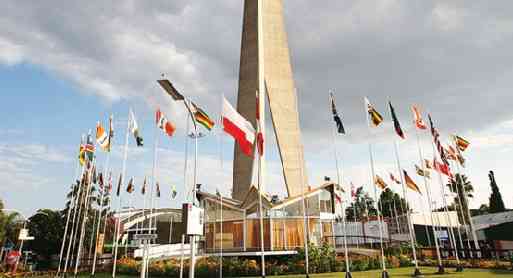
THE Zimbabwe International Trade Fair (ZITF) has once again come and gone, bringing together a broad spread of goods and services, from primary production and agro-processing to manufacturing and a range of tertiary sector offerings.
As always, the fair has also sparked debate. In one professional discussion forum, a colleague lamented that many of the artefacts on display felt “backward” and out of step with the technological advances visible elsewhere in the world.
In summary, the argument was that ZITF 2026 felt too similar to earlier years; that university exhibits were not sufficiently research-led or transformative; and that showcasing products such as detergents or food items signalled a worrying mismatch between higher education and the demands of a technology-driven era, especially when the world is rapidly adopting Artificial Intelligence (AI).
That discomfort is understandable. A nation should be able to point to clear markers of progress, especially at its flagship showcase. Yet the conclusion that Zimbabwe has “not moved from 1998” risks overlooking how development typically unfolds: not as a sudden jump from “primitive” to “advanced”, but as an incremental, uneven and often sector-specific process — one shaped by needs, incentives, skills, capital, policy and markets.
Innovation follows need
Countries in the so-called “third”, “second” and “first” worlds sit at different levels of development across multiple dimensions; political, social, economic, technological and many other domains.
The practical consequence is simple: what counts as “useful innovation” is not identical everywhere. In an agrarian or semi-agrarian economy, the pressing problems are often food security, irrigation, storage, logistics, energy reliability and affordability.
- Harvest hay to prevent veldfires: Ema
- Public relations: How artificial intelligence is changing the face of PR
- Queen Lozikeyi singer preaches peace
- Public relations: How artificial intelligence is changing the face of PR
Keep Reading
Solutions that improve post-harvest preservation, reduce spoilage, extend shelf life, lower input costs or increase yields may not look like frontier technology, but they can be the difference between profit and loss, or between hunger and stability.
ZITF, at its core, is a mirror of what producers can make, what buyers will purchase, and what investors are willing to fund.
If the market rewards agro-processing equipment, basic manufacturing, low-cost household products and incremental improvements in productivity, those are the artefacts that will dominate exhibition space.
This is not an excuse for stagnation; it is an explanation of why progress is often visible first in “everyday” technologies rather than in headline-grabbing robotics or artificial intelligence (AI).
‘1998 Test’: Emotionally true
The question “would a visitor from 1998 notice progress?” is a powerful rhetorical device. But it can also be misleading, because it assumes progress must be most visible in physical prototypes on exhibition floors.
Much of Zimbabwe’s most significant change has been intangible or infrastructure-based: the spread of mobile connectivity, digitised services, fintech adoption, new payment habits, software-driven business models, and the steady diffusion of affordable smartphones. These shifts may not always translate into dramatic hardware displays at a trade fair yet they meaningfully alter how citizens work, trade, learn and access services.
Universities should raise the bar
The sharpest part of the criticism targeted universities and here the concern deserves serious attention. Higher education should demonstrate problem-solving capacity, research depth, and the ability to translate theory into scalable solutions.
If university stands repeatedly resemble general retail stalls, it is fair to ask whether research is being commercialised, whether prototypes are being matured into products, and whether institutions are engaging industry strongly enough.
However, it is also worth challenging the implied hierarchy that places certain innovations “below” universities. A detergent can embody chemistry, formulation science, local raw-material substitution, safer surfactants, improved biodegradability and cost engineering.
A food product can reflect post-harvest science, nutrition, preservation, packaging, quality control, and small-scale industrialisation. mThe problem is not that these themes appear at ZITF; the problem is when they are presented without the underlying research story, without performance evidence, and without a clear pathway to scale.
There is also a human-capital reality. Many Zimbabwean students are products of largely rural environments and under-resourced schools. For some, university is the first sustained encounter with advanced computing, laboratories or modern industrial equipment. Innovation is constrained by exposure: imagination often starts at the edges of what one has seen, handled and tested.
That is why structured exchange programmes, joint projects between universities, industry placements, maker spaces, and access to shared national laboratories are not “nice-to-haves”. They are a core part of building an innovation pipeline.
Sequential advancement accelerated
Accepting that development is incremental does not mean settling for slow. Zimbabwe does not have to reinvent what others have already built. The advantage of arriving later in the technology cycle is that foundational frameworks such as cloud platforms, open-source software, low-cost sensors, mobile networks, digital payment rails and global knowledge repositories already exist.
The challenge, therefore, is not invention from scratch; it is adaptation with intent: taking proven building blocks and tailoring them to local constraints such as intermittent power, high connectivity costs, limited capital and fragmented supply chains.
This is how “accelerated sequential advancement” should look at ZITF: not necessarily humanoid robots, but credible, testable solutions built on modern platforms such as precision agriculture using affordable sensing and analytics; cold-chain monitoring; low-cost water-quality testing; predictive maintenance for small industry; local-language digital services; and AI used where it adds measurable value (for example, in quality inspection, fraud detection, customer support, or demand forecasting). AI is not a stand-alone trophy; it is a tool that should be visible through outcomes, not slogans.
Practical steps that can bring change
Curate for impact, not just attendance: ZITF organisers can introduce categories that reward measurable problem-solving, for example, energy resilience, water, food systems, health, fintech, manufacturing productivity and require basic evidence of testing or uptake.
Differentiate university exhibits: Institutions should show the research behind the product: prototypes, lab results, comparative performance, intellectual property status, and a clear commercialisation pathway or industry partner.
Build exposure into the pipeline: Expand internships, inter-university exchanges (local to local; local to cross border), hackathons with real datasets, and shared laboratories so students can imagine, and build, beyond what they have grown up seeing.
Fund “applied research and development” and prototyping: Small grants for working prototypes, not just papers, can move innovations from poster to product.
Reward collaboration: The most convincing innovations often sit at the intersection of academia, industry and government. Joint stands and co-developed pilots should become normal.
The frustration expressed by professionals who expected to see more frontier technology at ZITF is valid and useful because it signals ambition. But ambition must be paired with an honest reading of where the economy is, what problems are most urgent, and what capabilities are realistically available to innovators today.
Zimbabwe’s innovation journey will be sequential: foundations first, sophistication next. The opportunity is to make that sequence faster by leveraging existing technological frameworks, partnering aggressively, and showcasing solutions that are both locally-relevant and globally-informed.
If we do that, the question next year will not be whether ZITF looks like 1998, it will be whether our innovations are moving from stands into farms, factories, clinics and households, improving lives at scale.
Samuel Mwale writes in his personal capacity. Mobile/ WhatsApp: +263773435974. Email — [email protected]