Imagine waking up tomorrow to discover that all stored data has vanished. No bank records. No hospital histories. No satellite navigation. No weather forecasts. No engineering manuals. No digital memories of how machines were built or repaired.
Aircraft would remain grounded because flight systems depend on stored performance data. Hospitals would struggle to treat patients without medical histories. Financial systems would freeze as account balances disappeared into uncertainty. And space exploration? It would stop instantly.
We often hear the phrase “data is the currency of today.” Yet in truth, data is far more than currency. It is memory. It is knowledge preserved across generations. It is the invisible thread that links past discoveries to future achievements. Few examples illustrate this better than humanity’s return to the moon through the Artemis programme.
The legacy of Apollo
When astronauts landed on the moon during Apollo 11, the world celebrated courage, technology, and human determination. What was less visible, but equally important, was the vast amount of data produced during the mission.
Every second of the journey generated information. Engineers recorded rocket engine performance, fuel efficiency, astronaut health readings, spacecraft temperatures, and the behaviour of materials under extreme stress. Navigation systems tracked trajectory accuracy, while re-entry data documented how spacecraft survived the intense heat of returning to earth. This was not just a historic mission, it was a scientific archive.
Subsequent Apollo missions expanded this growing body of knowledge. They refined landing techniques, improved safety margins, and deepened humanity’s understanding of space travel. Even decades later, this information remains invaluable. It is studied, reinterpreted, and reused. Without it, modern space missions would be forced to start from scratch, repeating dangerous experiments already solved by earlier generations.
The Artemis programme
- Time running out for SA-based Zimbos
- Sally Mugabe renal unit disappears
- Epworth eyes town status
- Commodity price boom buoys GB
Keep Reading
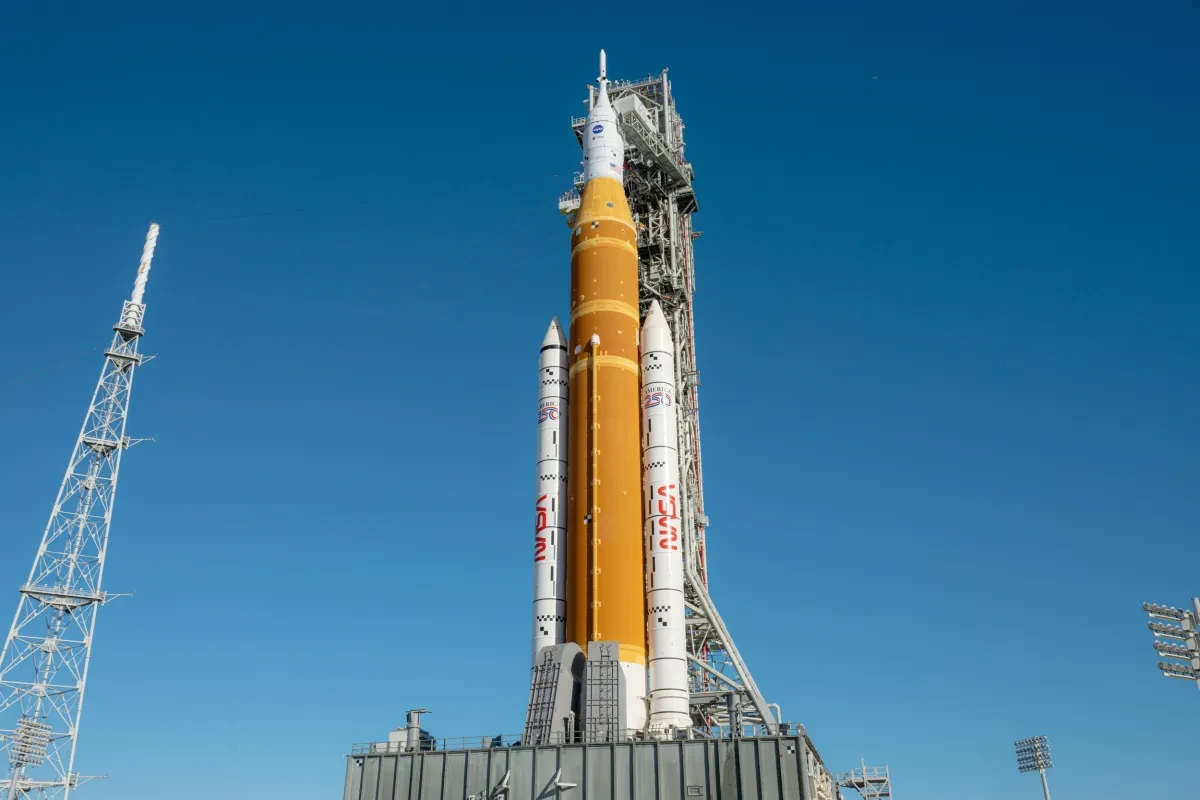
Today, humanity is returning to the moon through the ambitious Artemis programme. This programme represents more than a technological revival. It is a continuation of a long chain of accumulated knowledge.
Unlike the Apollo era, modern engineers do not begin with empty notebooks. Instead, they inherit decades of recorded experience. Designs for spacecraft components, materials used in thermal protection, and life-support systems are all informed by historical records.
The recent crewed mission Artemis II, for example, depended heavily on lessons learned from Apollo flights, space shuttle missions, and operations aboard the International Space Station. Each of these programmes contributed new data, strengthening the foundation upon which Artemis has now stood.
Space exploration is often described as daring and adventurous, but beneath the drama lies a disciplined reliance on recorded knowledge. Rockets do not launch on courage alone. They launch on calculations built from decades of measurements.
AI: Turning data into intelligence
While historical data forms the foundation, modern missions rely on another powerful tool: artificial intelligence (AI).
In the early days of space exploration, engineers manually analysed data, reviewing charts and tables line by line. Today, the sheer volume of information produced during testing and flight makes such manual work impossible. Spacecraft systems generate millions of data points every second.
AI allows this information to be processed in real time. Machine learning systems can detect patterns invisible to human observers. They can predict equipment failure before it occurs, identify unusual behaviour in spacecraft systems, and optimise flight paths for safety and efficiency.
This shift marks a new era in space exploration. Instead of reacting to problems after they occur, engineers can anticipate them in advance. Instead of relying solely on human judgment, they can draw on predictive models trained on decades of historical records.
In simple terms, data provides the memory, but AI provides the reasoning.
Backbone of safety, innovation
Every modern spacecraft launch is, in reality, a conversation with history. Engineers consult past mission results, compare performance metrics and refine designs accordingly. Each improvement reduces uncertainty and enhances reliability.
Consider the complexity of re-entering earth’s atmosphere. Spacecraft returning from lunar missions travel at extraordinary speeds, generating intense heat that can melt metal. Designing protective heat shields requires precise knowledge of materials, airflow patterns and thermal resistance.
Much of this knowledge originates from earlier missions. It is tested, documented and stored, becoming part of an ever-growing scientific memory.
Without these records, astronauts would face unacceptable risks. With them, humanity moves forward with confidence.
While lunar missions capture the imagination, the lessons they teach extend far beyond space exploration. Data-driven decision-making now shapes nearly every aspect of modern life.
In agriculture, satellite data helps farmers monitor rainfall patterns and predict drought conditions. In healthcare, patient records enable doctors to diagnose diseases more accurately. In finance, transaction histories support risk management and fraud detection.
Across Africa and Zimbabwe, the growing availability of digital tools is opening new opportunities. Farmers increasingly rely on weather forecasts derived from satellite observations. Urban planners use geographic data to design more efficient cities. Health authorities analyse disease trends to improve public health responses.
These advances are made possible by the same principle that supports space missions: reliable, well-organised information.
The future: Africa’s opportunity
For African nations, the rise of data and artificial intelligence represents both a challenge and an opportunity. Countries that invest in data infrastructure, digital education and technological innovation will position themselves to benefit from global advances.
Just as the Artemis programme relies on decades of archived knowledge, Africa’s future development will depend on how effectively it collects, manages, and uses information. Reliable census records, agricultural databases and healthcare systems form the backbone of national planning.
Moreover, the growth of artificial intelligence presents new possibilities for innovation. Young engineers and scientists across the continent can use data-driven tools to address local challenges, from climate resilience to transportation efficiency.
The lesson from space exploration is clear: progress belongs to those who preserve knowledge and build upon it.
Conclusion
The story of humanity’s return to the moon is not only a story of rockets and astronauts. It is a story of memory, continuity and learning. From the historic achievements of Apollo to the ambitious goals of Artemis, each mission demonstrates the power of accumulated knowledge.
Data is not only the currency of the digital age. It is also the memory of humanity. Artificial intelligence, in turn, is the tool that allows us to learn from that memory, transforming stored information into actionable insight. Together, data and AI form the foundation upon which modern discovery stands.
As humanity prepares to journey once again toward the lunar surface and later to Mars, one truth becomes unmistakable. The future of exploration, whether in space or here on earth, will belong to those who understand, preserve and wisely use the knowledge they collect today. In that sense, every dataset we create is not merely a record of the present, but an investment for the future.
Bangure is a technology researcher based in the UK, where he examines the impact of emerging technologies on economies and societies. With extensive experience as a newspaper production manager and media executive, coupled with formal training in data analytics and AI, he effectively integrates technological expertise with strategic insight. — [email protected]