
Every time a user types a prompt into an AI application, information is being exchanged. It may appear harmless, a question, an instruction, perhaps a draft paragraph rewrite or a business idea.
Yet behind the convenience lies an invisible transaction. Data flows quietly into systems owned by others. Patterns are studied. Behaviours are mapped. Knowledge is absorbed.
The debate around data sovereignty is no longer abstract. It is a matter of national security, economic independence and long-term dignity. Across the world, artificial intelligence (AI) is rapidly becoming the most powerful instrument shaping the future of economies, societies and governance. Yet Africa, a continent rich in people, ideas and raw data, risks becoming merely a supplier of digital resources to technologies built elsewhere. That would be a grave mistake. The time has come for Africans to build their own AI, deliberately, urgently and without apology.
Call for African AI autonomy
In the fevered race for better prompts, we risk mistaking technique for truth. Yet the core insight remains unflinching: powerful prompts carry potent information. They’re not mere tokens or clever shuffles.
They encode insights, assumptions and tacit knowledge that organisations guard like crown jewels. When a prompt reveals a roadmap such as market interests, user preferences and competitive blind spots, it bleeds into the realm of intellectual and strategic capital.
Today, every prompt shares vital data collected by AI developers, data that shapes models, policies and power itself. In this environment, the question isn’t only about privacy or governance.
It is about sovereignty. If Africans are to steer their own digital destinies, time is of the essence: the moment to cultivate and own AI capability on the continent is now.
- Open letter to President Mnangagwa
- Feature: ‘It’s worse right now than under Mugabe’: Sikhala pays the price of opposition in solitary cell
- Time running out for SA-based Zimbos
- Masvingo turns down fire tender deal
Keep Reading
As algorithms become central to decision-making, the data that trains them such as training sets, internal strategies, design rationales, even early prompts, becomes economic and strategic capital. Ownership and control over these assets translate into influence over outcomes that affect livelihoods, governance and democracy.
There is need to accelerate African-led AI development with transparent provenance and robust guardrails. Build local data ecosystems, empower researchers and foster open, ethical innovation. In a continent poised to leap, autonomy in AI is not a luxury but a democratic necessity and a public good that can redefine futures. This is why the debate around data sovereignty is no longer abstract. It is a matter of national security, economic independence and long-term dignity.
In February, President Emmerson Mnangagwa instructed his government to withdraw from negotiations over a proposed US$367 million five-year health funding arrangement with the United States.
On the surface, the agreement appeared generous. It promised resources for healthcare programmes in Zimbabwe, a nation that continues to rebuild and modernise its public health systems. But beneath the promise of funding lay troubling provisions.
Officials in Harare raised concerns that the agreement demanded access to Zimbabwean health data, biological samples and other forms of sensitive information. Government spokesperson Nick Mangwana described the proposed terms as asymmetrical, a polite diplomatic phrase for a deal in which one side benefits far more than the other.
The concern was not merely theoretical.
Zimbabwean authorities feared that data gathered through the partnership could be used for research and commercial innovation elsewhere, with no guaranteed access for Zimbabwe to the vaccines, treatments or intellectual property that might emerge from that research.
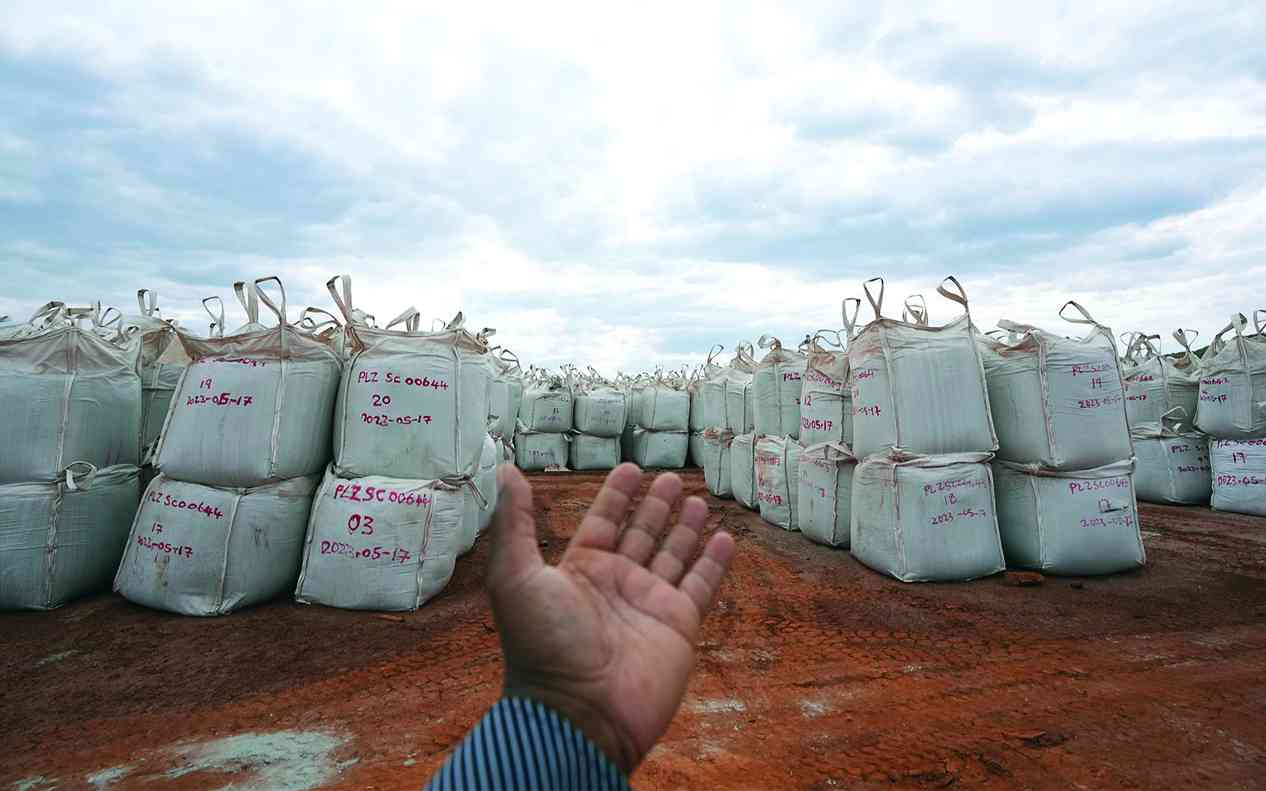
There were also reports suggesting that the proposed arrangement had indirect links to access to Zimbabwe’s strategic mineral resources, particularly lithium — a critical component in modern battery technology.
To a country determined to protect its economic sovereignty, such conditions appeared less like cooperation and more like leverage.
Another objection centred on the decision to bypass frameworks established by the World Health Organisation. Zimbabwe reportedly questioned why a bilateral arrangement should replace global mechanisms designed to ensure fair pathogen access and equitable sharing of scientific benefits.
Whatever one’s political position, the episode exposed a larger reality: data has become a strategic asset. In the era of AI, those who control data shape the future. Data trains the models. Data sharpens the predictions. Data drives the innovations that determine which nations lead and which ones follow. The countries that dominate AI today did not arrive there by accident. They invested early in infrastructure, research institutions and talent pipelines. Above all, they accumulated vast oceans of data.
Africa possesses enormous volumes of untapped digital information, from languages and cultural knowledge to agricultural patterns, medical histories, climate data and consumer behaviour. Yet much of this information is captured, processed and monetised elsewhere.
The continent must begin to ask itself a difficult question. Are we prepared to become permanent tenants in the digital houses of others? AI built entirely outside Africa cannot fully understand African realities. It cannot easily grasp the subtleties of local languages spoken in markets and rural villages. It cannot intuit the informal economies that sustain millions of households. It cannot learn the cultural rhythms that shape decision making across communities.
When the technology that powers the future does not reflect your context, it inevitably reproduces someone else’s priorities. That is why Africa must not simply adopt AI, it must create it.
The foundation of that effort lies in data infrastructure. Zimbabwe, like many African countries, will eventually need robust national data centres capable of storing and processing vast quantities of information securely within its borders. These facilities are not merely buildings filled with servers. They are strategic assets, the digital equivalent of reservoirs, power stations and national archives combined.
Of course, data centres require two things that are often in short supply: reliable energy and abundant water for cooling systems. Yet Zimbabwe is not without advantages. The country possesses considerable potential in renewable energy, particularly solar power, which could be harnessed to sustain large-scale digital infrastructure. With careful planning and investment, water systems can also be designed to support such facilities.
What is required above all is coordination. The triple helix approach becomes key here.
African universities must become laboratories of AI development. Governments must invest in computational capacity and digital literacy. Entrepreneurs must be encouraged to build platforms tailored to African markets rather than simply importing tools built elsewhere.
Equally important is the cultivation of African data ethics. If the continent is to build its own AI systems, it must also define how data is collected, protected and used. Respect for privacy and community consent must become foundational principles rather than afterthoughts.
There is also a profound opportunity here. Africa is home to the world’s youngest population. Millions of young people are entering the digital economy with creativity, resilience and a deep familiarity with technology. If given the right tools and institutional support, they could become architects of a distinctly African technological future.
The alternative, which is, continued dependence, would be far more costly. A continent that supplies raw data but imports intelligence will remain perpetually on the margins of the global knowledge economy as history has always shown. For centuries Africa exported raw materials while finished goods were manufactured elsewhere. The profits accumulated far from the mines and farms where those resources originated. AI threatens to replicate that pattern in digital form.
Conclusion
But history does not have to repeat itself. By building its own data infrastructure, investing in AI research and protecting the sovereignty of its digital resources, Africa can shift from being a passive participant to an active architect of the technological age.
The decision taken by Zimbabwe in February may prove to be more than a diplomatic disagreement. It may signal the beginning of a deeper conversation about who owns African data, who benefits from African knowledge and who shapes the algorithms that will govern tomorrow’s world.
But remember this reality. AI developers will not wait for Africa to catch up. The revolution is already underway. The only question that remains is whether Africans will join this revolution by building their own AI or they will resign and simply feed other nations’ AI with African data.
Ndoro-Mkombachoto is a former academic and banker. She has consulted widely in strategy, entrepreneurship, and private sector development for organisations in Zimbabwe, the sub-region and overseas. As a writer and entrepreneur with interests in property, hospitality and manufacturing, she continues in strategy consulting, also sharing through her podcast @HeartfeltwithGloria. — +263 772 236 341.