
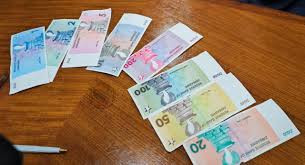
Over the past year, Zimbabwe Gold (ZiG) has managed to hold its ground, contributing to relative price stability in sectors where it is used as a transactional currency and narrowing the gap between the official exchange rate and the parallel market rate against the United States dollar.
This modest stability could provide the foundation for the long-term consolidation of Zimbabwe’s latest currency experiment.
However, the key question confronting policymakers is not simply stability. It is trust. The Reserve Bank of Zimbabwe (RBZ), in its latest monetary policy statement, acknowledged that more work needs to be done to improve the circulation and acceptance of ZiG, particularly in the southern regions of the country.
In these areas, the South African rand remains the dominant currency, reflecting strong trade ties with South Africa. In contrast, mining regions and major urban centres remain heavily dollarised.
This pattern has not been imposed through policy. It has emerged organically from market behaviour.
As the RBZ prepares to introduce new ZiG notes, including ZiG10, ZiG20 and ZiG50 denominations, with ZiG100 and ZiG200 expected later, authorities must tread carefully to avoid repeating the failures of previous currency experiments.
Zimbabwe’s monetary history over the past two decades offers a sobering reminder of the consequences of policy missteps.
Between 2007 and 2008, Zimbabwe experienced one of the worst episodes of hyperinflation in recorded economic history, with inflation peaking at 500 billion percent in December 2008, according to the IMF.
- Lupane man survives axe attack
- Zim has no willpower to save its currency
- Sunday word: The sea beast of Revelation 13
- Women’s hockey team in impressive start
Keep Reading
That trauma continues to shape financial behaviour today. Even after the introduction of ZiG in April 2024, backed by gold and foreign currency reserves, the economy remains heavily dollarised. Some say over 70% of transactions are still conducted in foreign currency.
Meanwhile, the structural expansion of Zimbabwe’s informal economy further complicates efforts to entrench the local unit. According to the Zimbabwe National Statistics Agency about 76% of economic activity now takes place in the informal sector. For many small retailers, transport operators and informal traders, cash — often in US dollars — remains the most convenient and reliable medium of exchange.
While large formal retailers may process ZiG transactions through electronic payment platforms, these payments are largely derived from the ZiG component of salaries paid to formal workers.
The informal sector, which employs the biggest part of Zimbabweans, continues to prefer hard currency and cash-based transactions. This creates a structural bottleneck for the wider adoption of ZiG.
Even if the RBZ injects large quantities of the new notes into circulation, acceptance will remain limited unless confidence in the currency improves. In this regard, supply alone will not determine the success of the new notes.
Sustained public awareness campaigns, clear monetary policy discipline and credible fiscal management will be critical in rebuilding trust in the local currency.