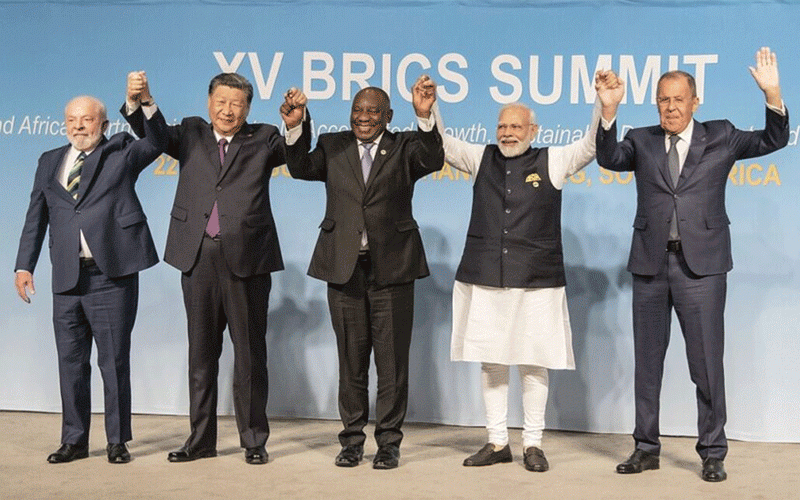
The term BRICS refers to the geopolitical and economic bloc of major Global South economies — Brazil, Russia, India, China and South Africa — formally constituted in 2011. The grouping emerged from a shared recognition that developing, formerly colonised nations were routinely side-lined in global governance and compelled to operate within systems largely designed by advanced Western economies.
Much of the modern global architecture — from trade rules and credit-rating systems to reserve currencies and development finance norms — reflects the priorities of the Group of Seven (G7), led prominently by the United States and economies within the European Union.
For decades, emerging markets argued that these structures entrenched asymmetries in power, leaving the Global South as rule takers rather than rule makers.
BRICS was conceived as part of the response to that imbalance.
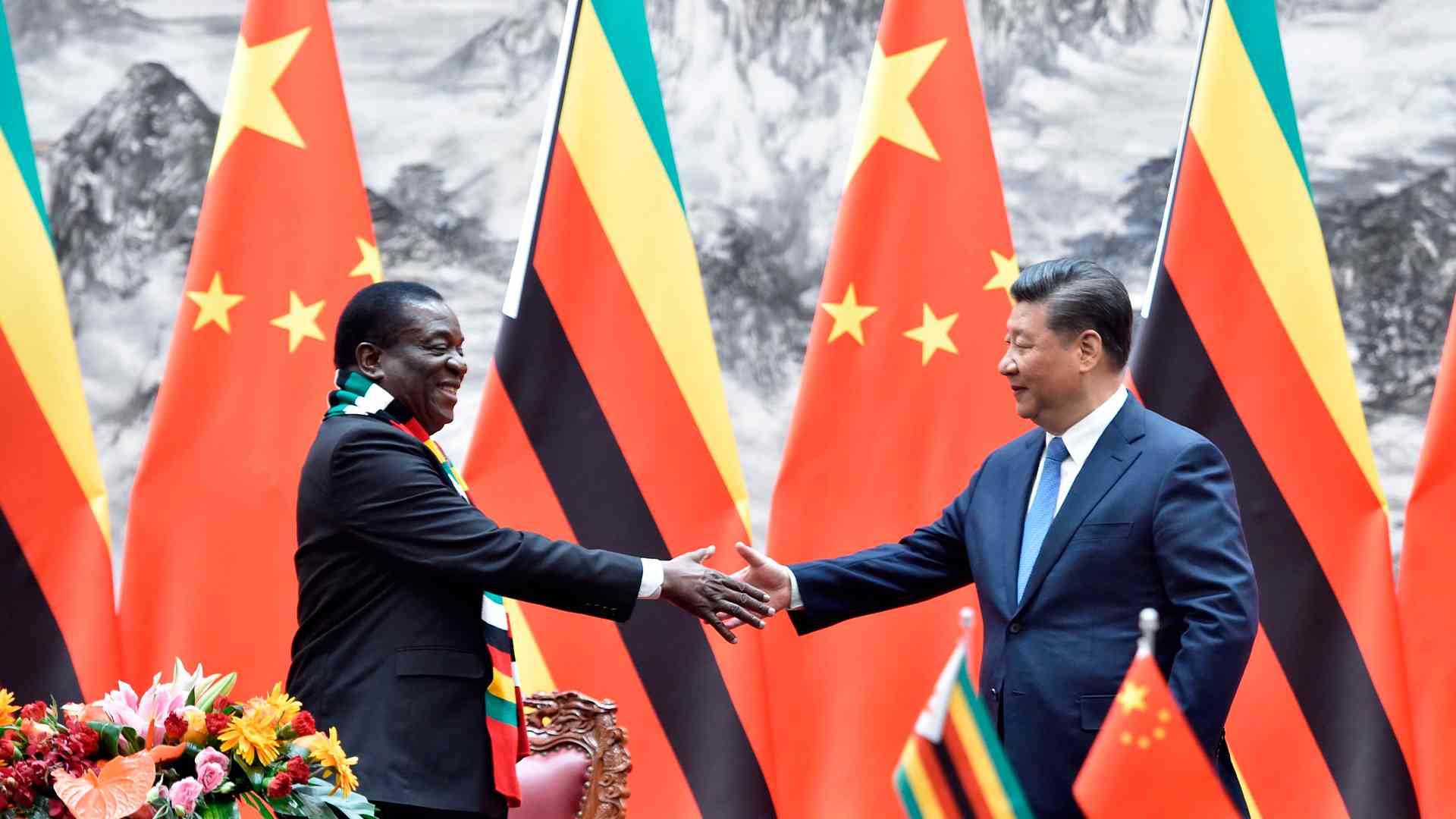
As Zimbabwe seeks closer engagement with the bloc following its 2025 application to join, understanding BRICS’ trajectory — its strengths, contradictions and strategic possibilities — has become more than an academic exercise.
From concept to coalition
The origins of BRICS lie in an investment thesis rather than a diplomatic initiative. In 2001, British economist Jim O’Neill introduced the acronym “BRIC” to describe the long-term growth potential of Brazil, Russia, India and China.
His projection was bold: the economic centre of gravity would gradually shift away from the G7 towards these large emerging markets.
- The brains behind Matavire’s immortalisation
- Red Cross work remembered
- All set for inaugural job fair
- Community trailblazers: Dr Guramatunhu: A hard-driving achiever yearning for better Zim
Keep Reading
A quarter of a century later, that shift is evident. China has become the world’s second largest economy. India is among the fastest growing major economies.
Russia and Brazil, despite sanctions cycles and domestic volatility, remain pivotal regional powers. Meanwhile, the G7’s share of global output has steadily declined relative to emerging economies.
The BRIC countries held their first formal summit in 2009, transforming a market concept into a geopolitical forum. In 2011, South Africa joined, giving the bloc continental representation in Africa and expanding it into BRICS.
The grouping’s agenda broadened: reform of global governance institutions such as the International Monetary Fund (IMF), the World Bank and the United Nations; increased trade cooperation; financial collaboration; and strategic dialogue on global security and development.
Expansion resumed in 2023 with the admission of Saudi Arabia, United Arab Emirates, Egypt, Ethiopia and Iran, giving rise to the informal label BRICS+.
The bloc now spans multiple continents, major energy producers, manufacturing hubs and large consumer markets.
Economic weight
BRICS+’s most compelling strength lies in scale. On a purchasing power parity basis, the bloc accounts for roughly 40% of global GDP, surpassing the G7’s share of about 28%. If current growth trajectories persist, that lead could widen further by mid-century.
Demographically, the bloc represents nearly half the world’s population. Its median age — approximately 31 years — contrasts sharply with ageing societies in Europe and parts of East Asia.
This demographic dividend, if matched with job creation, education and productivity gains, could underpin decades of expansion.
Large internal markets also create resilience. Growing middle classes in China and India are reshaping global consumption patterns, influencing everything from commodity demand to digital services.
Energy rich members such as Saudi Arabia, Russia and the UAE add strategic depth, while agricultural and mineral wealth across Brazil, South Africa and others strengthens resource security.
Yet economic weight alone does not automatically translate into cohesion or influence.
Trade integration
BRICS+ countries collectively trade trillions of dollars in goods and services each year. However, intra bloc trade remains limited.
Only about one fifth of total trade flows occur among members, while roughly 80% is conducted with the broader global economy — particularly advanced markets.
This outward orientation reveals a structural paradox. While BRICS rhetoric emphasises South South cooperation, supply chains and export markets remain deeply intertwined with Western economies.
Several barriers explain this. Average tariffs within the bloc remain relatively high. Regulatory standards differ widely.
Transport and logistics corridors are underdeveloped across certain regions. Crucially, there is no unified trade framework equivalent to a free trade area.
Currency settlement reform has emerged as a strategic priority. China and Brazil have increasingly used yuan and reals in bilateral trade, while India has paid for some Russian oil imports in rupees. Such arrangements reduce reliance on the US dollar and Western clearing systems.
However, implementation remains uneven. The majority of transactions are still dollar-denominated. Imbalances also arise when trade flows are asymmetric, as illustrated by Russia’s accumulation of surplus rupees due to limited Indian imports. These frictions highlight the technical complexity of de-dollarisation.
Trust deficits are visible in the proliferation of anti-dumping measures among members. More than 200 such cases have reportedly been initiated within the bloc.
While legally permissible under global trade rules, their frequency suggests that commercial rivalry continues to outweigh solidarity in many sectors.
Development finance and capital flows
A central institutional innovation of BRICS was the creation of the New Development Bank (NDB) in 2014. Headquartered in Shanghai, the bank was designed to finance infrastructure and sustainable development projects across member states, offering an alternative to Western dominated lenders.
The NDB has approved billions of dollars in loans, including renewable energy and transport projects. Yet its balance sheet remains modest compared to the International Monetray Fund or World Bank. Scaling up capital and maintaining creditworthiness will be essential if it is to become a genuine counterweight in development finance.
Foreign direct investment patterns further illustrate asymmetry. China dominates outward FDI within the bloc, much of it linked to the Belt and Road Initiative. While some BRICS members benefit, Beijing’s strategy is global rather than bloc-centric.
Nonetheless, intra-BRICS investment has grown significantly over two decades, rising from under 6% of total FDI in 2003 to nearly 29% in 2023. This trend suggests a gradual strengthening of financial ties, even if dependency patterns persist.
Digital divides and human mobility
Digital infrastructure is increasingly central to economic competitiveness. Within BRICS+, disparities are stark. Internet penetration is nearly universal in Saudi Arabia and the UAE, while Ethiopia lags far behind, constrained by affordability, device access and digital literacy.
India offers a contrasting success story, having dramatically expanded connectivity through low data prices and rapid network rollout.
Bridging digital gaps across the bloc will determine whether BRICS+ can compete effectively in the knowledge economy.
Migration patterns also complicate integration. Many BRICS citizens continue to migrate primarily outside the bloc, seeking education, employment and investment opportunities in North America and Europe. While South South migration exists — particularly toward Gulf economies — intra bloc mobility remains limited by visa regimes, bureaucratic hurdles and political sensitivities.
Facilitating easier movement of professionals, students and entrepreneurs could strengthen innovation and deepen economic interdependence.
Institutional fragility
Despite its economic heft, BRICS+ remains institutionally thin. It lacks a permanent secretariat with binding authority to monitor and implement summit decisions. Much coordination relies on political will rather than enforceable mechanisms.
Internal rivalries pose additional challenges. Border tensions between India and China, water disputes between Ethiopia and Egypt, and broader geopolitical alignments complicate unified action. Expansion has increased diversity but also amplified complexity.
For BRICS+ to evolve into a durable pillar of a multipolar order, it must move beyond symbolic communiqués.
Concrete steps — tariff reduction, harmonised standards, integrated payment systems, expanded development finance and credible dispute resolution frameworks — will determine its long term relevance.
Implications for Zimbabwe
For Zimbabwe, potential engagement with BRICS+ presents both opportunity and caution. Membership could expand access to development finance, diversify trade partnerships and reduce overreliance on traditional Western markets.
However, benefits would depend on competitiveness, policy credibility and the ability to integrate into existing supply chains. BRICS+ is not a substitute for domestic reform. Rather, it is a platform that rewards strategic positioning.
Fifteen years after formalisation, BRICS+ embodies both the aspirations and contradictions of the Global South. Its economic scale and demographic momentum give it leverage.
Yet internal fragmentation, uneven integration and institutional fragility temper expectations.
The bloc could consolidate into a powerful engine of South South cooperation and a genuine counterweight in global governance. Alternatively, it could remain an influential but loosely coordinated forum.
Its future will hinge less on declarations and more on disciplined implementation, deeper economic integration and the political maturity to manage differences constructively. The promise is substantial — but realising it will require cohesion equal to its ambition.
Kevin Tutani is a political economy analyst. —[email protected].