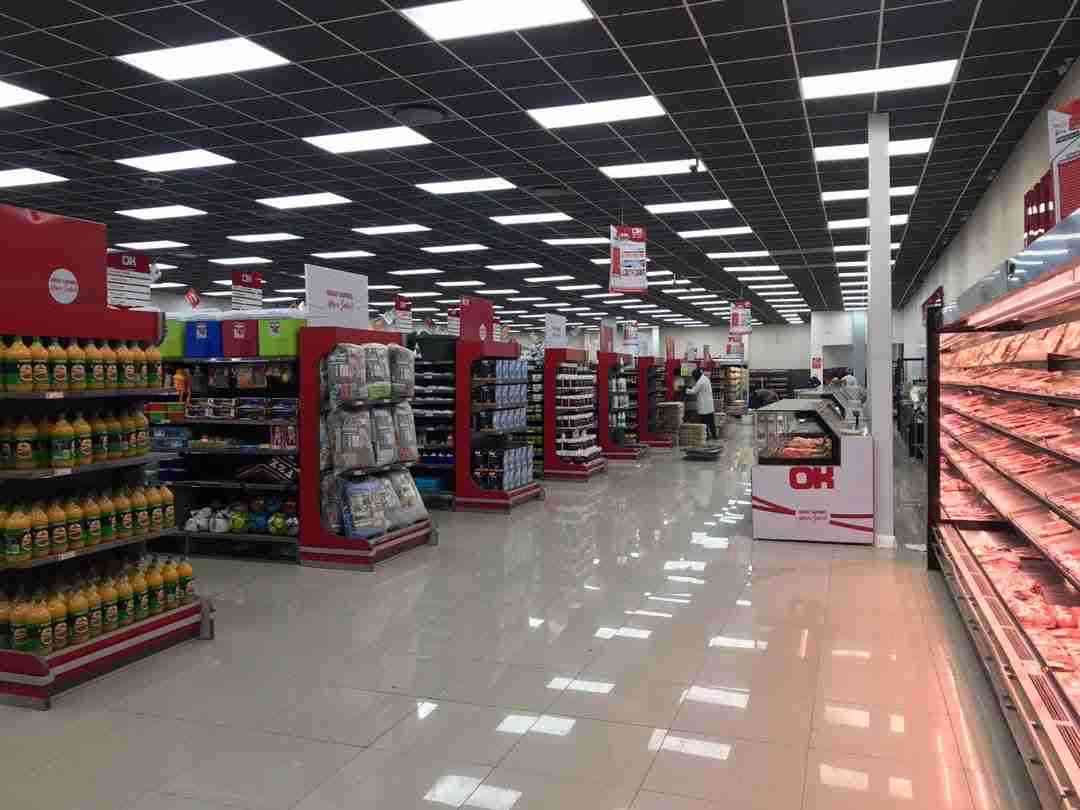
WHEN OK Zimbabwe unveiled its revised capital-raising strategy in mid-2025, the hope was that fresh capital, asset disposals and new leadership would stabilise the business and lay the foundation for recovery.
Six months later, the retailer’s HY26 financials for the period ended September 30, 2025 suggest that the turnaround remains elusive.
The half-year results paint a picture of a business still under intense operational and financial strain, weighed down by collapsing volumes, weak demand, rising USD-denominated costs and mounting regulatory pressure.
Volumes collapse
The most striking feature of OK’s HY26 performance is the sharp contraction in volumes.
Group sales volumes fell by 82,7%, plunging from 139,9 million units in the prior comparative period to just 24,2 million units.
This collapse underscores the depth of pressure facing formal retailers as consumers increasingly shift to the informal sector in search of lower prices and flexible payment terms.
Despite ongoing store rationalisation and attempts to stabilise supply chains, subdued consumer spending and heightened price sensitivity continued to erode footfall across OK’s network.
- Abwa commissions milk plant
- In the groove: Has inflation hit the music markets?
- Zimbos snub Zec voter registration programme
- Business opinion: Brand customisation
Keep Reading
The result was a weak topline performance that failed to keep pace with operating cost pressures.
Failure offset cost pressures
While revenue showed modest growth in nominal terms, it remained well below inflation, translating into real revenue contraction.
High fixed costs — including rentals, utilities and logistics — coupled with USD-denominated expenses continued to compress margins in an environment where pricing power remains limited.
The volume contraction, combined with these structural cost pressures, flowed directly to the bottom line. OK Zimbabwe reported a net loss of US$17,81 million for the half-year, further weakening an already fragile balance sheet.
Regulatory penalties
Adding to operational challenges was a US$2,05 million civil penalty imposed on OK Zimbabwe for Fiscal Data Management System non-compliance.
The penalty compounded the group’s losses and highlighted the growing regulatory burden facing formal businesses.
At a time when liquidity preservation is critical, such penalties divert scarce capital away from working capital, store refurbishment and systems upgrades — areas essential for restoring competitiveness in a rapidly informalising retail market.
Market scepticism
Market confidence in OK Zimbabwe remains fragile. Using a market exchange rate of 32, the company’s current market capitalisation is estimated at approximately US$11 million — a fraction of its historical valuations and well below the capital raised ambitions outlined earlier in 2025.
Considering that OK Zimbabwe had a market capitalisation of US$176 million in 2021, the current valuation is stark by comparison.
This weak valuation reflects persistent investor scepticism around the pace and credibility of the turnaround, especially given ongoing losses, declining volumes and structural pressures in the formal retail sector.
The market’s verdict was particularly harsh in 2025. OK Zimbabwe emerged as the third-largest laggard on the ZSE, shedding 72% of its market value by December 31, 2025.
This performance starkly contrasts with gains recorded by selected blue-chip counters and highlights how unforgiving the market has been toward companies struggling to adapt to Zimbabwe’s evolving consumption patterns.
OK participation
Looking ahead, the macroeconomic backdrop presents mixed signals. While the Ministry of Finance projects the wholesale and retail sector to grow by 7,4% in 2026, the performance of other formal retailers paints a far more sobering picture.
TM Pick n Pay, trading under Meikles Limited, reported a staggering 10,899% increase in its HY26 loss to approximately US$5,3 million, driven by weak consumer demand and sharply rising operating costs.
Revenue grew by just 12% to around US$187,5 million, failing to keep pace with annual ZiG inflation of 15%.
This raises two critical questions: first, whether the projected sectoral growth is achievable in the current operating environment; and second, if it does materialise, whether OK Zimbabwe will be able to position itself to meaningfully participate in that growth.
For a recovery to materialise, the group will need to:
Stem volume declines and rebuild competitive pricing,
Contain fixed costs and improve operational efficiency,
Restore supplier confidence and stock availability,
Navigate regulatory compliance without further financial leakages.
Without visible progress on these fronts, sector-wide growth may largely bypass formal retailers, continuing to accrue instead to informal operators with lower cost structures and greater pricing flexibility.
Conclusion
OK Zimbabwe’s HY26 results reinforce the scale of the challenge facing the business. While strategic intent and leadership changes have been put in place, execution risks remain high and financial pressure intense.
With the retail sector expected to expand in 2026, the year will be pivotal.
Whether OK Zimbabwe can stabilise, regain relevance and emerge as a beneficiary of the projected growth — or remain on the periphery of a projected rapidly changing retail landscape — will depend on the speed and credibility of its turnaround efforts.
Taimo is an investment analyst with a talent for writing about equities and addressing topical issues in local capital markets. He holds a First Class Degree in Finance and Banking from the University of Zimbabwe. He is an active member of the Investment Professionals of Zimbabwe community, pursuing the Chartered Financial Analyst charter designation.