You only get one body so it is vital to take care of it. Our bodies tell us when we are hungry but unfortunately not what kind of food we should eat! In fact, we seem to be most attracted to the kind of food which is bad for our health! For your health it is important to remember that the amount of food which we eat is not as important as the type of food. Here are some simple guidelines to help you improve your diet.
What is a balanced diet?
Food contains substances called nutrients which are necessary for our body to function well. These include: carbohydrates, fats, protein, vitamins and minerals. Most food contains mixtures of these nutrients in different amounts. To help us plan healthy meals we can group food according to which nutrients they contain the most of. A balanced diet contains food from three different food groups as well as plenty of fibre-rich food.
Energy food group
These contain substantial amounts of carbohydrates, fats or oils, substances which give us energy to move, work and think. Energy foods include cereals (such as wheat, maize, rice, sorghum and millet), root and tuber crops (potatoes, sweet potatoes, cassava and yams), sugar, fats (such as butter and margarine) and oils.
It is important to eat a wide range of energy foods rather than just one or two so try to eat a mixture of cereals and root/tuber products. When choosing cereals remember that some are more nutritious than others. Millet and sorghum are two of the most nutritious cereals available while maize is one of the least nutritious.
Avoid highly-processed cereals such as refined maize meal, white bread, white rice, margarine or refined cooking oil. They contain few nutrients and little fibre. Instead, eat less processed cereals such as millet, sorghum, brown rice, brown bread and whole wheat pasta.
If you love to eat maize you can make tasty cereal blends by combining different cereal flours together. See our recipe section for more ideas. Cooking with animal fat, butter, peanut butter or home-made vegetable oil is a healthy alternative to processed cooking oil and margarine.
We need to regulate the amount of energy foods which we eat according to the amount of physical exercise which we get. Eating too much from this group can lead to health problems. Most people consume unhealthy amounts of sugar increasing their chances of developing heart problems, weight problems, tooth decay and diabetes. One fizzy drink per day can increase your risk of developing diabetes by 22%! Sugar is not a necessary part of the diet and should be gradually phased out if possible.
Body-building food group
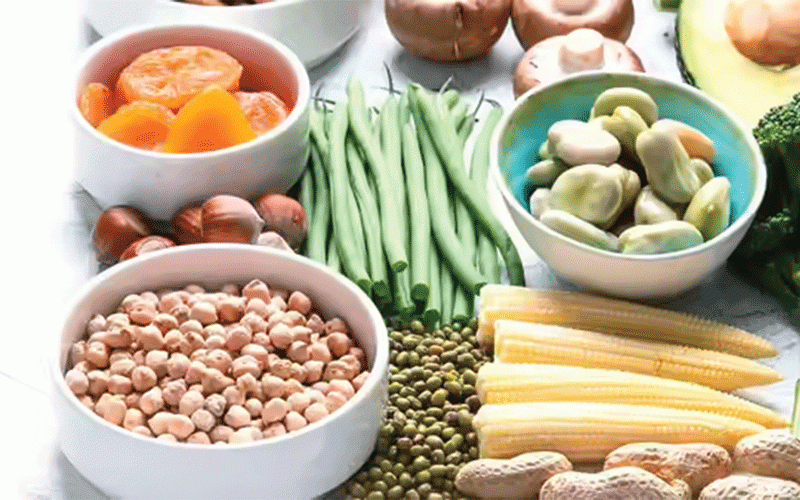
These foods contain large amounts of protein which helps our body to grow and repair itself. Body-building foods include legumes (dried peas and beans) and animal products (such as meat, milk and eggs, and insects). Family members who need extra body-building food include children — because their brains and bodies are growing and pregnant or breastfeeding women.
Although animal products are excellent sources of protein, it is not necessary to get all of your protein from meat. Plant sources, (including cowpeas, beans, soya beans, butter beans and sugar beans) are highly nutritious and are often more affordable than meat or dairy products.
Edible insects also contain high quantities of protein. For example mopane caterpillars (madora, amacimbi) contain three times more protein per gram than beef.
Protective food group
Fruit and vegetables make up the protective food group as they contain large amounts of vitamins and minerals (micronutrients) which strengthen the body and boost the immune system. Most people do not eat enough fruit and vegetables. Research shows that eating large amounts of a wide range of different fruits and vegetables is extremely beneficial to your health, reducing your risk of some cancers, cardiovascular disease and diabetes. In many countries, it is recommended for people to eat at least five different types of fruit or vegetables per day.
Indigenous fruits and vegetables are just as nutritious as exotic ones. For example, amaranth leaves (mowa, bonongwe) contains higher levels of nutrients than covo, rape or cabbage. Baobab fruit (mauyu, umkhomo) is one of the best fruit sources of vitamin C, calcium, magnesium and potassium).
Drying fruit and vegetables for consumption is one way to ensure that you get enough micronutrients all year round.
Fibre is also an important part of our diet. It helps us absorb nutrients from our food, control our weight and improves our digestion. We get fibre from eating whole grain cereals, root and tuber crops, legumes, and especially fruit and vegetables.
Who needs a balanced diet?
Everyone needs to eat nutritious food but the most important time to get a good diet is the first 1000 days of life — from conception until the age of two years. Because the first nine months of our life is inside our mother’s body, pregnant women need a good diet and plenty of rest.
For their first six months, babies need only breastmilk (and no other food or drink) whenever they are hungry — day or night. Breastfeeding mothers also need a healthy, balanced diet during this time. At six months old, babies can be gradually introduced to solid foods in addition to being breastfed. Once the baby has got used to these complimentary foods, they should be given softened balanced meals (containing all of the food groups). Breastfeeding should continue until the baby is two years old.
- This article is adapted from a publication by the Zimbabwe Traditional and Organic Food Forum called Eat Well - Live Well — The Good Food Booklet, produced in 2015.