When Donald Trump stormed into global consciousness, he did more than disrupt American politics; he rewrote the grammar of influence itself. Tweets became decrees, rallies mutated into reality shows, and chaos was transfigured into legitimacy. The spectacle was no longer a sideshow; it became the main stage. In Africa, where youth constitute the majority yet remain politically marginalised, this lesson has not gone unnoticed, but the avatar of this generational insurgency is not a statesman, nor a policy architect. It is a frenetic American streamer: IShowSpeed.
Speed’s arrival on African soil, whether in Lagos, Johannesburg, or Nairobi, is more than entertainment. It is a declaration of insurgent energy. His influence is not reducible to the content of his streams or the antics that make him a meme machine. It is about force, pulse, and presence. He embodies the raw, unfiltered, chaotic rhythm of Gen Z, a generation unwilling to be scripted by the old guard, impatient with hierarchy, hungry for immediacy, and determined to seize the stage without waiting their turn.
In Africa, Speed’s resonance is symbolic: he is the zeitgeist of disruption, a mirror reflecting the continent’s restless youth. His manic energy is not trivial; it is tectonic. It signals a shift in legitimacy from institutions to visibility, from patience to immediacy, from inherited authority to seized attention. To grasp the magnitude of this moment, one must recall Zaire, 1974, the Rumble in the Jungle. That spectacle was more than a boxing match; it was a cultural convulsion. Muhammad Ali’s defiance against George Foreman was staged not merely in the ring but in the imagination of a continent. It was Africa announcing itself as a theatre of global drama, a site where power and charisma could rewrite history. Ali’s rope-a-dope was not just a tactic; it was a metaphor for resilience, for turning vulnerability into victory, for transforming spectacle into sovereignty.
Speed’s African incursions echo that moment. He is no Ali, yet his presence carries the same symbolic charge: the recognition that spectacle itself is power. Just as Ali embodied the insurgent spirit of the 1970s, Speed channels the insurgent spirit of Gen Z. His chaos is their rope-a-dope, a refusal to be subdued, a strategy of turning unpredictability into dominance.
The lesson is clear: Africa’s youth are no longer waiting for permission. They are scripting their own Rumble in the Jungle, not with gloves but with memes, not in Kinshasa’s stadium but in digital arenas that stretch from TikTok to amapiano clubs. Speed is their cypher, their proof that influence can be seized through visibility, virality, and audacity.
Spectacle as Power
Trump’s America did not merely flirt with spectacle; it enthroned it as politics itself. The world watched as institutions bent under the weight of tweets, insults, and rallies that resembled carnivals more than campaigns. Governance became theatre, and theatre became governance. Africa’s Gen Z has absorbed that lesson, but they are not mimicking it; they are remixing it into their own insurgent vernacular. For them, Speed is not a clown; he is a cypher. His manic energy, his refusal to conform, his capacity to turn every moment into a viral eruption, this is the new grammar of influence. It is not about ideology, but about visibility. Not about institutions, but about immediacy. Speed’s chaos is not trivial; it is tectonic. It signals a profound shift in how legitimacy is understood.
In a continent where elders still cling to power, Speed’s chaos is a reminder that legitimacy can be seized, not inherited. His presence in Africa is less about entertainment than about symbolic insurgency: a generational declaration that attention itself has become authority, and that the spectacle is no longer a distraction but a weapon.
- Letter from America: Is former president Donald Trump a hero or villain?
- Chidzivo, Tarakinyu clinch Kabag honours
- Letter from America: Is former president Donald Trump a hero or villain?
- The Fiddler: Is honesty the best policy?
Keep Reading
Africa’s Youth Majority
Africa is the youngest continent on earth, a demographic volcano with more than 60% of its population under 25, yet political power remains stubbornly concentrated in the hands of leaders from the liberation generation of the 1960s and 70s, men who still speak the language of struggle while presiding over societies impatient for transformation. The disconnect is glaring, almost obscene.
Gen Z Africans are not waiting for permission. They are scripting their own insurgency through TikTok, through amapiano, through memes that travel faster than manifestos and cut deeper than policy speeches. Their politics is cultural, their agency digital, their legitimacy viral.
This is where IShowSpeed enters the frame. His resonance lies not in the content of his streams but in his ability to embody impatience itself. He is not African, yet he is claimed by African youth as one of their own, because he incarnates what they crave: unapologetic presence, unfiltered energy, refusal to be ignored and a huge splash of cash. In Speed’s chaos, they see their own insurgent pulse, their refusal to wait their turn, their insistence that visibility itself is power.
The Streamer as Cypher
In the streets of Harare, the clubs of Kampala, the campuses of Nairobi, Speed’s name circulates as shorthand for a new kind of agency. He is not a politician, yet he is unmistakably political. His influence is not measured in policy papers or parliamentary debates, but in the raw currency of attention. This is the paradox of the age of Trump, where disruption itself has become a form of legitimacy and institutions bend not to reasoned argument but to spectacle and to the viral moment that cannot be ignored. Speed’s manic streams, his eruptions into virality, and his refusal to conform all this resonates with a generation raised in the shadow of broken promises and deferred futures.
Critics will dismiss Speed as frivolous, a distraction from Africa’s serious challenges, but that misses the critical point that influence today is not about seriousness; instead, it is a product of presence and Speed’s chaos is a metaphor for Gen Z’s refusal to be ignored. In a continent where unemployment, climate crisis, and authoritarianism weigh heavily, Speed’s resonance is not escapism; instead, it is an insurgency and a brazen refusal to be scripted by elders who insist that patience is a virtue. Gen Z is done waiting.
The New Zeitgeist
The age of Trump taught the world a brutal lesson: disruption is power. Africa’s Gen Z, armed with Speed’s frenetic gospel, is poised to wield that power with unrelenting audacity. The question is no longer whether they will take charge. The question is whether Africa’s leaders, still imprisoned in the logic of the past, will recognise that the zeitgeist has already shifted beneath their feet.
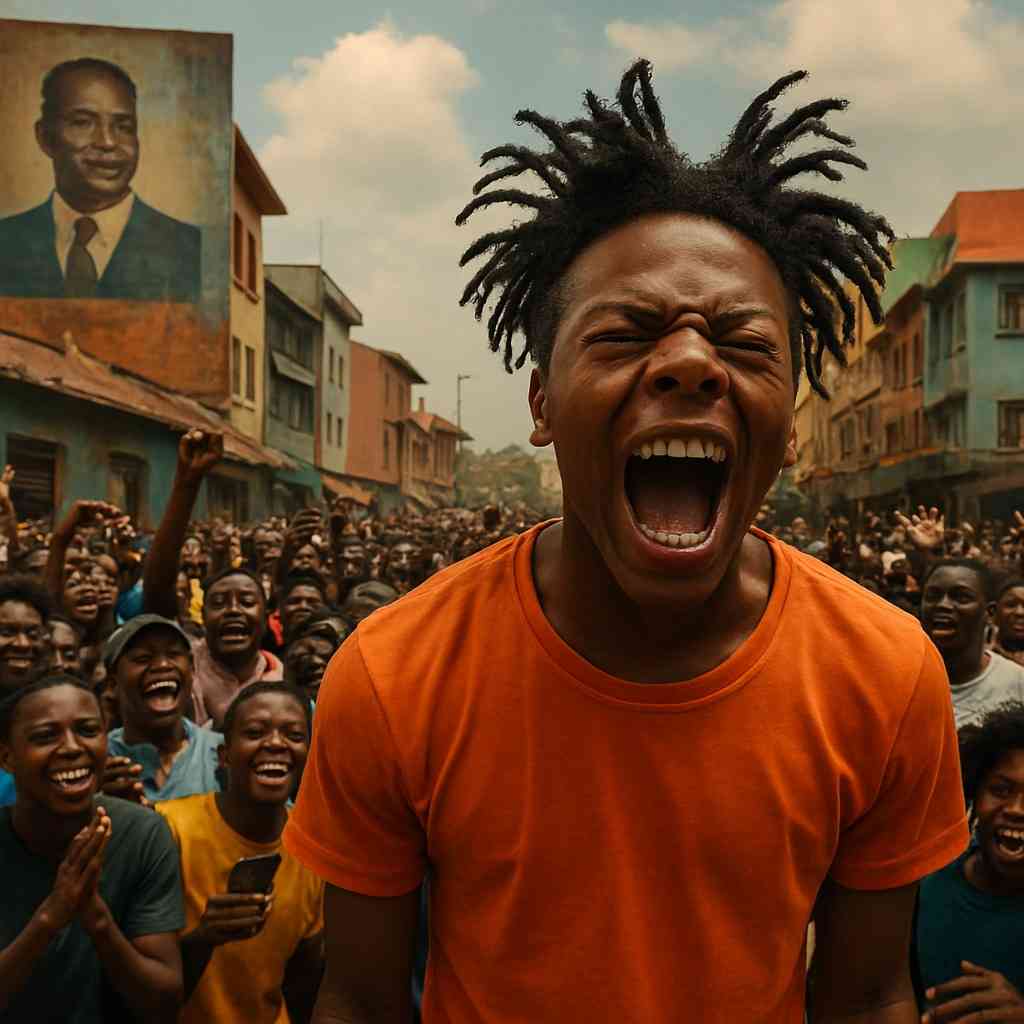
Who is this boy, this fine young man? He speaks no politics, seeks no audience with presidents, yet he draws raw emotion from the masses. He is in Mbare, in the ghettos of Nairobi, Kigali, Johannesburg, and Gaborone. Who is this man? He summons crowds upon crowds, born after Mandela’s death, knowing nothing of Nkrumah’s speeches, and yet, from the streets of Ohio, he ignites a new dawn across Africa’s restless youth.
What Speed has done, Jay‑Z could not pull off; nor could Floyd Mayweather, Snoop Dogg, Beyoncé, or the pantheon of American celebrity. Their presence in Africa has always carried the weight of “American airs”, the aura of distance, the subtle condescension of empire. Speed is different. He arrives stripped of that baggage, raw and unfiltered, a child of Internet 2.0, where borders dissolve, and hierarchies collapse.
Speed is proof that the old categories, First World, Third World, have evaporated. In the age of streaming, memes, and viral immediacy, there is only one world, a single stage where influence is measured not in passports or pedigrees but in presence. His resonance validates the truth that Africa’s youth already know: the world is one, and they are no longer spectators. They are protagonists.
Speed is not the future of African politics, but he is the symbol of its generational insurgency, the cypher through which Gen Z declares that they are done waiting for permission and they are taking charge, through spectacle, through chaos, through visibility.
In Africa, Gen Z is weaponising virality as legitimacy, and Speed is their cypher, their symbol, their declaration. He is African-American, yet he has been fully claimed by African youth as one of their own, a living testament to the undying draw of bloodlines, the stubborn continuity of spirit across centuries of rupture and slavery. His presence validates the bond that history tried to sever but never erased. Indeed, the bones have woken as what was scattered has begun to speak again, not through manifestos or institutions, but through energy, immediacy, and spectacle. Speed’s chaos is the pulse of a generation refusing silence, insisting that the future is theirs to seize.
The new zeitgeist is not about ideology but about visibility. Not about institutions but about immediacy. Gen Z is firmly in charge. The only question that remains is whether Africa’s leaders will awaken to the fact that the future has already arrived, roaring from the streets, unfiltered and unstoppable.
- Wellington Muzengeza is a Political Risk Analyst and Urban Strategist offering incisive insight on urban planning, infrastructure, leadership succession, and governance reform across Africa’s evolving post-liberation urban landscapes.