THE fields of Zimbabwe and its neighbours in the Southern African Development Community tell a story of remarkable resilience these days.
Just a couple of years ago, the brutal El Niño drought slashed maize harvests across the region, leaving families worried about their next meal and countries scrambling for imports.
But as we sit here in mid-December 2025, the picture looks far brighter. Favourable La Niña rains have breathed new life into the soil, harvests are rebounding impressively, and there is a quiet confidence building among farmers, millers, and policymakers alike that the worst might be behind us, for now at least.
Zimbabwe’s maize story captures this turnaround perfectly. Production fluctuated sharply over the past five years: around 1,53 million tonnes in 2020/21, dropping to 0,77 million in 2021/22 due to poor rains, recovering to 1,88 million in 2022/23, then around 1,72 million in 2023/24, before crashing to about 0,8 million tonnes in the devastating 2023/24 drought season.
The 2024/25 season brought strong recovery, with estimates around 1,3 million tonnes according to United States Department of Agriculture figures, though some local assessments suggest higher.
This bounty has reduced import needs from around 700 000 to 1 million tonnes for the current marketing year, giving processors like National Foods and Blue Ribbon a steadier flow of local grain and easing pressure on costs.
South Africa, the undisputed powerhouse of regional maize supply, has been the reliable anchor through it all.
Its production over the last five years showed resilience: 15,5 million tonnes in 2020/21, 16,2 million in 2021/22, 15,3 million in 2022/23, dipping to around 13,5 million in the drought-hit 2023/24, before surging to approximately 16,44 million tonnes in 2024/25, marking the second-largest crop on record and a 28% increase year-on-year.
- Zim headed for a political dead heat in 2023
- Record breaker Mpofu revisits difficult upbringing
- Tendo Electronics eyes Africa after TelOne deal
- Record breaker Mpofu revisits difficult upbringing
Keep Reading
Even in tougher years, its commercial farms kept exporting, with Zimbabwe taking a large share during deficits. Agricultural Business Chamber of South Africa (Agbiz) reports highlight strong yields in core areas such as Free State and Mpumalanga, supporting robust exports.
Leading agricultural economist Wandile Sihlobo recently noted that South Africa has lifted its maize export forecast for the 2025/26 marketing year to 2,4 million tonnes, up slightly from previous estimates of 2,2 million, comprising about 1,4 million tonnes of white maize and one million tonnes of yellow maize.
Half of these exports are already shipped, with momentum expected in early 2026, primarily to Southern Africa and Far East markets, and Zimbabwe positioned as a key buyer.
This upward revision, while still below the previous year’s 2,8 million tonnes, reinforces South Africa’s critical role in buffering regional deficits.
Sihlobo also points to early challenges in the 2025/26 production season, where excessive rainfall has delayed planting and affected germination in some areas, yet optimism remains high for another solid crop given ongoing favourable conditions.
Zambia’s performance adds balance, with output in good years reaching 3,6 million tonnes, dropping sharply to 1,5 million in 2023/24 drought, then rebounding to 3,66 million tonnes in 2024/25. Trade flows reflect these shifts vividly. Zimbabwe remains a net importer, but volumes have eased.
South Africa dominated supplies during the crunch, though a short-lived import ban mid-2025 aimed to protect local growers was lifted by October as realities set in.
Zambia’s recovery promises more options ahead, fostering healthier competition. Looking to the 2025/26 season now underway, La Niña forecasts point to normal-to-above-normal rains across much of Sadc.
South African farmers plan sizable plantings, setting up another solid crop, while Zambia anticipates surpluses and Zimbabwe aims higher with continued support.
Risks linger, late dryness, pests like fall armyworm, rising input costs, but the momentum feels positive.
On the seed production front, companies like Seed Co Zimbabwe are feeling the pinch of seasonal quirks and shifting regional demand.
The first half of the current financial year turned out underwhelming, with delayed plantings pushing sales into later months, a thinner winter wheat crop cutting into volumes, and weaker regional exports as neighbouring countries rebuilt their own stocks after last year’s shortages.
Analysts note that this half-year lull is fairly typical, costs pile up early, while revenues cluster in the rainy season peak, but the absence of those big export boosts and the lean wheat performance mean full-year earnings likely will not quite match prior highs, even with an expected robust second-half recovery driven by the stronger La Niña rains.
This volatility underscores a deeper reality for the seed industry: Zimbabwe’s maize sector remains heavily tied to rainfall patterns, made more unpredictable by climate change over the past decade.
For farmers, it means betting big on the right seed varieties each season, drought-tolerant hybrids can make or break yields, but access and timing remain critical.
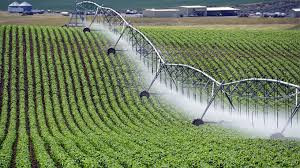
The government has a clear incentive to ramp up irrigation investments and support faster rollout of newer, climate-adapted varieties to smooth out these swings and push toward self-sufficiency.
Manufacturers downstream, from mealie-meal producers to feed mills, benefit from steadier seed supply translating into more reliable planting and harvests, reducing their exposure to import spikes and price shocks.
In the end, bridging this rain-dependent gap through innovation and infrastructure could unlock more consistent growth for everyone in the value chain.
Broader forces are at play too. Globally, ample maize supplies from giants like the US and Brazil keep prices moderate, offering a buffer.
Yet climate change looms large, amplifying extremes: hotter temperatures, shifting rains, more frequent El Niños eroding yields in rain-fed systems that dominate here.
In Zimbabwe’s semi-arid zones, soils degrade faster, and pests thrive in the warmth.
The region cannot ignore this, adaptation is essential. That is where programmes like Pfumvudza shine, promoting conservation agriculture: mulching, minimal tillage, intercropping with legumes, drought-tolerant seeds.
Scaled to millions of smallholders, it is lifting yields even on marginal land. Irrigation expansion, solar-powered schemes, and digital tools for better planning are gaining ground, helping farmers produce year-round and inch toward true self-sufficiency.
Finance, Economic Development and Investment Promotion minister Mthuli Ncube’s 2026 budge underscores this commitment, carving out about ZiG26,8 billion (US$1,02 billion) for agriculture, focused on dams, irrigation, livestock support and reserves.
Coming after drought scars, it signals a push for climate-proofing, directly aiding maize growers with subsidies and infrastructure.
For companies relying on maize, millers turning it into mealie meal or feed producers, these trends offer real opportunities.
Supply looks more stable, potentially softening raw material prices if rains hold. Locking in local contracts with climate-smart farmers could secure sustainable chains.
Policymakers, meanwhile, have clear signals: harmonise trade rules, build reserves, double down on resilience investments to weather future shocks.
Across Sadc, the maize sector is not out of the woods, climate threats demand vigilance, but the recovery underway shows what is possible with good weather, smart policies and regional solidarity.
Manufacturers and decision-makers ignoring these shifts risk getting left behind; those tuning in could help steer toward lasting food security. It is a fragile balance, but one worth nurturing.
- This article was first published by Equity Axis in its latest weekly newsletter, The Axis. Equity Axis is a financial media firm offering business intelligence, economic and equity research.