AS Zimbabwe pushes to expand gold output and strengthen foreign currency earnings, Freda Rebecca Gold Mine has emerged as the backbone of the state’s mining ambitions. The mine contributed about 70% of the state-run Mutapa Gold Resources’ output in 2025, producing 2,2 tonnes. With a planned US$250 million investment drive across Mutapa’s gold assets, Freda is under pressure to sustain production, cut costs and extend its mine life beyond four years. In this interview, our senior reporter Freeman Makopa (FM) speaks to Freda general manager Alfred Chinyere (AC,) about expansion plans, rising operating costs, exploration drilling and the strategy to reduce dependence on one mine. Find below excerpts from the interview:
FM: Freda Rebecca accounts for about 70% of Mutapa Gold Resources’ output. What specific operational risks does this concentration create for national production stability?
AC: Having one business unit carrying the biggest load of the gold portfolio, I understand, presents a risk. But I think overall there is a de-risking process, with the construction of the Shamva plant. What that then does is that Shamva is going to be brought to around 200kg per month — where we are sitting. We will push further upwards to around 250kg or thereabouts. So that will automatically de-risk the business.
The construction of the Shamva plant is expected to start in earnest around July. So our expectation is that in about two years’ time, that de-risking process would have been totally completed. For now, it sits like that, but clear plans are in place so that we do not remain the biggest portfolio carrying the biggest risk for the group.
FM: You reported 2,2 tonnes of gold in 2025. What was the main driver of this output?
AC: We cannot take away the fact that the gold price played a major role because in any business, especially gold mining, the biggest input is strong cash flow. So, when the gold price surged, we were capable of financing the procurement and refurbishment of key pieces of equipment, which helped improve availability and productivity.
But overall, we also have a very good workforce. It is highly-competent and well-motivated. They worked very hard to make sure that we achieved our targets as we did.
FM: Given the push to 570kg per month by 2028, how confident are you and what are the bottlenecks that might limit immediate production scaling?
- Interview: Freda Rebecca bullish as investments pay off
- EditorialComment: Why Vision 2030 will flop
- Kuvimba launches sustainability campaign
- Shamva deploys US$1,5m of US$7m capex budget
Keep Reading
AC: If you look at Freda, it is about plant capacity.
We are operating at our maximum. Let me say we have reached our inflection point and there is not much more scaling up that can be done. The story around any further upgrades at Freda is related to utilising the plant capacity that will be freed up by Shamva.
So really, there is no magic that we are going to be doing anymore. We have reached our total capacity for now, but what we are going to do going forward is process some of the low-grade ore that we are foregoing now.
Because we will have extra capacity, we can leverage the higher gold price while increasing profitability in the process.
FM: What is Freda’s current sustaining cost per ounce and how has it changed over the last 24 months?
AC: I normally want to talk about the C1 (direct cash cost of producing one ounce of gold) because that is the main metric of importance when it comes to operational efficiency. Our C1 cost hovers around US$1 400. It reflects how we are producing a quality ounce.
For now that metric has remained around US$1 400 for quite a while. Sometimes we push it down to around US$1 300 on the back of improved production volumes. Let me say we have over time enjoyed a good production trend and in March, we had record production where we produced around 240kg.
Once you do that, you lower your cost per ounce dramatically. Another factor is cost management. It has been a key issue because we are a very large operation. You want to optimise activities by lowering the cost of production.
This is exactly what we have done through improving efficiency. Where you need to manage costs in a certain way, you do cost-containment measures and invariably lower the C1.
FM: How are rising energy costs affecting production efficiency?
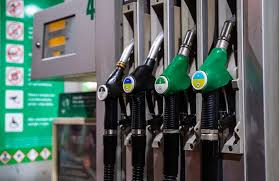
AC: This mine really operates on tonnage and uses a lot of fuel. We consume around 23 000 litres of fuel per day. Every single day, we move almost half a truckload of fuel. In terms of cost, we have seen an additional half a million in costs because of the increases we are seeing now. We have a power management programme where we want to have a stable line installed through Trojan. We are already in project mode and by January next year, it should be complete.
But for fuel it is a geopolitical issue, so we will see how it goes. Because of the gold price, we have not been affected as much because half a million out of the profitability we are generating is not a major knock. But it is something to worry about. Hopefully it will not continue rising again.
FM: As a strategic national asset under state ownership, how do you balance commercial efficiency with government development expectations?
AC: All we know is that we have certain key performance indicators and inputs into the national development strategy. Right now we are looking at National Development Strategy 2.
We play a very important role in ensuring that our productivity remains high and that we continue being a major exporter. So, our operational job is to make sure that the production numbers we set out in the budget are achieved.
FM: Are current geological reserves sufficient to support long-term expansion, or is the mine approaching its limits?
AC: Right now, we have a mine life of four years. That is low when you look at global standards
You want that mine life to be a minimum of 10 years.
The four-year mine life has existed for many years because you deplete and then add. So what you want is a higher rate of addition against depletion, which is exactly what we are doing now. We have a very aggressive exploration campaign.
This year alone, we are going to drill 46 000 metres in exploration drilling. When converted into mine life, we are looking at nothing less than nine years. So that problem should be solved for good by the end of this year.