
A Zimbabwean agency tasked with marketing the country’s vast mineral endowment says it is absorbing nearly US$500 000 in monthly revenue losses from the lithium export ban imposed in February.
It is the latest feedback in a cascade of setbacks that have stalked Zimbabwe’s lithium sector since the shock directive halted raw exports. Cashflows were disrupted, straining fragile financing structures underpinning a young but strategic industry tied to the global shift toward battery-powered vehicles.
What began as a bold policy thrust to force value addition has, in the short-term, morphed into a grinding test of endurance.
The Zimbabwe Independent reported recently that domestic lithium miners were already on the brink, with some operators mothballing operations in response to the ban. The Lithium Association of Zimbabwe said cashflow constraints had rippled across the sector, briefly unsettling prices in China, the main export market.
Responding to questions this week, Minerals Marketing Corporation of Zimbabwe (MMCZ) general manager Nomusa Moyo said the shockwaves were also hitting state institutions.
“Prior to the ban, Zimbabwe was exporting volumes of raw lithium that could have generated exponentially more value domestically,” Moyo told the Independent.
“While the ban has resulted in a temporary revenue setback of approximately US$462 292 per month in terms of MMCZ commission, this represents deferred rather than lost revenue as we transition to higher-value processed mineral exports.
“It is important to note that the ban is a strategic policy measure aimed at promoting local value addition and beneficiation of lithium resources, which will enhance revenue generation, industrial development and employment creation.”
- Disgruntled chrome miners meet govt over poor prices
- Zimra seizes CCC campaign vehicle
- ZDI defends AK-47 rifles 'smugglers'
- Firearms smuggling suspect weeps in court
Keep Reading
Her remarks frame the official narrative, also echoed in some affected markets, that this was a necessary sacrifice in pursuit of long-term industrial transformation.
But beneath that vision lies a widening fiscal and industrial strain.
Industry sources say Zimbabwe could be losing as much as US$60 million monthly in royalties and taxes following the indefinite ban, demonstrating the scale of disruption to Treasury inflows.
“Before the ban came into being, the MMCZ and Zimbabwe Revenue Authority (Zimra) were collecting close to US$60 million in taxes and royalties from the five largest lithium mining firms,” an industry source said. “While the ban is commendable, it has severely choked revenue streams. The consequences are far-reaching.”
On Wednesday, Zimra said questions posed by the Independent relate to national policy decisions and their broader fiscal implications.
“In line with our mandate as a policy implementation agency, we respectfully request that you engage the relevant ministry, which is best placed to provide comprehensive and authoritative guidance on the matter,” the taxman said.
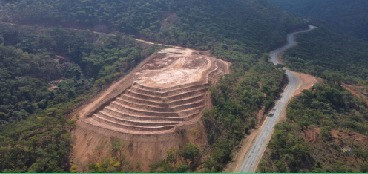
Zimbabwe’s largest lithium operations, many of them Chinese-owned, include Bikita Minerals, Arcadia, Zulu Lithium, Sabi Star Lithium Mine and Kamativi Lithium. Government, through Mutapa Investment Fund, also controls Sandawana Mine.
The numbers tell a story of astonishing ascent, and sudden interruption.
Zimbabwe’s raw lithium exports surged from about US$7 million in 2020 to nearly US$600 million within a few years, driven largely by shipments to China’s booming electric vehicle battery industry. It was one of the fastest growth trajectories in the country’s mining history. But it has now been abruptly halted mid-flight.
On the ground, the effects are immediate.
Industry players say the country’s five largest producers, employing about 9 000 workers, have scaled down operations and are largely mining to stockpile ore, a stopgap strategy that buys time, but offers little certainty.
“At the moment, we are only stockpiling since the ban came into play. Costs of production are rising by the day,” a source said. “It is uncertain if firms will preserve jobs. We are engaging government to explore ways of protecting the sector while companies invest in processing plants.”
What is emerging is a sector caught between policy ambition and operational reality. Mining firms have begun pivoting toward local processing, signalling alignment with government’s long-term vision.
Bikita is planning a US$400 million lithium chemicals plant expected next year, positioning itself within Zimbabwe’s beneficiation push. Sinomine acquired the asset in 2022 for US$180 million, but the lag between investment and returns exposes the gap between immediate losses and deferred gains.
Globally, the tremors have not gone unnoticed. Lithium carbonate futures have surged to about US$25 800 per tonne, nearly doubling since late 2025, reflecting tightening supply expectations.
Shares of major lithium producers have also rallied on global exchanges as investors recalibrate around constrained supply.
At the time the ban was announced, analysts warned global lithium supply could shrink by between 8% and 16%, underlining Zimbabwe’s strategic weight in the battery minerals market.
In a rare diplomatic signal, the Chinese embassy in Harare urged investors to tread cautiously, highlighting long-standing concerns over policy unpredictability — now at the centre of the lithium debate.