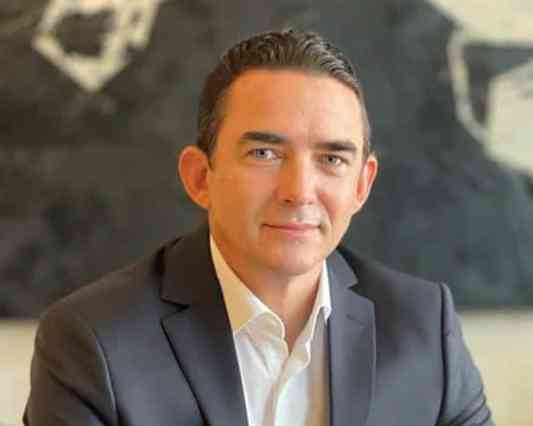
A TECHNICAL discussion on fiscal and monetary credibility at the CEO Africa Round Table took a more probing turn when WestProp Holdings chief executive Ken Sharpe challenged policymakers to confront what he described as Zimbabwe’s deeper structural weakness — an economy rich in assets, yet unable to convert that wealth into usable capital.
Sharpe argued that Zimbabwe’s constraints run deeper than policy inconsistency or currency instability, instead pointing to a systemic inability to financialise existing assets.
“I would like to challenge us to confront what may be the core structural issue beneath this discussion,” Sharpe said. Framing Zimbabwe as a textbook case of “dead capital,” Sharpe argued that the country’s economy is asset-rich but liquidity-poor.
“The problem in many developing economies is not a lack of assets — but a failure to convert those assets into usable capital,” he said.
“Zimbabwe fits this pattern very closely.” He cited property as the most visible example.
Zimbabwe, he noted, has over one million legally titled homes, alongside a significantly larger stock of untitled property, with a combined estimated value of about US$100 billion.
“Yet over 99% of this value remains economically ‘dead’, because it cannot be leveraged at scale within the current formal financial system,” Sharpe said.
Even a limited shift could have outsized impact, he argued.
- Change tack on economy: Chiwenga
- ‘Govt reviewing ownership model of struggling SOEs’
- Govt eyes solar farm to ease power crisis
- Zacc asked to probe Harare land deals case
Keep Reading
“Even if we unlock just 20% of that value, we are talking about US$20 billion in long-term financing,” he said.
“That gap — between what exists and what is accessible — is what keeps citizens asset-rich on paper, but excluded from real liquidity and wealth creation.”
To illustrate what functional capital markets look like, Sharpe pointed to Switzerland, where mortgage lending exceeds 150% of gross domestic product.
“That is what alive capital looks like—assets fully integrated into the financial system, driving liquidity, investment, and prosperity,” he said.
The comparison underscored his central thesis: Zimbabwe is not short of assets, but of mechanisms to transform them into financeable capital. Sharpe’s intervention also exposed a deeper tension in Zimbabwe’s monetary policy debate, particularly around efforts to de-dollarise the economy.
“A mortgage market — and capital formation at that scale — requires a stable store of value, deep confidence in the currency, and long-term policy credibility,” Sharpe said.
“In the absence of that, the market has naturally defaulted to USD for preservation of value.”
He then posed a pointed question to policymakers:
“Are we attempting to de-dollarise before we have created the conditions that allow capital to exist confidently in local currency?”
Sharpe further challenged authorities to address the scale mismatch between financing needs and monetary realities.
“How does the central bank propose to bridge the gap between the US$20 billion required just for housing, and an economy-wide requirement that likely exceeds US$100 billion — given that the current domestic currency cannot support that scale or duration of financing?” he asked.
Until that structural gap is resolved, Sharpe warned, Zimbabwe’s vast property base will remain underutilised — limiting both liquidity creation and broader economic expansion.
“Because until that gap is addressed, our assets will remain assets — but they will not become usable capital to unlock liquidity and give people the opportunity to create wealth,” he said. — Staff Writer.