
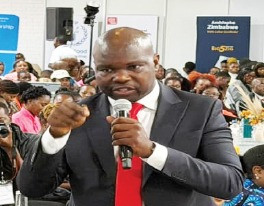
This week, a US$1 million youth fund is expected to begin disbursements across provinces. It is being touted as a bold intervention by President Emmerson Mnangagwa’s government to support thousands of young Zimbabweans trapped in poverty after years of economic decay.
The truth is this is not bold, but a small, overdue response to a crisis the government itself created. And unless handled with ruthless discipline, it will degenerate into yet another patronage pipeline that prioritises the well-connected.
Zimbabwe’s youth do not suffer from a lack of ideas. They suffer from a State that destroyed industries, wiped out savings, and then shut them out of the financial system it crippled. In a country with over 90% unemployment, where more than 1,5 million have fled into artisanal mining, US$500 loans are not transformation. The cost of doing business is too high in Zimbabwe.
Loans of US$500 are just survival scraps.
Yes, access to capital matters. But this is not visionary policy. It is damage control after years of economic vandalism.
The government now claims it wants to fix the mess. This is fine, but it must first prove it can resist its own instincts.
History is damning.
Zimbabwe has seen this movie before, and it always ends the same way. Empowerment funds are captured, looted, and quietly buried. From Kurera/Ukondla to the Distressed Industries and Marginalised Areas Fund, millions disappeared into politically connected pockets. During hyperinflation, cheap loans became a feeding frenzy. Repayment was optional, and accountability was non-existent.
- NoViolet Bulawayo’s new novel is an instant Zimbabwean classic
- Jah Prayzah, Zanu PF rekindles ‘lost love’
- Bank workers appeal to Ncube for tax relief
- Indosakusa marks 21-year anniversary milestone
Keep Reading
These were not policy, but governance failures.
That is why political neutrality is not a technical detail — it is the entire test.
In Zimbabwe, funds do not collapse because of poor design. They collapse because they are captured. Beneficiaries are handpicked through political networks. If this fund follows that script, it will not empower youth, but insult them.
The government must therefore do what it routinely avoids. It must expose the process, publish criteria, name beneficiaries and allow scrutiny. Anything less than this invites suspicion, and rightly so.
Then comes enforcement. This is where most of these schemes collapse.
Loans must be recovered relentlessly, without exceptions. Not even for the well-connected. Because the moment one politically-protected defaulter walks away, the entire fund is finished.
And let’s not pretend about scale. US$1 million is symbolic, almost tokenistic. That makes discipline non-negotiable. Waste at this level is not just incompetence but contempt.
Zimbabwe’s youth do not need another recycled promise dressed up as empowerment. They need fairness, transparency and a system that does not ask who they know before deciding what they deserve.