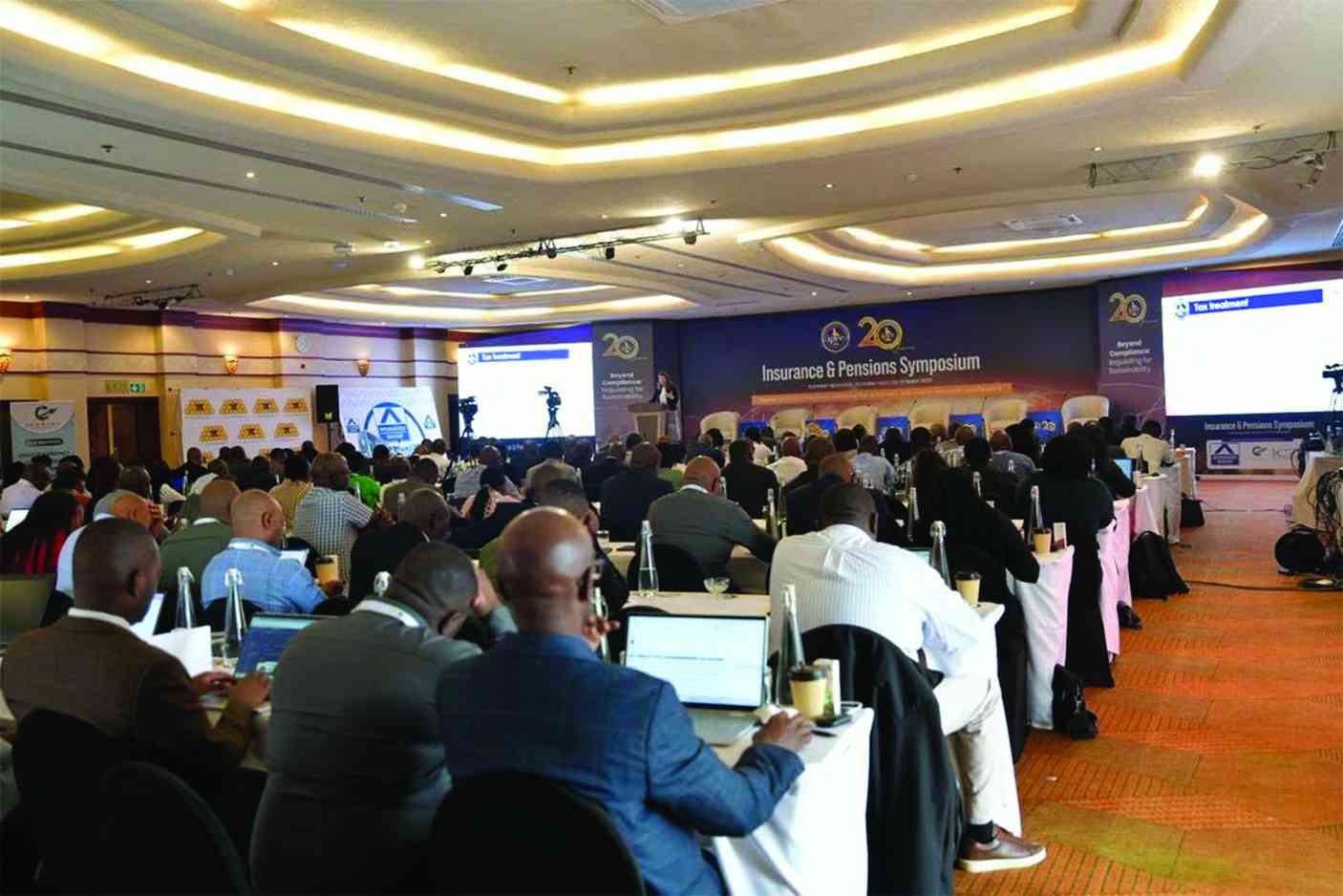

OVER the past two decades, Ipec has played a transformative and increasingly influential role in shaping Zimbabwe’s insurance and pensions sector.
From its modest beginnings in 2006, the commission has evolved into a credible, forward-looking regulator, navigating complex economic cycles, implementing far-reaching reforms and steadily rebuilding confidence in a sector that is fundamental to financial security and long-term economic development.
Operating within a dynamic and, at times, challenging macro-economic environment, Ipec has demonstrated resilience, adaptability and strategic foresight. Through a combination of regulatory reform, institutional strengthening and proactive stakeholder engagement, the commission has contributed to restoring stability, enhancing transparency and promoting sustainable growth within the sector.
Its interventions have not only strengthened oversight, but have also repositioned insurance and pensions as critical pillars of financial inclusion, risk management and national development.
A defining feature of the commission’s journey has been its ability to learn from past challenges and translate those lessons into progressive policy and regulatory action.
From addressing the legacy issues arising from hyperinflation, to guiding the sector through currency transitions, and more recently embracing risk-based supervision and digital transformation, Ipec has consistently demonstrated a commitment to continuous improvement and innovation.
Equally important has been the commission’s deliberate focus on building internal capacity and institutional resilience. Through targeted investment in human capital, the establishment of specialised functions, and the adoption of modern systems and technologies, Ipec has strengthened its ability to effectively discharge its mandate in an increasingly complex regulatory landscape.
Beyond regulation, the commission has played a pivotal role in driving financial inclusion and consumer empowerment. Through structured consumer education programmes, media engagement, and outreach initiatives, Ipec has enhanced public understanding of insurance and pensions, enabling more Zimbabweans to make informed financial decisions and access appropriate financial protection mechanisms.
- UK based Zimbabwean divorces wife of 33 years over conjugal rights
- New perspectives: Money laundering red flags in insurance sector
- 3 000 non-resident pensioners owed US$1.5 million, says Ipec
- Removing barriers to women’s financial inclusion
Keep Reading
This chapter presents a comprehensive overview of the commission’s key achievements and sectoral impact over the past 20 years. It highlights progress across multiple dimensions, including:
Institutional growth and human capital development;
Regulatory and supervisory reforms;
Advancement of financial inclusion;
Promotion of innovation and digital transformation; and
Strengthening of consumer protection and market conduct.
Taken together, these achievements reflect a journey of transformation, resilience and purpose-driven leadership. They underscore the commission’s central role in shaping a more stable, inclusive and sustainable insurance and pensions sector, one that is better positioned to support Zimbabwe’s long-term economic aspirations and protect the financial futures of its citizens.
Human capital development
At the heart of the commission’s 20-year journey lies a powerful story of people — of growth, dedication and the deliberate building of institutional capacity against the odds.
When Ipec commenced operations in 2006, it did so with a modest team, ending the year with just 17 staff members, of whom 12 were directly involved in regulatory work, while five provided critical support services. This small team was tasked with the immense responsibility of supervising over one thousand insurance and pension entities across the country.
The scale of the mandate, juxtaposed against the limited human resources, underscores the magnitude of the challenge faced by the young institution in its formative years.
Yet, it is within these humble beginnings that the foundations of today’s commission were laid. The early staff carried not only the workload, but also the vision of building a credible and effective regulator.
Their commitment, resilience and sense of purpose became the cornerstone upon which the institution would grow.
Over the years, this foundation has been deliberately strengthened through sustained investment in human capital.
Today, the commission boasts a staff complement of 138 professionals, reflecting a significant expansion in both size and capability. More importantly, this growth has been accompanied by a diversification of skills and expertise, enabling the commission to respond to the increasing complexity of the insurance and pensions sector.
The commission has developed a multidisciplinary workforce with competencies spanning:
Actuarial;
Finance and investment analysis;
Legal and regulatory enforcement;
Economics and policy development;
Information and communication technology;
Corporate governance, audit and compliance; and
Consumer education and communication.
This evolution has transformed Ipec from a resource-constrained entity into a technically robust and well-rounded regulator, capable of addressing both traditional and emerging risks within the sector.
Equally notable is the commission’s success in fostering a strong institutional culture. With staff retention rates exceeding 95%, Ipec has built a stable and cohesive workforce characterised by professionalism, integrity and a shared commitment to public interest.
Beyond its internal development, the commission has also contributed to regional capacity building, particularly in actuarial assurance and regulatory practice. Through secondment of actuarial skills to assist fellow regulatory authorities in the region in establishing their actuarial functions, Ipec has positioned itself as a centre of excellence.
Infrastructure development
A key pillar of the commission’s growth over the past two decades has been its deliberate investment in infrastructure and institutional development.
At inception in 2006 until November 2011, the commission operated from rented offices at Finsure House along Kwame Nkrumah Avenue in Harare.
In a significant milestone towards institutional stability, Ipec acquired its first property in 2010, a house in Greendale, Harare. This marked the beginning of the Commission’s transition from reliance on leased premises to ownership of strategic assets.
As the commission continued to grow in both scope and staff complement, the need for larger and more centralised office space became increasingly evident. This culminated in a major investment in 2022, when Ipec acquired a substantial property in the Harare central business district. This facility, with the capacity to accommodate at least 150 staff members, represents a significant step in aligning infrastructure with institutional growth.
Looking ahead, the commission has taken an even more forward-looking step by acquiring a stand in Borrowdale, Harare, where a purpose-built Ipec head office is planned.
Collectively, these investments, from rented offices to owned properties and future infrastructure, tell a compelling story of institutional maturity and strategic foresight.
Institutional transformation
The combined evolution of human capital and infrastructure reflects a broader narrative of institutional transformation and maturity.
From operating out of rented premises with a handful of staff, Ipec has grown into a well-established institution with a strong human resource base and a permanent physical footprint.
These investments have not only enhanced operational efficiency but have also strengthened the commission’s ability to effectively discharge its mandate in an increasingly complex and dynamic environment.
As Ipec celebrates 20 years of existence, its journey in building institutional capacity stands as a testament to vision, resilience and strategic foresight — laying a solid foundation for the next phase of growth and impact in Zimbabwe’s insurance and pensions sector.