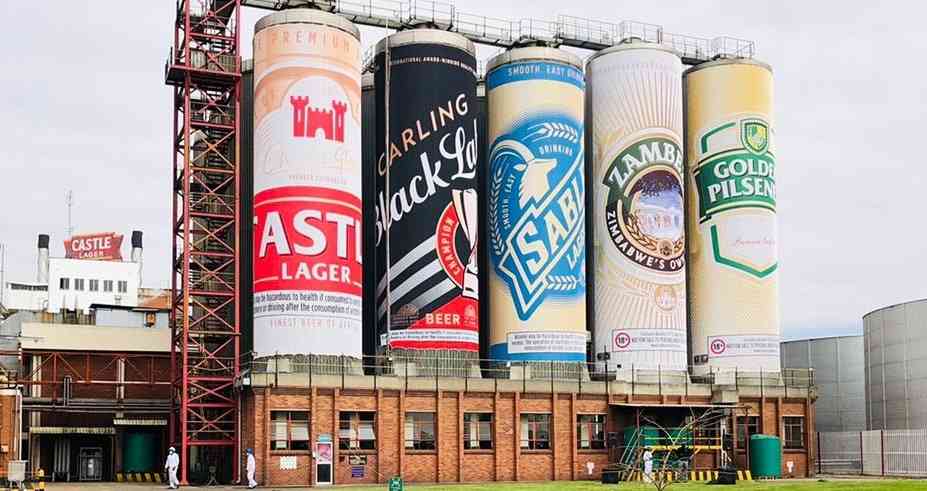
Zimbabwe’s biggest beverages maker, Delta Corporation, said this week it was investing in expansion after a surge in demand exceeded forecasts.
It is a sweet headache in a market where the rest of the sectors are struggling as demand falters. The Zimbabwe Stock Exchange-listed blue chip said higher demand was being driven by stronger performance in mining, improved agricultural incomes and resilient remittances.
Delta’s interests span a range of soft drink and alcoholic beverage production, making it one of Zimbabwe’s biggest firms by market capitalisation. It says demand has rebounded in its lager beer and Maheu businesses, creating capacity constraints.
Group treasurer Tumai Mafunga told businessdigest that the company was adequately positioned in several of its key product segments, but was experiencing pressure in categories where demand growth had accelerated.
“We have adequate capacity in sparkling beverages and sorghum beer segments of the business,” Mafunga said.
“Capacity constraints are more pronounced in the lager beer business and Maheu,” he added.
“The business invested ahead of the curve based on the best forward view that management had at the time,” Mafunga told businessdigest.
“As we have pointed out in previous results, the demand recovery has been materially stronger than earlier planning assumptions, supported by stable retail prices, stronger mining receipts, improved agricultural incomes and resilient diaspora inflows.”
- Currency crisis hits capital markets
- We are climbing out of hard lockdowns, says Delta boss
- Currency crisis hits capital markets
- We are climbing out of hard lockdowns, says Delta boss
Keep Reading
As Zimbabwe’s largest listed consumer company, Delta is often viewed as a barometer of broader economic activity. Its products are sold across urban and rural markets, giving the company a unique perspective on household spending patterns and shifts in consumer confidence.
Mining, Zimbabwe’s largest export earner, continues to benefit from strong gold production and rising investment in lithium projects.
Agriculture has also contributed to the recovery. “In that context, the issue is less one of underinvestment than of demand accelerating faster than the normal investment cycle could reasonably anticipate,” Mafunga said.
“It is also important to recognise that capacity projects of this scale carry long lead times from approval to commissioning, and those timelines have been further stretched in the post-Covid environment by equipment supply constraints and broader geopolitical disruptions,” Mafunga added.
Manufacturers worldwide continue to face challenges securing industrial machinery and specialised equipment, while shipping disruptions and geopolitical tensions have increased costs and delayed project implementation.
“Delta has continued to invest through that period and has indicated a substantial capital programme across the group, with current projects specifically aimed at relieving the pressure points in lager beer going into the 2026 peak season,” Mafunga said.
The expansion programme is expected to increase capacity in high-growth categories while supporting future demand as the economy continues to strengthen.
The investment drive also carries broader implications for Zimbabwe’s economy.
Economists note that stronger consumer demand often triggers additional capital expenditure, creating a positive cycle in which rising consumption encourages investment, supports employment creation and stimulates further economic growth.
Meanwhile, the firm is projected to grow revenue by 19,6% to US$1,31 billion in the financial year ending March 31, 2027, underpinned by the capacity expansions, stronger contributions from Schweppes Zimbabwe and sustained growth across its beverages portfolio, according to IH Securities. The forecast follows a strong FY26 performance in which Delta surpassed the US$1 billion revenue mark. The beverages giant also reported profit after tax of US$151,85 million, up nearly 36% from the previous year, while cash generated from operations rose to almost US$199 million. The group closed the year with US$56,76 million in cash and cash equivalents.
“We forecast FY27 revenue of US$1,31 billion, with EBITDA (earnings before interest, taxes, depreciation and amortisation) margins settling at approximately 21,5% in the near term, reflecting Middle East supply chain pressures, notably a circa 30% increase in fuel costs, before recovering as capacity efficiencies take hold,” IH Securities said.
“Crossing US$1 billion in revenue for the first time, surpassing the FY98 Sorghum Beer volume record and delivering 42% EBITDA growth in a single year is a high-quality outcome by any measure.
“The Schweppes consolidation was well-timed and attractively priced at 0,9x book against a peer median of 4,0x P/Bk, positioning Delta as a near-complete beverages platform with management targeting improved performance from FY27.”
IH Securities said Delta’s planned US$120 million capital expenditure programme for FY27 was aimed at addressing persistent supply constraints in its lager beer business, where demand has continued to outstrip available capacity.