
UNIFREIGHT Africa Limited’s FY2025 financial performance presents a business in transition, balancing operational expansion with significant margin compression.
Signs of strain began to emerge in FY2024, and the latest results confirm that while volumes and strategic positioning continue, profitability remains under pressure.
Meanwhile, the group’s acquisition of Cheetah Express Logistics marks a deliberate shift toward a more diversified, service-oriented logistics model, with potential implications for earnings quality going forward.
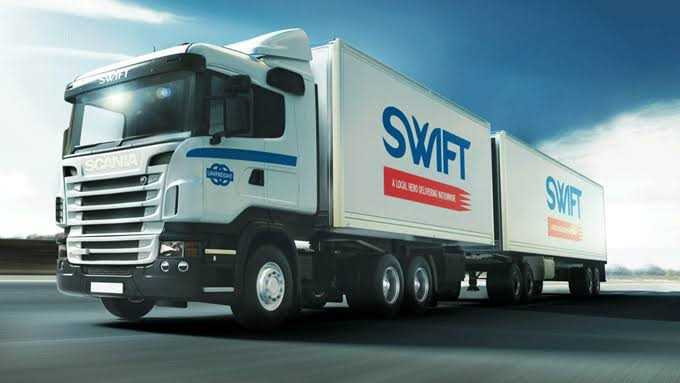
Unifreight operates as an integrated logistics group anchored by its Swift brand, supported by Bulwark Transport and Skynet Worldwide Express.
Its model spans bulk freight, distribution, cross-border transport and courier services, increasingly complemented by fourth-party logistics (4PL) solutions.
The acquisition of an effective 86,67% stake in Cheetah Express Logistics (the sole authorised FedEx Express partner in Zimbabwe) fits squarely within this strategy.
It introduces a higher-margin, asset-light courier segment into a historically asset-heavy trucking business, effectively broadening the group’s revenue mix while strengthening its role as an end-to-end logistics provider with both domestic reach and global connectivity.
From a financial perspective, FY2025 reflects continued operational activity, but weaker earnings efficiency. Revenue translates to approximately US$36,3 million, indicating a recovery from FY2024 levels (c.26,8 million) in real terms.
- Unifreight in US$2,08m deal to acquire local FedEx Express partner
- Unifreight buys 86.7% of FedEx Zimbabwe partner in US$2.08m deal
- Unifreight navigates margin squeeze, bets on acquisitions
Keep Reading
However, margin performance tells a more sobering story. EBITDA margin declined sharply to 14,34% in FY2025 from 38,47% in FY2024, extending a downward trend from the 56,43% peak recorded in FY2023. Net profit margin followed a similar trajectory, falling to 11,20% from 22,23% in the prior year.
This margin compression highlights a significant deterioration in operating efficiency. While revenue has stabilised, cost pressures have intensified, particularly within core transport operations. Rising fuel costs, maintenance expenses, and fleet expansion-related inefficiencies appear to have diluted operating leverage.
In addition, the business continues to operate in a complex macroeconomic environment which further complicates cost management and pricing dynamics.
Importantly, EBITDA in USD terms declined to approximately US$5,2 million in FY2025 from around US$8,2 million in FY2024, reinforcing the view that profitability has not kept pace with operational scale. Net profit, while still positive, also reflects this pressure, with earnings increasingly sensitive to cost fluctuations rather than volume growth.
The sharp decline in margins suggests that the expansion strategy pursued over the past two years is still in its investment phase, with benefits yet to materialise.
Against this backdrop, the acquisition of Cheetah Express Logistics represents a strategic attempt to rebalance the earnings profile.
The US$2,08 million transaction, funded partly through internal cash and largely through debt (US$1,87 million) at a 10,5% interest rate, gives Unifreight immediate exposure to the express courier market.
From a strategic standpoint, the rationale is sound. Cheetah’s long-standing relationship with FedEx provides a stable, service-based revenue stream with strong brand backing and global integration.
This reduces reliance on cyclical freight volumes and introduces a more predictable income base. Additionally, potential synergies in route optimisation, administration, and procurement could improve overall group efficiency over time.
However, the value-accretive nature of the deal is likely to be medium-term rather than immediate. In the short term, the use of debt financing introduces additional financial obligations, which may place further pressure on margins already under strain. Furthermore, successful integration will be critical.
Realising synergies and maintaining service quality within the courier segment will determine whether the acquisition delivers its intended benefits.
From a valuation perspective, the deal appears reasonably priced at approximately 15,7% of Unifreight’s market capitalisation, suggesting disciplined capital allocation.
More importantly, it signals a shift in strategic direction, away from pure asset-based logistics toward a hybrid model combining transport, logistics, and service-led solutions. If executed effectively, this transition could enhance return on capital and improve earnings resilience.
Looking ahead to FY2026, the outlook for Unifreight is cautiously constructive. Operationally, the group is projected to benefit from continued growth in cross-border trade, increasing logistics demand, and expansion along key regional corridors such as Beira.
The integration of Cheetah Express is expected to support margin recovery, albeit gradually, as higher-margin courier revenues begin to contribute meaningfully to the income statement.
That said, near-term performance will remain sensitive to cost control and execution. The sharp decline in margins over the past two years underscores the need for improved operational efficiency and disciplined capital deployment.
While volumes are expected to remain strong, the key determinant of earnings recovery will be the group’s ability to extract value from its expanded asset base and stabilise margins.
In conclusion, Unifreight remains a sound logistics business undergoing a strategic transition. FY2025 highlights the challenges of scaling in a high-cost environment, with margin compression offsetting operational gains.
The acquisition of Cheetah Express Logistics represents a logical and potentially transformative step toward improving earnings quality and diversification.
While short-term pressures persist, the medium-term outlook is supported by structural growth drivers and strategic repositioning. For investors, the counter presents a transition and execution story, where upside will depend on margin stabilisation and successful integration of its evolving business model.
Taimo is an investment analyst with a talent for writing about equities and addressing topical issues in local capital markets. He holds a First Class Degree in Finance and Banking from the University of Zimbabwe. He is an active member of the Investment Professionals of Zimbabwe community, pursuing the Chartered Financial Analyst charter designation.