MINING giant Kuvimba Mining House (KMH) has embarked on a group-wide exploration campaign, a direct strategic response to the falling ore grades that have hamstrung its production this year.
The urgent push for new resources comes after KMH reported a 14% drop in gold production for the six months to September 2025, yielding just 1 547 kilogramme compared to 1 808 kg during the same period last year.
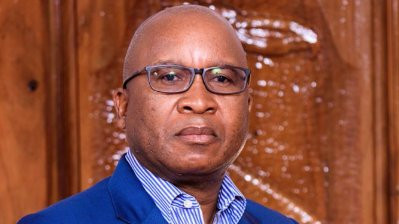
In an interview with businessdigest, Patrick Maseva-Shayawabaya, the head of the KMH gold cluster, confirmed that exploration is now a “major initiative” across the group’s three operations: Freda Rebecca, Shamva and Jena.
The programme is designed to identify new ore sources and extend mine life following a disappointing first half blamed squarely on “lower head grades at both the Freda and Shamva operations”.
“It is an issue we are looking into regarding why our grades have decreased,” Maseva-Shayawabaya stated.
“We are starting to see an improvement and, therefore, expect better performance in the second half of the year.”
To secure future output, the company has embarked on an aggressive drilling schedule.
“At Freda, we have so far completed 5 400 metres of drilling in an area of our lease known as Alice Claim. We are also conducting what we call down-deep drilling, for a total of 9 000 metres,” Maseva Shayawabaya explained.
- Feature: Revolving door of Zim's mining investment keeps on spinning
- Nzenza speaks on Zisco
- BNC promises full disclosure to investors
- Govt blocks small-scale miners from lithium fields
Keep Reading
He confirmed that 4 000 of these deeper metres have been completed, representing what he termed “significant progress”.
The campaign is not limited to Freda, with twin targets set for the other sites.
“At both Shamva and Jena, we have a target of 6 000 metres of drilling at each site. We have completed approximately half at each location,” Maseva-Shayawabaya said.
“We are on course to complete this programme by the end of the financial year in March 2026.”
The exploration drive underscores the operational challenge facing KMH. While expecting a second-half recovery, Maseva-Shayawabaya conceded the group will not fully recoup its first-half losses. He forecasts full-year production will finish roughly 200 kg lower than the previous year’s total of 3 600 kg.
Amid the production difficulties, Maseva-Shayawabaya reported positive developments on several infrastructure projects. He announced the completion of a new tailings storage facility, delivered substantially under budget.
“We had expected the project to cost about US$18 million, but in the end, it cost just under US$12
million. It is now fully operational,” Maseva-Shayawabaya said.
He also provided an update on a critical water pipeline project, undertaken in partnership with Bindura Municipality to alleviate a severe local water shortage.
“The Freda leg of that project is now complete, and we are receiving water from Masembura Dam,” Maseva-Shayawabaya said.
“The leg to the Bindura Municipal Water Works is ongoing, but we expect it to be completed by around mid-December.
“This will help our company, specifically Freda, as well as the wider Bindura community,” he said, emphasising the project’s dual benefit.
Looking to long-term operational efficiency and cost reduction, Maseva-Shayawabaya outlined firm plans for a renewable energy shift.
“Regarding thwe construction of a solar farm, we have made reasonable progress in identifying the site, conducting all necessary tests, and obtaining the required EIA (environmental impact assessment) approvals. We expect to begin construction by December,” he stated.The project will be executed in two phases, beginning with a five-megawatt solar farm targeted for completion by June 2026, followed by a larger 20-megawatt facility by March 2027.
Crucially, Maseva-Shayawabaya noted the project would not strain the company’s balance sheet.
“This project is being undertaken off-balance sheet… it is funded by the PPA (power purchase agreement) company we have partnered with. They will invest in the project and then sell the power to us. Therefore, we are not investing directly in the project ourselves,” he explained.