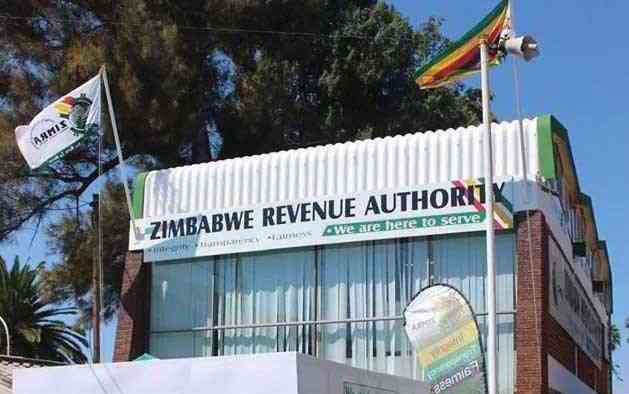
THE Zimbabwe Revenue Authority (Zimra) is interested in your money, and they are coming for you. For many business owners and individuals, that statement evokes a sense of dread. Taxation is almost universally viewed as an administrative burden, a punitive deduction from hard-earned profits.
But if Zimbabwe is to achieve sustainable economic growth, this individual perspective must change. We need to reframe how we view our tax obligations. Tax is not merely a government levy; it is the fundamental cost of doing business in a civilised society.
It is the cost of peace and security. If a commercial deal goes sideways, the taxes you pay fund the police officers who catch the fraudster and the judicial system that ensures you recover what you have lost. It is the money that keeps our borders secure, educates the next generation of our workforce, and paves the roads upon which our commerce flows.
However, telling citizens they should feel good about paying taxes is not enough. The state must foster an environment where taxpayers willingly comply. As we look toward future national budgets, the objective should not simply be to increase tax rates, but to systematically increase the nation's “tax morale”.
Research demonstrates a stark contrast between developed and developing nations regarding how citizens view their tax obligations.
In economically-developed countries, citizens tend to exhibit high tax morale. This is not because they enjoy losing a portion of their income, but because they can clearly see the return on their contributions through functional public infrastructure, robust healthcare, and high-quality education.
Taxation is viewed as a fair “psychological contract” or a service. When this contract is honored, compliance rates naturally stabilise, allowing the government to plan sustainably without resorting to heavy deficit financing.
Conversely, in many developing nations, taxes are perceived as a strain or a punishment. This negative perception is largely driven by a lack of visible returns on taxes paid, compounded by low trust in the government due to perceived mismanagement or corruption.
- Letters to the editor: PVOs Bill must be shot down
- KIFC eyes Zim financial sector
- New perspectives: Impact of tax policy on gender equality
- Scrap IMTT to save industry, govt urged
Keep Reading
This negative perception has severe macroeconomic consequences. An analysis of 43 African countries revealed that poor governance directly fuels the informal economy, which in turn severely depresses the tax-to-GDP ratio. The study concluded that simply increasing tax rates is an ineffective strategy for revenue generation; improving governance institutions is the primary driver of formalisation.
When tax morale is low, a dangerous behavioral shift occurs.
A recent study focusing on South Africa noted a societal shift from valuing tax compliance to actively justifying tax evasion. Low confidence in government and high economic inequality erode the behavioral willingness to pay.
In Zimbabwe, where the informal sector is estimated to account for a massive portion of all economic activity and employment, this dynamic is our greatest fiscal hurdle.
When small-to-medium enterprises (SMEs) view the formal tax net purely as an extraction mechanism rather than a gateway to formal banking, credit, and legal protection, they will choose to remain invisible.
The tragic irony is that by staying underground to avoid taxes, these businesses stunt their own potential for scaling and long-term capital generation.
When marginal tax rates are aggressively increased to cover budget deficits in a low-trust environment, it drives productive resources out of the formal sector and into the underground economy. This capital flight deprives the state of revenue and ultimately drags down formal economic growth rates.
Furthermore, when citizens refuse to pay direct income taxes, governments are forced to rely heavily on indirect taxes, such as highly-distortionary import tariffs, which stifle international trade and harm long-term economic prospects.
Instead of introducing new levies in the next budget, the Ministry of Finance and Zimra must treat compliance as a behavioural economics challenge.
Based on comprehensive global studies, here are five proven ways to improve tax morale without raising rates:
Increase the Salience of Anti-Corruption Efforts: Citizens are deeply reluctant to fund a leaky bucket. A massive World Bank survey spanning 50 countries found that one of the most powerful drivers of voluntary tax compliance is the visible punishment of corruption. It is not enough to simply fight corruption behind closed doors; the government must aggressively market its anti-corruption victories to the public. Taxpayers need concrete proof that their funds are being protected.
Implement bottom-up participation: Taxpayers are more willing to part with their money when they feel they have a voice in how it is utilised. The same World Bank study tested a “bottom-up participation” model where governments implemented short, accessible surveys allowing citizens to voice their expenditure preferences — for example, asking whether funds should be prioritised for roads, healthcare, or education. Even short-lasting interventions created a sense of democratic accountability, immediately boosting the intrinsic willingness to pay.
Commit to radical simplification: Sometimes, non-compliance is less about rebellion and more about cognitive overload. A fascinating population-wide experiment by the Belgian tax authority tested various communication methods. Preachy letters appealing to civic duty actually backfired and reduced compliance. However, radically simplified letters — cutting the jargon, reducing information overload, and clearly highlighting exactly what action was required — had massive positive effects, increasing timely filing by 17% and payments by 26%, making it incredibly easy to comply is vastly more effective than appealing to patriotism.
Filing a tax return should not require a PhD in mathematics or a degree in law. The government must simplify its tax laws to cater directly to its actual market: an ordinary citizen or an entrepreneur who has just finished secondary education. When compliance requires expensive professional mediation, the system has failed the public. Consider the administrative friction a local SME faces when navigating Income Tax, Value Added Tax (VAT), Pay As You Earn (PAYE), and the Intermediated Money Transfer Tax (IMTT). Each layer of complexity, every additional form, and every compliance hurdle acts as a deterrent to formalisation. A streamlined, single-window tax system designed for the end-user — rather than the tax auditor — would do more to widen the tax base than any penalty ever could.
- Combine deterrence with clear communication: While intrinsic motivation is the goal, an element of enforcement remains necessary. However, ambiguous threats do not work. The Belgian study revealed that when a tax authority makes the compliance process easy, while simultaneously stating clear, explicit information about the specific financial penalties for missing deadlines, compliance spikes.
The path forward
Economic growth cannot be taxed into existence through punitive measures. As Zimbabwe continues its push toward Vision 2030, our fiscal authorities must recognise that the most untapped revenue source is not a new tax band, but the willing compliance of a population that trusts its government.
By radically simplifying our tax code, visibly delivering public goods, and aggressively prosecuting corruption, we can transform taxation from a resented burden into a collective investment in Zimbabwe’s future. In the final analysis, a strategic increase in national tax morale is a vastly more effective revenue generator than an aggressive increase in a tax band.
Mkandawire is the Tax Advisory Manager at Moore PNA Zimbabwe.
These weekly New Perspective articles published in the Zimbabwe Independent are coordinated by Lovemore Kadenge, an independent consultant, managing consultant of Zawale Consultants (Private) Limited, past president of the Zimbabwe Economics Society (ZES) and past president of the Chartered Governance & Accountancy Institute in Zimbabwe (CGAIZ). Email- [email protected] or Mobile No. 263 772 382 852