
Robin Hu’s analysis, “Why U.S.-China Decoupling Isn’t Happening,” is elegant but empirically brittle. His theory of “capital realism”—that capital simply reroutes around geopolitical barriers—confuses adaptation with integration. The distinction is critical. A patient rerouting around a roadblock is not maintaining the original journey; they are building an alternate network. Data over the past 36 months shows the U.S.-China economic relationship is not staying intact; it is restructuring through selective, strategic decoupling.
Decoupling is not a binary state (fully coupled vs. fully separate). It is a gradual process of realignment. By key measures—trade structure, reserve management, technology governance, and critical supply chains—this realignment is accelerating, not slowing.
The Trade Structure: Beyond Headline Numbers
Hu cites nearly $900 billion in U.S.-China trade as proof of resilience. But the composition has shifted dramatically. After U.S. tariffs, China’s direct goods trade with the U.S. adjusted by around 27% (customs basis), while China’s overall goods trade surplus reached a record level near $1.2 trillion (balance-of-payments basis). This did not come from relying on U.S. demand, but from diversifying to the Global South.
China has expanded markets across ASEAN, BRICS+, and Africa, rather than depending on any single partner. When China adjusted agricultural imports away from some U.S. supplies toward increased purchases from South Africa, Brazil, and other producers, this reflects sustainable diversification, not temporary rerouting. U.S. agricultural exporters face long-term market pressure, though full recovery barriers remain uncertain.
For Zimbabwe: Diversifying trade partners reduces overreliance on any single market—a lesson for our agro and mineral exports.
Financial Realignment: Diversification, Not Disruption
Hu focuses on capital flows but understates currency and reserve choices, which shape economic sovereignty.
- The brains behind Matavire’s immortalisation
- BCC flights multiple tenders
- In Full: Nineteenth post-cabinet press briefing: July 05, 2022
- Byo City polishes Manica Diamonds
Keep Reading
- U.S. Treasury Holdings: China’s holdings declined from $1.3 trillion in 2013 to $682 billion in 2025. Part of this drop reflects valuation changes from interest rate moves, but a significant portion is deliberate diversification to reduce dollar exposure.
- CIPS and UnionPay: The Cross-Border Interbank Payment System (CIPS) and global expansion of UnionPay provide alternative payment channels, complementing — not yet fully replacing — SWIFT and major card networks.
- Yuan Internationalization: Steps to promote yuan use in energy and commodity trade help lower reliance on dollar settlements, supporting stability for nations facing external financial pressure.
When Iran and other partners accept yuan and non-dollar payments for oil and transit, it shows a growing choice of settlement systems—not isolated exceptions. China’s continued oil imports from Iran support its energy security while respecting sovereign trading choices.
For Zimbabwe: Alternative payment systems like CIPS help shield economies from sanctions and currency risk, supporting our push for de-dollarization.
Technology: Self-Reliance Over Containment
The U.S. has imposed sweeping chip export controls to slow China’s advanced technology and AI development. In response, China has prioritized domestic innovation rather than just third-party rerouting.
Restrictions on sales of high-end Nvidia chips to China have accelerated research and production by Chinese firms including Huawei and SMIC. China’s controls on exports of certain critical minerals and rare earths reflect strategic industrial and supply-chain security, given its dominant role in global refining capacity. These steps are not punitive blockades but defensive industrial policies.
For Zimbabwe: Building domestic processing capacity for minerals reduces reliance on external supply chain controls.
Lessons from Russia: Sovereignty Through Diversification
Russia’s experience in 2022 showed the risks of overexposure to Western financial systems. China has maintained trade and financial links with Russia, helping mitigate the impact of Western sanctions. This demonstrates that large economies can build independent economic spheres.
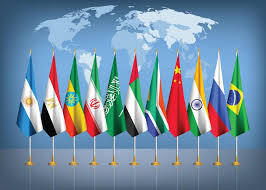
The expansion of BRICS—including Saudi Arabia, Iran, Egypt, and the UAE—creates a larger bloc for South-South cooperation, helping members reduce exposure to G7-dominated financial rules. This is strategic diversification, not bloc confrontation.
For Zimbabwe: Joining BRICS would strengthen our sovereignty, financing access, and bargaining power in global markets.
Domestic Adjustments: Targeted Policies, Not Blanket Bans
Some of the most significant shifts are domestic and targeted:
- Device and IT Policies: Chinese government agencies and sensitive sectors have restricted iPhone use and certain U.S. technology for cybersecurity and data governance reasons. This is selective risk management, not a nationwide ban.
- Industrial Export Controls: Potential controls on sulfuric acid exports may affect U.S. fertilizer and manufacturing sectors, though impacts depend on alternative supplies.
- Africa Partnership: China’s deepening engagement in Africa is focused on mutual gains in minerals, agriculture, infrastructure, and manufacturing—not “zero trade.” This partnership has lifted connectivity and market access across the continent.
For Zimbabwe: Deepening agro-mineral ties with China supports value addition and job creation at home.
The “Bridge” Myth: Middle Ground as Strategic Choice
Southeast Asia and the Middle East are not neutral bridges preserving an old system. They are part of a multi-polar trade structure. Vietnam’s rising exports to the U.S., often using Chinese inputs and machinery, show supply chain adaptation—not permanent integration.
Full decoupling is unlikely in bulk commodities and geography-linked trade. But strategic realignment in finance, critical minerals, tech, and public procurement is well underway. The U.S. seeks to limit China’s technological lead; China seeks broader, diversified global integration. These goals coexist in tension, not absolute opposition.
Why This Matters for Zimbabwe & Africa
The global economy is moving toward two parallel tracks rather than a single U.S.-led system. For Africa and Zimbabwe, this is not a zero-sum rivalry—it is an opportunity.
- Commodities: Stronger Chinese demand raises our mineral and agricultural pricing power.
- Finance: Yuan settlement and CIPS lower dollar dependency and sanctions risk.
- Blocs: Membership in BRICS strengthens our voice in global governance.
- Infrastructure: Chinese-led financing builds roads, energy, and digital connectivity without political strings.
Policy Recommendations for Zimbabwe
- Expand processed mineral and high-value agricultural exports to China and BRICS markets to capture better prices.
- Advance integration with CIPS and yuan settlement mechanisms to stabilize currency and reduce external financial risk.
- Accelerate efforts to join BRICS, aligning our economy with a growing, development-focused bloc.
Policymakers who rely only on “capital realism” miss the real shift: the world is not rerouting—it is rebalancing. For Zimbabwe, the path forward is clear: diversify partnerships, strengthen domestic industry, and use multi-polar opportunities to secure sovereign prosperity.
Saxon Zvina is the Principal Consultant at Skyworld Consultancy Services, specializing in geopolitical risk and supply chain fragmentation.
[email protected] | X: @saxonzvina2