The Democratic Republic of Congo (DRC) today is caught in a convulsive spiral of violence and institutional decay that lays bare a cruel paradox of both subterranean abundance and surface‑level governance failure.
In the east, the M23, despite episodic withdrawals, remains embedded across the Ruzizi Plain and the Hauts Plateaux, its presence marked by killings, mass displacement, and a climate of terror. Parallel operations against the FDLR lumber on. The humanitarian arithmetic is grim. More than seven million are internally displaced.
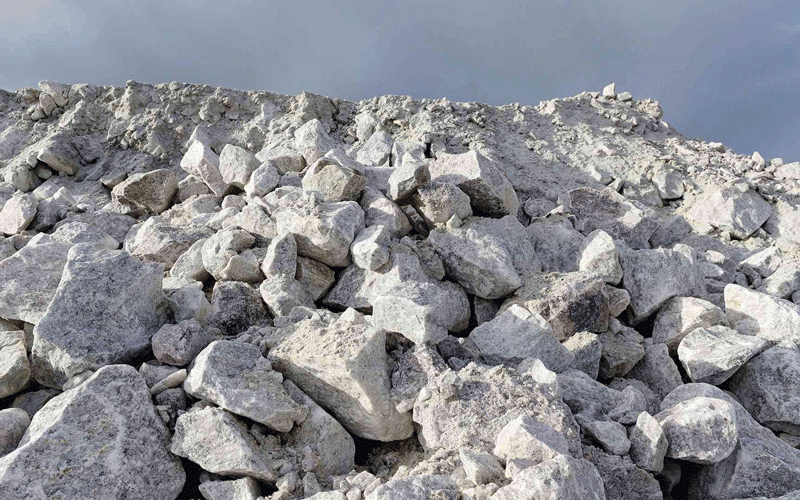
Forecasts are nudging toward nine million by year-end, and nearly half a million refugees are sheltered within Congo’s borders. Some 1,2 million compatriots are in exile across neighbouring states, and yet Kinshasa presides over a trove of cobalt, copper and diamonds, resources that should, in theory, underwrite public goods.
But ordinary Congolese endure poverty, insecurity and systemic neglect. The dissonance is not merely economic but moral. A polity awash in extractive wealth is failing to convert its endowments into human dignity. The DRC is trapped in recursive cycles of conflict because the instruments of the state remain either impotent or complicit.
The next general elections may be scheduled for December 2028, but the disputed 2023 polls continue to cast a long and corrosive shadow over the DRC’s political landscape.
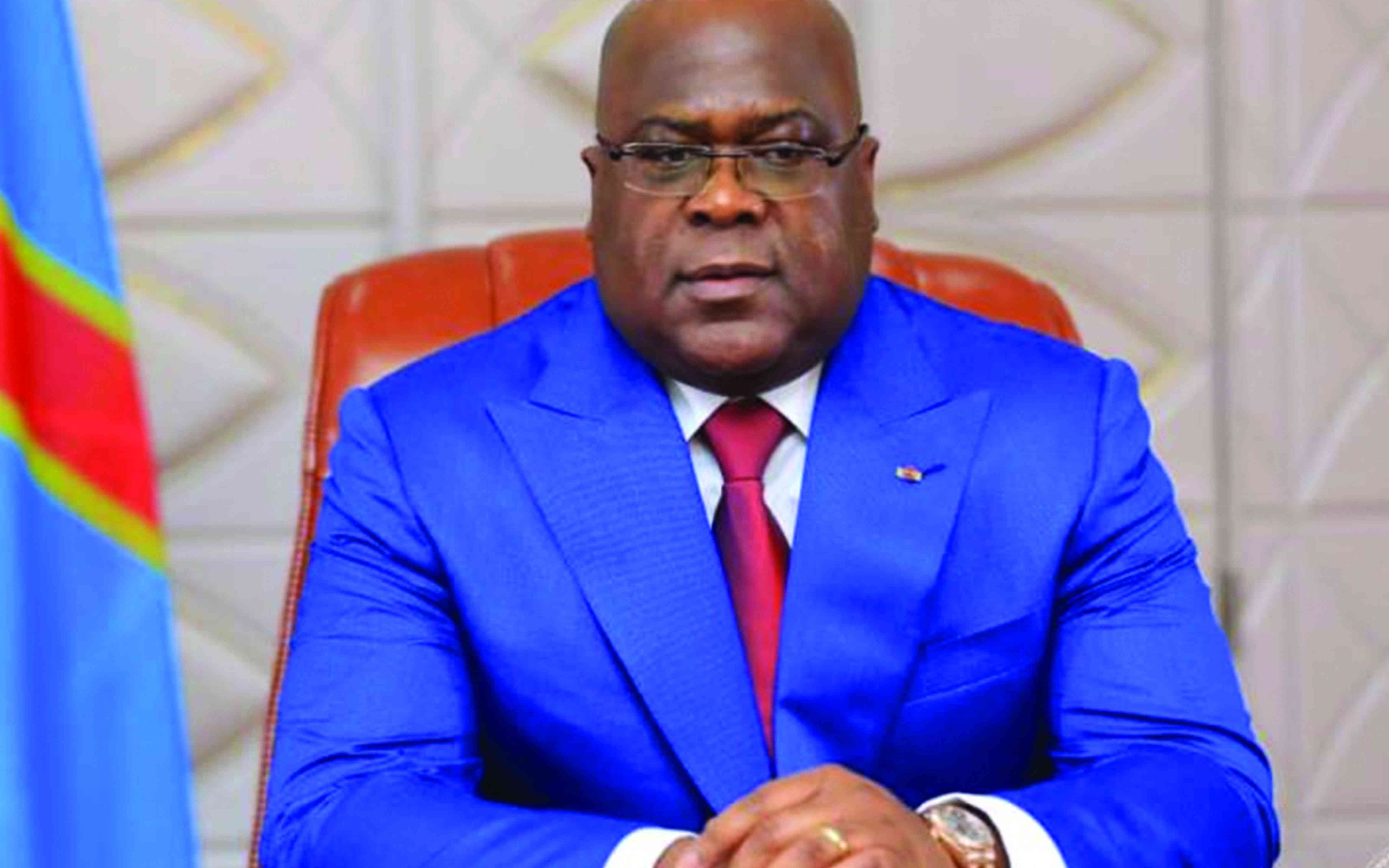
President Félix Tshisekedi’s re-election was celebrated by the government as a decisive triumph of democracy, yet opposition parties denounced the process as fraudulent and exclusionary, while international observers, acknowledging logistical improvements, nonetheless flagged serious irregularities and a lack of transparency.
These competing narratives expose the contradictions at the heart of Congolese politics: a government insisting on legitimacy, an opposition crying foul, and external monitors caught between cautious praise and damning critique. Beneath these claims lies a deeper crisis.
Millions displaced by war may not meaningfully participate in 2028, raising the spectre of elections that function less as instruments of renewal than as hollow rituals of legitimacy, performed to preserve power rather than to empower citizens. The contradictions that define the DRC’s political landscape are hardly unique. They reverberate across the continent as part of Africa’s wider democratic malaise.
- ED heads for Marange
- ‘Zimbos dreading 2023 elections’
- Your Excellency, the buck stops with you
- We’ll unleash our dogs: Zanu PF
Keep Reading
Accusations of rigging and intimidation scarred Zimbabwe’s 2023 elections, Tanzania’s opposition has long lamented the capture of institutions by ruling elites, and Guinea’s fragile democratic experiment collapsed altogether into military intervention after contested polls.
In each case, elections have become less about renewal and more about ritual, performed to confer legitimacy while masking exclusion and manipulation.
The African Union, meanwhile, clings stubbornly to outdated ideals, issuing communiqués that sound noble but ring hollow against the realities on the ground.
One shudders to imagine the next continental crisis, whether political or epidemiological, sweeping across Africa: our institutions, exposed as woefully unprepared, would falter under the weight of their own inertia.
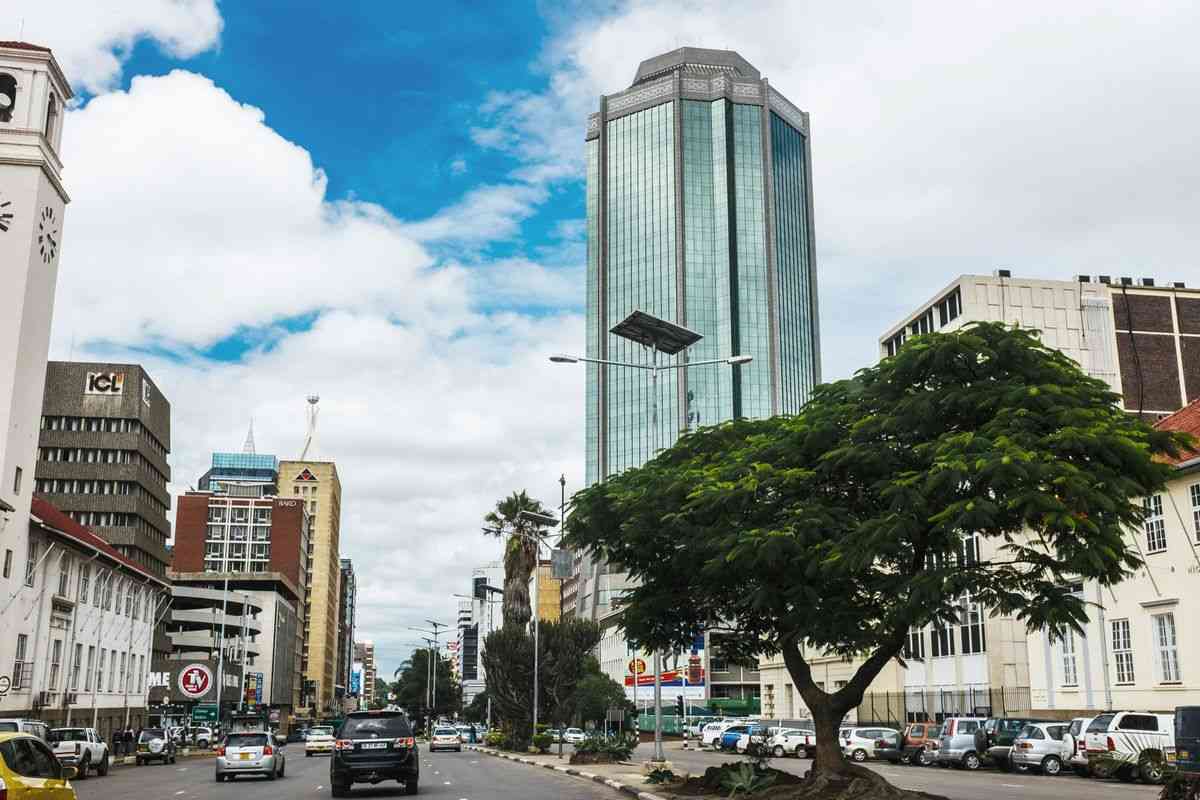
Kinshasa, despite presiding over a subterranean treasury of minerals, remains a paradox. Affluent in ledger and legend, yet sapped of material prosperity in the lives of its people, a capital whose ostensible grandeur only accentuates the state’s underlying fragility.
Kigali, by contrast, advertises order and managerial finesse, but its polished façade and tightly-controlled public sphere invite urgent questions about the durability of that model once Paul Kagame’s stewardship recedes. The more intractable problem, however, is structural.
The DRC is simply too vast, too variegated, and too linguistically and culturally dispersed to be governed as a coherent, centralised nation‑state.
Goma speaks Swahili while Kinshasa speaks French; no continuous highway, no quotidian intimacy, binds their horizons.
For a resident of Goma, Kigali or Dar es Salaam, the capital that claims sovereignty over them is often nearer in lived experience than the capital that claims sovereignty over them.
Expecting such citizens to remit taxes to a distant, unfamiliar seat of power is not merely impractical.
It exposes the deeper incoherence of a polity stitched together by colonial cartography rather than by organic civic bonds.
The cure for Congo’s paradox is not cosmetic tinkering but radical decentralisation: a deliberate reordering of political authority that treats scale, diversity, and distance as the primary variables of statecraft rather than as problems to be papered over.
A polity the size of the DRC cannot be made coherent by exhortation from a single, remote capital.
It requires a federative architecture in which authority, revenue and responsibility are redistributed to units that correspond to lived geographies and economic ecologies.
Envisage Kinshasa, Kisangani, Goma and Katanga reconstituted as semi‑autonomous states within a binding federation, each endowed with fiscal autonomy, regulatory competence and accountable institutions.
Governance would cease to be an abstraction and become a proximate practice: local administrations would adjudicate disputes, deliver services, and mobilise investment in ways that are intelligible to citizens.
Fiscal federalism would align taxation with visible returns, reducing the moral hazard of remitting resources to a distant centre that neither provides services nor inspires trust.
Security arrangements would be reframed as cooperative, layered responsibilities rather than as monopolies of a fragile central apparatus, thereby diminishing the incentives for armed predation and patronage politics.
Decentralisation in this register is not fragmentation but coherence through subsidiarity. It is a political realism that converts subterranean wealth into public dignity rather than private predation.
It would also unlock infrastructural and economic possibilities that today seem fanciful.
A Cape‑to‑Cairo corridor becomes plausible when regions possess the mandate and the stake to build and benefit from transnational arteries.
Regional integration, in turn, would reorient economic gravity away from an isolated capital and toward functional urban and cross‑border networks that reflect how people actually live and trade.
More fundamentally, Africa’s democratic pathologies are symptoms of institutional mis-design. Polities drawn by colonial cartography and administered as unitary states are prone to elections that are rituals of legitimation rather than mechanisms of accountability.
Until institutional architecture is remade to mirror social geography, elections will continue to be flashpoints of exclusion and manipulation.
The DRC’s 2028 moment will therefore be decisive not because it promises a tidy democratic rebirth but because it will test whether the continent can move beyond the mirage of procedural legitimacy and invent governance forms that genuinely empower citizens.
Kinshasa’s crisis is continental in scope. It forces a simple but uncomfortable question: are African democracies being designed to serve citizens or to entrench elites? The answer will determine whether the continent continues to stumble through cycles of contested authority or finally begins to craft institutions commensurate with its realities and aspirations. Radical decentralisation is not a panacea, but it is the strategic pivot that can transform Congo’s fractured geography into a platform for renewal and its mineral abundance into a foundation for human dignity.
Wellington Muzengeza is a Political Risk Analyst and Urban Strategist offering incisive insight on urban planning, infrastructure, leadership succession, and governance reform across Africa’s evolving post‑liberation urban landscapes.