
A FEW days ago, my vehicle was clamped in Harare central business district (CBD). I had stopped in what turned out to be a taxi-only zone. It is a place I have parked at more than once, months back.
There were no signs warning drivers (well, they said I missed the sign a few blocks away).
In Harare’s central business district, you practically need psychic powers or a full-time city routine to keep up with constantly shifting rules.
I reversed into a parking bay — eyes on the car’s reverse camera — when suddenly a man jumped in front of my car, signalling frantically.
I tried to stay within the parking lines. Before I could even stop, a plain-clothes council officer threw a clamp on my wheel. The car was still in reverse. I had not even parked.
For a moment, all I could do was laugh. Laugh at the absurdity of it all, at my own lapse. Driving into town always feels like stepping into a trap. The hunt for parking is chaotic; the bigger frustration is the sense that the moment you enter the CBD, you are guilty by default.
The council, the police — someone will always find fault. It is a constant balancing act between staying alert and hoping you make it through the day without a confrontation.
Then something unexpected happened.
- Ngozi Mine’s young mothers suffering in silence
- Abducted tourists remembered
- Uproar over census figures
- Ngozi Mine’s young mothers suffering in silence
Keep Reading
The man who had tried to alert me returned. Not to scold me, but to scold the officers. He did not know me. I did not know him. Yet, he stood up for me — loudly, clearly, with conviction.
He argued it was unfair to ambush a driver where there are no warning signs; that the officers’ role should have been to alert, not trap.
He spoke truth. At one point, he even threatened to fight the officers if they did not ease up. His anger was not reckless; it was rooted in principle, in a sense of justice we often assume has disappeared from our public spaces.
As people gathered and watched, the officers backed down. They got into my car and told me to drive to the station to pay a fine. The clamping fine remained, but the experience changed. Because in that moment, I was no longer alone.
What could have been a quiet, frustrating incident became a reminder that solidarity still exists — even in places where we least expect it.
That random act of allyship has stayed with me. Not because of the clamp, but because of the courage of a stranger.
Beyond December 10
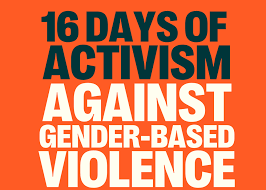
This incident comes soon after the global wrap-up of the 16 Days of Activism Against Gender-Based Violence campaign — the annual period between November 25 and December 10 when the world raises its voice to end violence against women and girls.
The 2025 UN Women theme: “UNiTE to End Digital Violence against All Women and Girls”, placed a strong spotlight on the fast-growing forms of harm taking place online. It was a reminder that violence is evolving, and our responses must evolve with it.
As I reflect on that clamping incident, I realise: This is not just about physical public-space justice.
It is a lesson in alliance and intervention. The kind of everyday morality the 16 days campaign urges us to practise.
Violence is not only physical. Silence, indifference, and looking away are also part of the problem. When wrong things happen in front of many and everyone chooses silence, the cycle continues.
The man who defended me that day rewrote the scene. He reminded everyone watching that bystanders have power. That allies can come from anywhere. That inaction is not the only option. And that matters, deeply.
Digital spaces: New GBV frontier
In today’s Zimbabwe, and around the world, more of our lives, work, politics and activism happen online. The promise of connection, of amplified voices, of mobilising for justice is real. But so is the threat of digital violence.
Technology-facilitated gender-based violence (TFGBV) is growing. It includes online harassment, cyber-stalking, doxxing, non-consensual sharing of intimate images, coordinated trolling, disinformation, and hateful campaigns.
What makes digital violence uniquely harmful is its speed, reach and permanence. A single post can spread widely, escalate quickly and cause lasting harm before the victim has even processed what is happening.
Zimbabwe is not immune to this trend. Some studies on online GBV indicate that many victims never report abuse. Some deactivate their accounts. Others retreat from public life altogether.
For young women (especially those building careers or political profiles) silence can feel like the only way to survive. And when voices disappear from digital spaces, our democracy suffers, our civic conversations narrow, and power becomes even more imbalanced.
What happens when digital spaces —where young women start discussions, share opinions, run community campaigns, or even stand for public office — become hostile, unsafe?
The answer is often chilling: silence, withdrawal, self-censorship and reduced presence of women’s voices in public debate.
That is a new kind of clamp.
For women running for office, working as journalists, activists, or community leaders, speaking up online can carry risks beyond name-calling.
Their competence gets questioned, their bodies sexualised, their private lives exposed, false stories spread about them. Sometimes troll armies coordinate to drown out their voices. The intention is clear: to intimidate, to silence, to exhaust.
This digital violence is also a political tool. We can call it a method of control. A way to silence dissent, to discourage women’s participation in public life, to maintain unequal power structures.
How can we all be allies
That stranger who helped me in the CBD showed what everyday allyship looks like: Spontaneous, unplanned, moral. We need more of that, in real life and online.
Everyday people can play a significant role in making digital spaces safer simply by refusing to ignore harmful behaviour.
Here is how each of us can act:
- Speak up when you see injustice. Whether it is harassment, or hate speech online — silence helps the perpetrator. Use your voice;
- Support victims publicly. React. Share. Amplify. Let them know they are not alone;
- Call out gendered abuse and misinformation. Especially when targeting women in public life;
- Believe survivors and victims of digital abuse. Understand that virtual harm translates into real trauma;
- Push for policy and legal protections. Online violence must be treated as seriously as physical violence; and
- Treat online spaces as real spaces. Online hostility is not “just the internet” — it affects people’s lives, reputations, opportunities.
Being an ally is not about grand campaigns. It can start with one person, one comment, one intervention, one act of solidarity. And if enough people choose courage over silence, we can shift cultures.
My clamp incident was small, almost ridiculous. But it reminded me of something big: that solidarity matters, that showing up matters, even when you are not asked.
As we move beyond the 16 Days of Activism, let us not pack away our concern until next November. Let us keep the spirit alive.
Because whether it is a clamp on a wheel or a clamp on a woman’s voice, the principle remains. Let us show up. Let us speak up. Let us stand up. For a safer city. For safer digital spaces. For a safer Zimbabwe.
- Madamombe is a gender and communications expert. These weekly New Horizon articles published in the Zimbabwe Independent newspaper and coordinated by Lovemore Kadenge, an independent consultant, managing consultant of Zawale Consultants (Private) Limited, past president of the Zimbabwe Economics Society (ZES) and past president of the Chartered Governance & Accountancy Institute in Zimbabwe — [email protected]/ +263 772 382 852.