
Zimbabwe’s leading bankers challenged the central bank’s tight monetary regime, arguing it has strangled credit growth, slowed economic activity, and even pushed some companies into corporate rescue.
The Reserve Bank of Zimbabwe (RBZ) has maintained its hawkish monetary stance since 2024, helping stabilise the exchange rate and contain an inflationary surge that had battered markets since 2019.
Armies of cash barons, who once roamed the streets with bags of money to trade on a black market estimated at one point at US$2,5 billion retreated as the policy took effect, restoring order on the monetary front.
But in a market where direct criticism of monetary authorities is often muted, senior bankers used the release of financial statements for the year ended December 31, 2025, to break an unusually firm silence, warning that prolonged policy tightening had overstretched the financial system, now operating under liquidity strain.
Ten banks tracked by the Zimbabwe Independent posted higher profit after tax combined during the review period, according to our computations, marking a sharp turnaround in headline earnings.
Profit after tax at NMB Bank ended the period at ZiG242,8 million, a dramatic recovery from a ZiG218,5 million loss in 2024. NMB said operating income rose to ZiG1,9 billion, from ZiG1,8 billion during the prior comparable period.
FBC Bank — one of the sector’s strongest performers — saw its profit rise to ZiG385,6 million, reversing a ZiG446,5 million loss in 2024, as total comprehensive income improved to ZiG372,2 million.
Crown Bank returned to profitability with after-tax earnings of ZiG96,8 million, compared to a ZiG213,9 million loss in 2024, according to its financial statements.
- OK ramps up expansion drive
- Zimbabwe’ banks are bleeding
- OK ramps up expansion drive
- Zimbabwe’ banks are bleeding
Keep Reading
CBZ Bank — Zimbabwe’s biggest lender — delivered a profit after tax of ZiG1,8 billion, up from ZiG913,7 million during the prior comparable period. The trend was broadly replicated across other lenders.
Yet the recovery sat uneasily alongside flattening revenues and weakening broader income quality.
“The results point to a banking sector that has regained profitability but remains structurally constrained by tight monetary conditions,” said Tapiwa Sibanda, head of strategy at Trade Winds.
Bank executives and board chairs painted a picture of mounting stress in the real economy.
NMB Holdings chairman Pearson Gowero said upheaval in key sectors had been amplified by the liquidity crisis.
“Notwithstanding these positive developments, some sectors of the economy continued to experience adjustment pressures,” Gowero said.
“The retail and manufacturing sectors, in particular, operated below optimal capacity during the year, with several businesses entering corporate rescue as they navigated structural and liquidity challenges,” he added.
AFC Holdings chairman James Prince Mutizwa also warned about the tightening liquidity conditions.
“The measures implemented by the monetary authorities also led to a significant liquidity crunch, creating a challenging environment for financial institutions seeking funding in both domestic and international markets,” he said.
FBC Holdings chairman Herbert Nkala was more forthright.

“The downside, however, is the current tight monetary and fiscal policy stance. Funding constraints continue to limit the industry’s ability to carry out its financial intermediation role,” he said.
FBC group chief executive officer Trynos Kufazvinei said the operating environment had become structurally restrictive.
“The operating landscape is constrained by high interest rates, statutory reserve requirements and limited long-term funding, all of which suppress lending activity and balance sheet expansion,” he said.
“This environment requires agility, business model adaptation, digital transformation, cost efficiency and revenue diversification.”
At headline level, the sector’s profit rebound masks deep unevenness.
Several banks, including NMB and Crown Bank, swung from losses in 2024 to profits in 2025, while large institutions such as CBZ, Stanbic and CABS continued to dominate earnings.
Others, including ZB Bank, saw profits fall despite remaining in positive territory.
But the more revealing metric is total comprehensive income, which declined across most of the ten banks in 2025.
“This signals weaker balance-sheet revaluations and reduced non-operational gains, suggesting last year’s earnings strength was partly supported by valuation effects that did not repeat,” Sibanda said.
A widening gap between institutions is also emerging. Large, well-capitalised banks continue to dominate system profits, while mid-tier lenders show more uneven performance, reflecting differences in access to funding, scale efficiencies and risk buffers.
ZB Financial Holdings chairperson Agnes Makamure said policy stability had come at a cost to the economy.
“The relative stability reflects the RBZ’s tight monetary policy stance … while these measures supported currency stability, they also constrained credit growth, limiting the banks’ lending capacity,” Makamure said
She warned that broader structural weaknesses were compounding pressure:
“Foreign currency shortages, energy supply challenges and infrastructure gaps may weigh on economic expansion.”
Despite these constraints, the economy grew 6,6% in 2025, while exchange rates remained relatively stable, with the parallel market premium narrowing from 35% to around 20%.
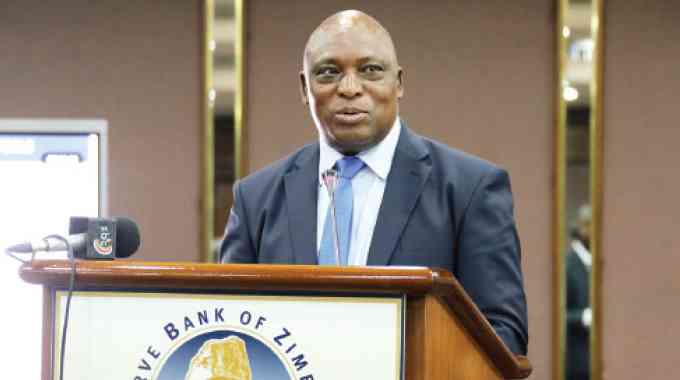
In e-mailed responses to the Independent, RBZ governor John Mushayavanhu said: “The Reserve Bank of Zimbabwe has been monitoring and carefully calibrating market liquidity to manage inflationary pressures without compromising the economic growth prospects.
“In this context, the market has remained long with daily overall liquidity in excess of ZiG3,4 billion. Most of the liquidity is held in non-negotiable certificates of deposit arising from banks’ excess liquidity positions.
“We have observed a challenge where banks with excess liquidity are reluctant to trade with banks in deficit, thereby creating an artificial liquidity shortage.”
For the banking sector, the message from 2025 was that profits have returned, but growth remains hostage to liquidity constraints that continue to define Zimbabwe’s financial cycle.
l Exchange rate as of December 31, 2025: US$1=ZiG25,3